#1 Everyone Wants to Achieve Carbon Neutrality
In the past few months, leading companies from different industries have approached Carbonstop, asking the same question: We also want to achieve carbon neutrality; tell us how to do it.
Companies in the technology and internet sector have been the most sensitive to this trend. Initially, the majority of companies that approached Carbonstop to discuss carbon neutrality were leading tech giants like Alibaba, Baidu, Tencent, Meituan, ByteDance, JD.com, Huawei, Xiaomi, Microsoft, etc.

Carbon Neutrality Training | Leading Tech Internet Companies
Soon, leading companies from more industries began to consider carbon neutrality. For example, companies and organizations such as Swire Properties, Cheung Kong Graduate School of Business, Citibank, Huaxi Biotech, Hillhouse Capital, Covestro, Legend Capital, UN Global Compact, Beijing Energy Network, China Electronics Society Green Data Center Forum, etc., also reached out to Carbonstop, hoping for assistance with carbon neutrality training and sharing.

Carbon Neutrality Training and Sharing | Leading Companies in Various Industries
As a veteran in the emerging industry of carbon management services, over the past year, Carbonstop has provided similar training and sharing sessions for leading companies in various industries.
Providing carbon neutrality services to so many leading companies in a short period is due not only to Carbonstop's professional background and years of experience but also to China's emphasis on carbon neutrality.
#2 Growing Interest in Carbon Neutrality
Having worked in China's carbon market for over a decade, Carbonstop clearly perceives that: in recent years, China's active commitments and actions in the field of climate change have influenced both the public and businesses, increasing awareness of climate change from top to bottom. Since President Xi Jinping announced the targets of reaching peak carbon emissions by 2030 and achieving carbon neutrality by 2060 last year, this trend has become even more evident. Carbon neutrality has evolved from a topic discussed among professionals to something familiar to the general public.
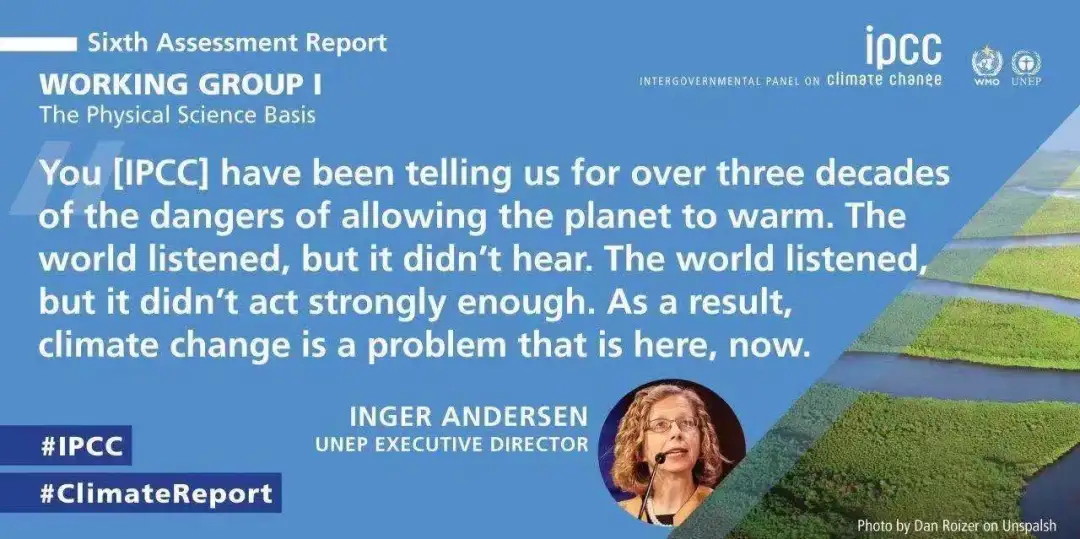
On August 9, the United Nations Intergovernmental Panel on Climate Change (IPCC) officially released the first part of the IPCC Sixth Assessment Report, titled "Climate Change 2021: The Physical Science Basis." The report states that unless there is immediate, rapid, and large-scale reduction in greenhouse gas emissions, limiting global warming to close to 1.5°C or even 2°C over the next few decades will not be achievable.

The increased attention to carbon neutrality from businesses is certainly a positive development, but how exactly should they proceed?
#3 How Exactly to Achieve Carbon Neutrality?
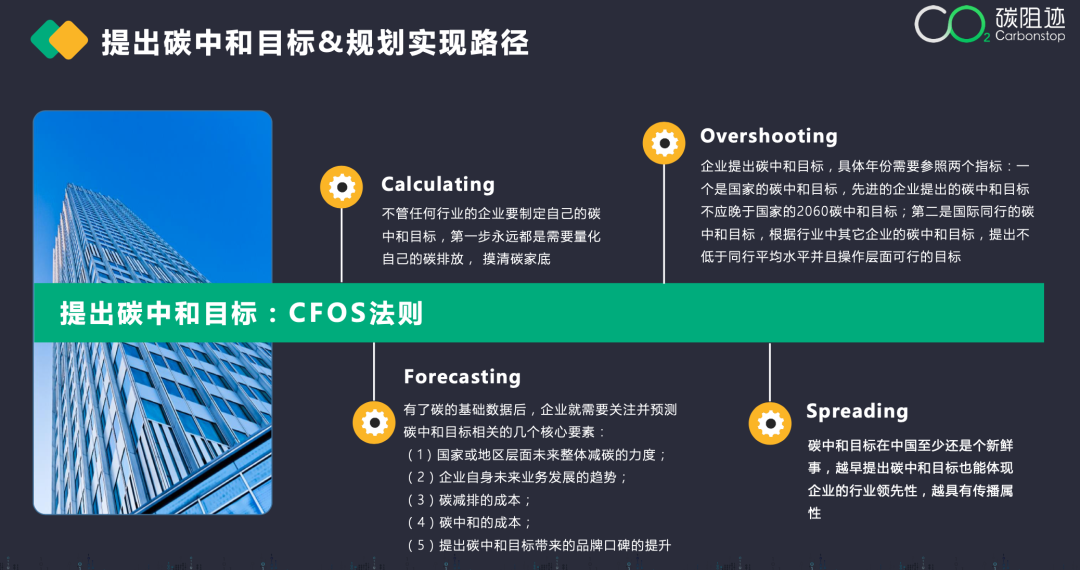
After analyzing most companies proposing carbon neutrality and combining case studies from serving leading companies in various industries, the Carbonstop team distilled the CFOS principles for setting carbon neutrality goals and the CREO pathway for achieving these goals.
First, before setting a company's carbon neutrality goal, it is essential to understand the current carbon emission status. This involves using the CFOS principle proposed by Carbonstop:

Calculating (Calculating): Quantify carbon emissions to understand the current situation. Knowing your current carbon emissions and where you stand within the industry is crucial for taking targeted reduction measures and laying a solid foundation for setting carbon neutrality goals.
Forecasting (Forecasting): Pay attention to and predict key elements related to carbon neutrality goals. For example, the overall carbon reduction efforts at the national or regional level, the future trends of the company's business, the costs associated with carbon reduction and carbon neutrality, and the brand reputation boost from setting carbon neutrality goals.
Overshooting (Exceeding): When setting carbon neutrality goals, how to choose the specific year. Two benchmarks should be considered: First, the national carbon neutrality target; advanced companies should not set later targets than the country's carbon neutrality target. Second, the carbon neutrality targets of international peers; based on the targets set by other companies in the industry, propose a goal that is at least as ambitious and feasible as the average.
Spreading (Spreading): Proposing carbon neutrality goals also demonstrates the company's industry leadership and has communicative value. For instance, when Tencent announced its carbon neutrality plan in 2021 (though it has not yet set a specific carbon neutrality target), it garnered significant attention. Recently, Carbonstop and Tencent have initiated a comprehensive collaboration, further advancing Tencent's journey toward carbon neutrality.
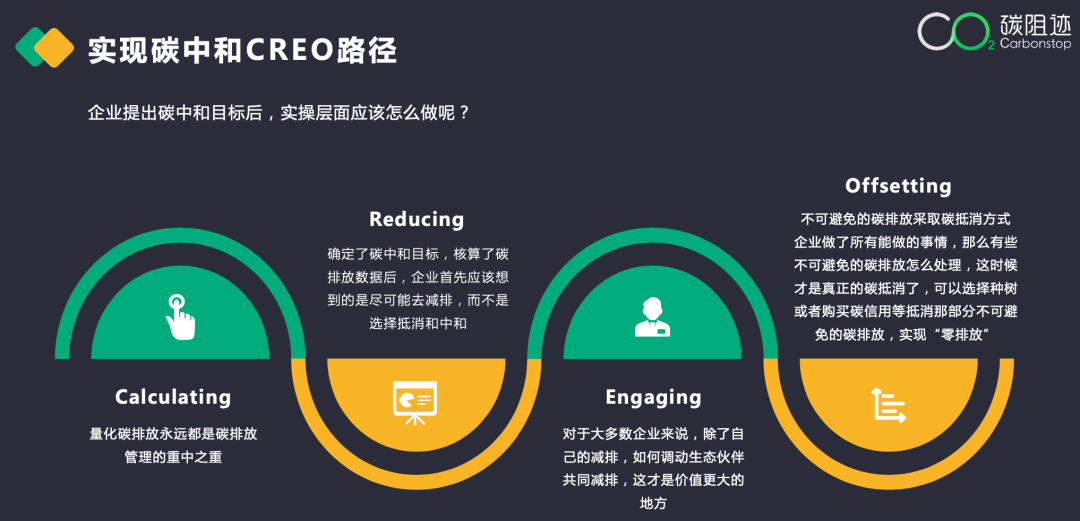
After understanding the current carbon emission status and setting carbon neutrality goals, what should be done operationally? Carbonstop proposes a four-step CREO pathway:

Calculating (Calculating): Quantifying carbon emissions remains the cornerstone of carbon emission management.
Reducing (Reducing): After calculating carbon emissions, the first priority should be to reduce emissions as much as possible, minimizing carbon emissions during production and operations, rather than immediately opting for offsets and neutrality.
Engaging (Engaging): For most leading companies, beyond their own emission reductions, engaging ecosystem partners to reduce emissions together is even more valuable. For example, encouraging employee participation, driving emission reductions across the supply chain, and green investment portfolios.
Offsetting (Offsetting): This is the final step. After doing everything possible, if there are still unavoidable emissions, this is the time to choose carbon offsetting. This can be achieved through tree planting or purchasing carbon credits to offset the remaining emissions, achieving "zero emissions."
#4 The Best Time for Corporate Carbon Neutrality
From proposing carbon neutrality to achieving the goals, it is a relatively new concept globally. Fortunately, under the ambitious international commitments of the Chinese government, Chinese companies, especially leading companies in various industries, are beginning to pay attention and take action.
Now is the best time for companies to achieve carbon neutrality.
For Carbonstop, born and grown in such a context, it is a rare opportunity. Benefiting from our early accumulation in the industry, we can work together with the best companies in China and globally to strive for China's carbon neutrality goals and contribute to the global effort against climate change.
The path may be long and arduous, but with action, we can reach our destination.
We hope to collaborate with more brands aspiring to become industry leaders to achieve corporate carbon neutrality together.
Hui Ge said: "As one of the 'expert reviewers' of the United Nations Intergovernmental Panel on Climate Change, I had the privilege to participate in the review work of the IPCC Fifth and Sixth Assessment Reports, working alongside top scientists worldwide and learning more fundamental knowledge about climate change. Continuously upgrading the most cutting-edge professional knowledge is also a solid foundation for supporting Carbonstop's carbon management business."