


 936
936_1766474285972543.jpg)

Introduction
Consumer-facing sustainability labels are increasingly influencing buying decisions of many consumers. Amazon’s Climate Pledge Friendly (CPF) label has emerged as a prominent label intended to help customers identify credible environmental products.
For Chief Sustainability Officers, ESG managers, and procurement leaders, CPF is not simply a marketing badge. It is an expression of its sustainability capabilities: product-level carbon accounting, supplier data quality, and credible third-party verification. Understanding how CPF works and what it requires behind the scenes is essential for organisations that wish to win the sustainability-minded consumer.
This article examines CPF from an enterprise sustainability perspective: how the label functions, and why robust carbon data infrastructure is now a prerequisite for credible consumer-facing claims.

What Is Climate Pledge Friendly
Climate Pledge Friendly is Amazon’s programme for highlighting products that meet one or more recognised sustainability certifications. Rather than operating as a single standard, CPF aggregates third-party certifications and verifications across environmental attributes such as product carbon footprints, materials, energy efficiency, and circularity.
Importantly, CPF is not a regulatory framework and does not replace compliance with disclosure regimes such as CSRD, ISSB, or CBAM. It is a voluntary, consumer-facing label that is available within Amazon’s marketplace.
For enterprise sustainability teams, the implication is clear: CPF does not reduce the need for rigorous internal carbon accounting. It increases scrutiny of the underlying data used in product-level claims.
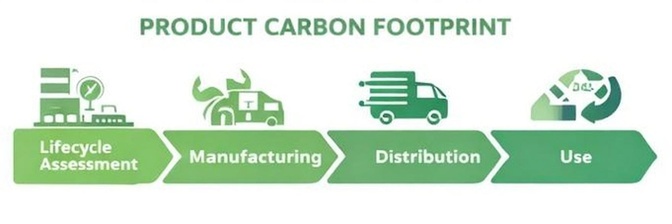

Product Carbon Footprints Requirements
Many certifications recognised under CPF rely on product carbon footprint (PCF) calculations based on lifecycle assessment. These assessments are typically aligned with the GHG Protocol Product Standard and ISO 14067, which require emissions to be quantified across a product lifecycle and product boundaries (for example, cradle-to-gate or cradle-to-grave).
This presents significant accounting issues, such as:
· Obtaining accurate activity data from manufacturing and suppliers
· Use appropriate, region-specific emission factors
· Using consistent allocation methodologies across product lines.
For companies, especially those with global or China-based supply chains, using generic and existing emissions datasets is not sufficient.

Why CPF Highlights a Broader Shift in Sustainability Expectations
The growth of CPF reflects a wider trend: sustainability claims are moving closer to the point of purchase, while expectations for data credibility are rising upstream.
Consumer labels now sit at the end of a long data chain that begins with Scope 3 emissions, supplier engagement, and product-level modelling. As regulators tighten requirements around green claims and disclosures, the tolerance for approximation, static spreadsheets, and unverifiable assumptions is diminishing.
For sustainability leaders, CPF is therefore best understood as a signal of market direction, not a standalone solution. It underscores the need for systems that can support:
· Consistent product carbon footprint calculations
· Transparent audit trails from raw data to published claims
· Alignment between internal reporting (GHG Protocol, CSRD, ISSB) and external communications

Data Quality as the Real Differentiator
A recurring challenge in product footprinting is data quality — particularly for companies with global supply chains. Generic emission factors, limited supplier engagement, or outdated datasets can materially distort product-level results and expose organisations to greenwashing risk.
This is where enterprise carbon management platforms play a critical role. Carbonstop, for example, supports product and supply chain carbon accounting with:
· China-specific emission factors that reflect local energy grids, manufacturing processes, and materials — essential for accurate product footprints
· Supplier engagement workflows that enable primary data collection at scale
· AI-enabled validation and anomaly detection to improve data completeness and consistency
· Audit-ready workflows that support third-party verification and assurance
Without this level of infrastructure, labels like CPF risk becoming superficial — credible in appearance, but fragile under scrutiny.

CPF, Regulation, and the Risk of Over-Interpretation
It is important to highlight what CPF does not do. Participation in CPF does not ensure compliance with regulatory requirements such as CSRD or CBAM, nor does it substitute for corporate-level emissions reporting or transition planning.
However, CPF does raise the bar for internal alignment. Organisations making product-level claims on major platforms must ensure that consumer-facing disclosures are consistent with corporate inventories, Scope 3 methodologies, and assurance processes. In practice, this pushes companies toward integrated carbon data systems rather than disconnected reporting exercises.

Looking Ahead: From Labels to Infrastructure
As sustainability and green claims become more regulated and more visible, consumer labels like CPF are likely to proliferate. Their long-term credibility will depend less on the labels themselves and more on the quality of the underlying carbon data.
For enterprise sustainability leaders, the strategic question is not whether to pursue labels like CPF, but whether the organisation’s carbon accounting infrastructure is mature enough to support them — across products, suppliers, and regions.

Conclusion
CPL illustrates how consumer expectations, voluntary standards, and enterprise carbon accounting are converging. While CPF operates at the point of sale, its implications extend deep into supply chains.
Organisations that invest in accurate product carbon footprints, robust supplier data, and audit-ready workflows are better positioned not only to qualify for labels like CPF, but to withstand regulatory scrutiny and maintain trust with customers, investors, and partners.
For companies navigating product sustainability claims across global supply chains, enterprise-grade carbon data is no longer optional — it is foundational.
Learn how Carbonstop supports product and supply-chain carbon accounting with China-specific data, AI-enabled validation, and audit-ready reporting.