



 3063
3063My first encounter with product carbon footprinting was about 14 years ago (in 2009) when I started working in the UK.
One day, while working overtime with my Spanish colleague Xana, I was working on carbon management software (primarily for corporate carbon accounting software), and Xana was a product carbon footprint consultant at the company. That day, during a casual chat, she mentioned product carbon footprinting and rattled off a bunch of terms: From Cradle to Grave, PAS 2050, the five core stages of product carbon footprinting, etc.
Although it was quite challenging to understand Xana's Spanish-accented English, I could still grasp the gist of what she said, and after she showed me the classic carbon footprint footprint photo, I understood the content and significance of her work.

Image: Classic carbon footprint footprint photo
At that moment, I had two major impressions:
1. I realized that so many items around us have carbon footprints, and they can be scientifically calculated using such methodologies, which is amazing!
2. Working overtime can also lead to learning a lot:)
Later, I would often go to chat with Xana and other carbon consultants during lunch breaks to understand how to calculate product carbon footprints (I also concluded that my two meals of Chinese cuisine for lunch and dinner had a lower overall carbon footprint than their light lunch and hearty dinner).
Interestingly, I noticed that many products on the shelves of British Tesco supermarkets had carbon footprints calculated by Xana and her team. I thought to myself, wouldn't it be fantastic if one day, all products on shelves in China also had carbon footprint data? It seemed like a great model and opportunity to empower consumers to drive the low-carbon transition of society from the bottom up. I felt it was an excellent model and opportunity to enable consumers to promote the low-carbon transformation of society from the bottom up.
In 2011, I returned to China to start a business, focusing initially on corporate carbon accounting. We found that there was greater demand for corporate-level carbon management, whether for regulated emission entities in carbon trading or suppliers required to disclose carbon information abroad; their needs were primarily focused on organizational carbon emissions.
However, later on, more and more companies began to pay attention not only to their annual carbon emissions but also needed to disclose the carbon footprint of their products to downstream clients, or some innovative and environmentally friendly companies hoped to calculate the carbon footprint of their products and compare it with industry averages. Product carbon footprinting gradually became widespread in China.
Carbonstop's first product carbon footprint project was the Eco-Frog Exercise Book Project in 2013 (exercise books made using recycled paper and eco-friendly ink for elementary school students).
Below, I will provide a detailed analysis of product carbon footprinting from the aspects ofWhat, Why, How, and others.
01
【What】
/ What is Carbon Footprint /
Let's look at two definitions of 【Carbon Footprint】—
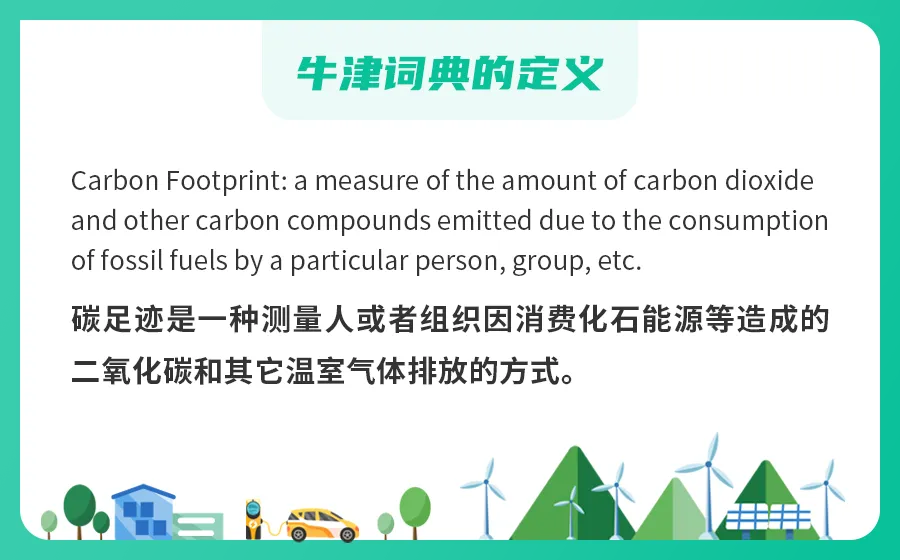
ISO14067 defines product carbon footprint as: the total amount of greenhouse gas emissions and removals associated with a product system, assessed using life cycle assessment methods, expressed as carbon dioxide equivalent (CO2eq).
Baidu Baike definesproduct carbon footprint as the various greenhouse gas emissions throughout a product's lifecycle.
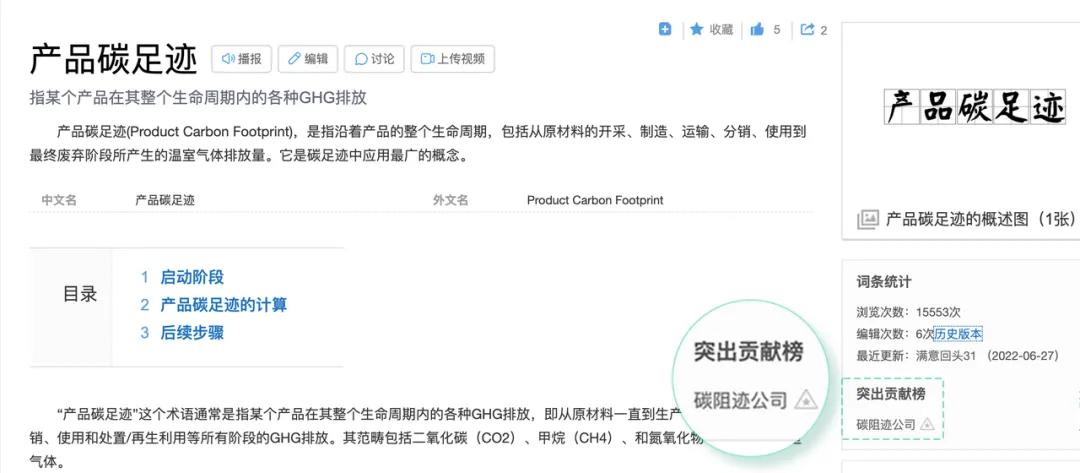
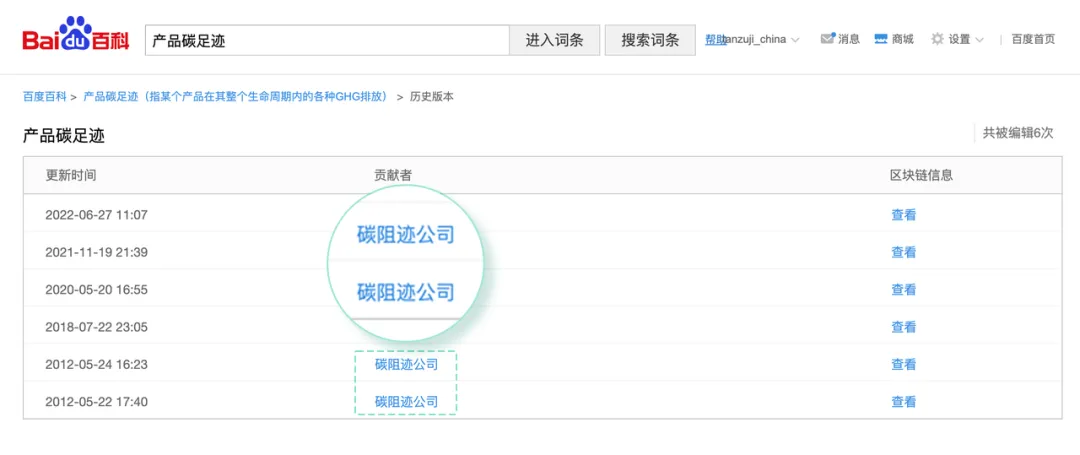
Image: Baidu Baike definition of product carbon footprint
As early as 2012, Carbonstop provided a definition of product carbon footprint on Baidu Baike and remains a prominent contributor to the entry to this day.
You may often hear LCA (Life Cycle Assessment). Then, what is the difference between LCA and carbon footprint? Simply put, product carbon footprint focuses solely on carbon emissions (greenhouse gas emissions), while LCA, or Life Cycle Assessment, evaluates over a dozen environmental indicators by default, including carbon footprint (e.g., PM2.5, SO2).
However, given that climate change is the greatest challenge facing the globe over the next few decades, along with global goals for carbon neutrality by 2050 and China's dual carbon targets, the most critical indicator within LCA is also the carbon footprint.
02
【Why】
/ Why Do Companies Need to Calculate the Carbon Footprint of Their Products /
I believe that the core driving forces for companies to conduct product carbon footprinting and management include:
1. By calculating the carbon footprint throughout the full (or partial) lifecycle, companies can clearly and accurately understand their carbon footprint at each key stage, enabling them to target and implement carbon reduction measures effectively.
2. By communicating product carbon footprint data with stakeholders, companies can disclose their focus on product-end carbon emissions and their commitment to reducing carbon emissions, enhancing brand image and winning business growth.
3. If the product is a carbon-reducing product, then the company has motivation to calculate the carbon reduction compared to conventional products.
03
【How】
/ How to Do It /
To perform product carbon footprinting effectively, several essential conditions and tools are required:
1. Standards
To calculate the carbon footprint of a product, a scientific calculation method is needed, meaning a widely recognized carbon footprint calculation standard is required.
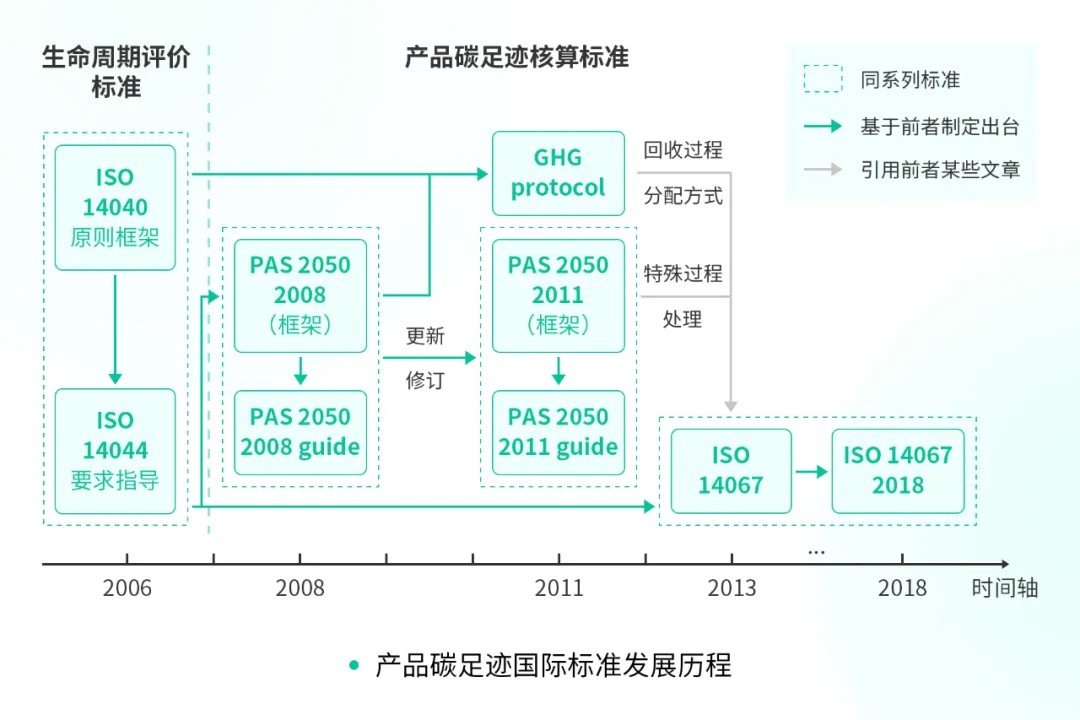
Currently, the most globally recognized standards for product carbon footprinting include ISO14067:2018, PAS2050, and GHG Protocol. Relatively speaking, ISO 14067:2018 is more general, while PAS2050 and GHG Protocol are more specific, including detailed calculation methods and relevant parameters.
Companies often need to focus on both corporate carbon accounting and product carbon footprinting. There is a certain connection between product carbon footprinting and corporate carbon accounting, which is intuitively described by the GHG Protocol, as shown in the figure below.
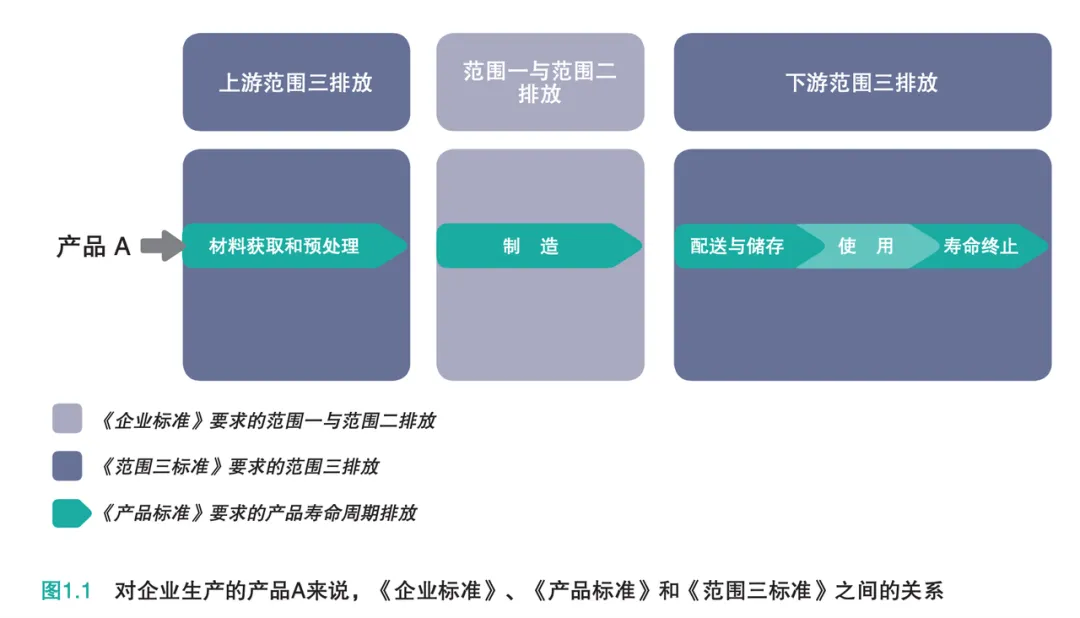
In the GHG Protocol standard framework, the above figure clearly illustrates the relationship between corporate carbon accounting and product carbon footprinting. The upstream Scope 3 emissions in "corporate carbon accounting" correspond to the raw material stage emissions in "product carbon footprinting," while the downstream Scope 3 emissions in "corporate carbon accounting" align with the distribution, use, and end-of-life treatment stages in "product carbon footprinting." In principle, a company's total carbon emissions should match the total carbon footprint of its various products.
2. Emission Factor Databases
To calculate the carbon footprint of a product, besides collecting activity data (such as electricity consumption in kilowatt-hours, liters of diesel used, etc.), another crucial piece of data is required: emission factors (for example, the carbon emissions per kilowatt-hour of electricity, the carbon emissions per liter of oil, etc.), to calculate the carbon footprint at each lifecycle stage.
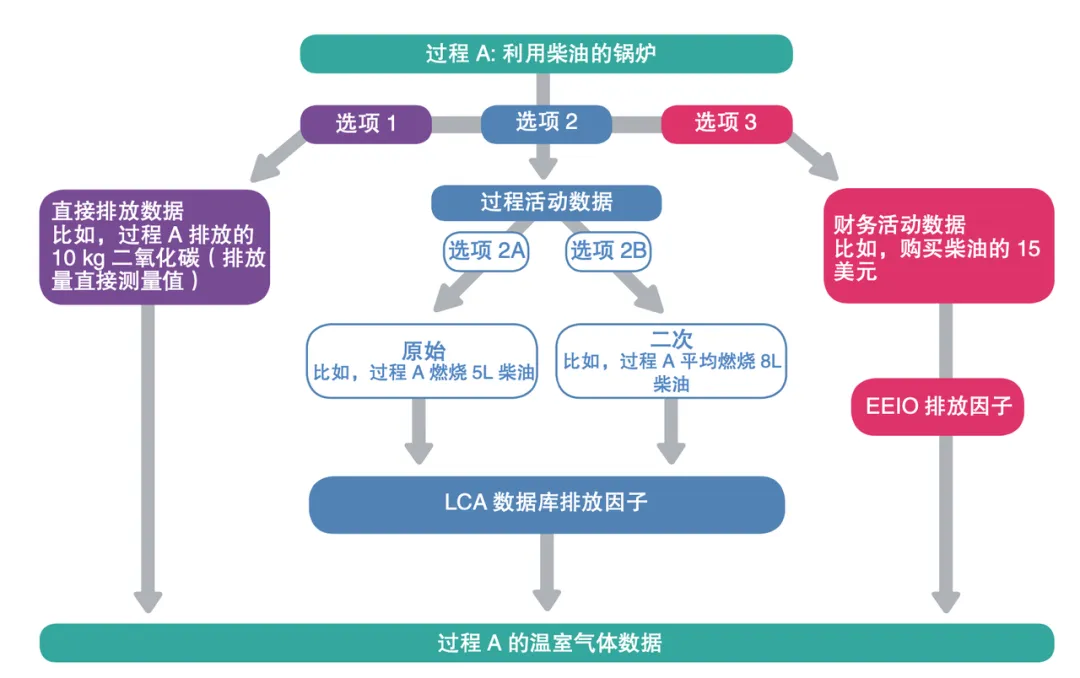
Image: Three mainstream methods for calculating carbon footprint according to the GHG Protocol
In almost all carbon footprint calculation standards, the emission factor method is one of the most important methods. In practice, due to the operational simplicity, data availability, and cost-effectiveness of the emission factor method, it has become the most critical method for corporate carbon emissions and product carbon footprint calculations, without exception. Furthermore, the emission factor method is also a future trend.
Globally, carbon emission factor data is still extremely scarce, and we call on governments and authoritative departments to publish more carbon emission factor data for products at different stages and clearly define them in carbon footprint calculation standards, so that the whole society can maintain a unified calculation method and obtain consistent results.
Currently, the most widely used LCA carbon footprint database globally is Ecoinvent from Switzerland, while carbon emission factor data released by organizations such as the UN IPCC and the UK Defra also serve as primary references for companies to calculate product carbon footprints. China currently lacks fundamental emission factors for calculating product carbon footprints, especially basic energy emission factors.
Speaking of this, the author would also like to share how Carbonstop gradually built up a carbon emission factor database with over 150,000 entries.
2012
The first generation of Carbonstop's carbon management software, the CAMP system, went online. At that time, the system embedded databases such as the UN IPCC National Inventory Database, the UK Defra Emission Factor Database, and the Bath University Database.
(While working in the UK, the main use was of the Defra database, including Scope 1, 2, and 3 data, which could support enterprises in calculating organizational carbon emissions or product carbon footprints. When I returned to China, many domestic peers were just beginning to conduct organizational carbon inventories and product carbon footprint services, so I introduced the Defra database to everyone, which accelerated the progress of carbon inventory and product carbon footprint calculations in China and formed some basic paradigms for enterprise carbon emission calculations.)
2013
Subsequently, due to the need to help corporate clients conduct carbon inventories and fill out CDP questionnaires, a colleague from Taiwan introduced Carbonstop to the carbon emission factor database commonly used by Taiwanese enterprises (it must be admitted that the level of carbon management by Taiwanese enterprises was far higher than that on the mainland at the time), particularly some carbon footprint information for consumer goods was very valuable for Chinese enterprises to carry out carbon emission calculations. Considering that the situation in Taiwan is relatively close to that on the mainland, similar data is closer to the actual conditions in China compared to data from the UK or the UN.
2014
At the end of 2014, the author participated in the Art of Change 21 event in France, gathering seven low-carbon environmental entrepreneurs, seven artists, and seven social changemakers to issue a global call for carbon neutrality, aiming to lay the groundwork and create momentum for the UN Climate Conference COP21 held in Paris at the end of 2015.
The author had the great honor to join as one of the seven low-carbon environmental entrepreneurs, and through participating in this conference, got to know several peers doing carbon management globally. We exchanged a lot and collectively turned the Art of Change 21 event into a carbon-neutral conference.
In the carbon-neutral conference project, foreign peers also shared the French carbon emission factor database Bilan Carbone. With the help of the Bilan Carbone database, the carbon footprint was calculated efficiently. This has also become an important database that international clients (especially those with branches in France) can rely on.
2015-2020
With the increase in international business, some of Carbonstop's corporate clients have subsidiaries all over the world, requiring the calculation of carbon footprints in various locations. Therefore, during the execution of projects, the Carbonstop team gradually accumulated carbon emission factor data from more than 200 countries and regions, including the UK, France, Japan, Thailand, South Korea, Canada, EU, India, USA, and other national/regional published data, as well as emission factor data released by authoritative research institutions such as Ecoinvent.
This includes lifecycle base data, process emission data, and terminal product carbon footprint data, etc. The most challenging work in collecting carbon emission factor data included translating non-English version databases (such as Japanese, Korean, Thai, etc.), which left a deep impression on the students of Carbonstop, as well as extracting (for example, finding a few usable carbon emission factors from hundreds of pages of papers) from literature/images. In the absence of AI capable of automatically reading usable carbon emission factors from images, manual input was still necessary. The Carbonstop team demonstrated the spirit of 'Yugong Moving Mountains,' continuously exploring and accumulating Carbonstop's underlying database.
There were many very interesting, meaningful, and touching scenes during some carbon emission calculation projects. To measure precisely, Carbonstop students took rulers and scales to travel to some warehouses of customers to measure packaging dimensions and weights, just to obtain more accurate carbon emission factor data.
Of course, a large part of the data was proactively developed by the Carbonstop team.
For example, the eight major cuisines of China, in 2020, Carbonstop formed a special task force to calculate the carbon footprint of all main dishes in the eight major cuisines.For instance, a plate of braised pork belly for two people, the team calculated the carbon footprint of each ingredient (pork belly, star anise, tangerine peel, sugar, oil, salt, etc.), cooking process (measuring the electricity or natural gas required to cook a plate of braised pork belly), and waste disposal process (according to China's average food waste rate and average waste disposal methods) based on ingredient lists from sources like 'A Bite of China', roughly estimating that a plate of braised pork belly for two people produces 6.22KG of carbon footprint.
These data also serve as reference benchmarks for food enterprises. For example, in cooperation with Meituan, these data can also come in handy, calculating the carbon footprint of different ways of eating such as takeout, dining in, and cooking at home, providing data basis for our low-carbon consumption behavior.
The construction of the carbon emission factor database could not have been completed without thousands of practical projects, the relentless efforts of the Carbonstop team and partners, and the strong support of partners.
By 2023, dozens of people at Carbonstop had spent eleven years building Carbonstop's carbon emission factor database,CCDB, ultimately establishing a database with 150,000 carbon emission factors, making it the largest database of its kind globally. Here, we should give a thumbs up to all the students who have participated in this work, whether they are still working at Carbonstop or have moved on!
Disclaimer:
Regarding the copyright of public databases, Carbonstop has always been respectful. Public data is the fruit of previous work, and Carbonstop has never, nor will ever, commercialize this part of the database in external collaborations.
As for some commercial databases, such as the Ecoinvent database, Carbonstop has maintained good cooperation with them, and Carbonstop is also the designated authorized partner of Ecoinvent in China.
Attitude towards Carbon Emission Factor Databases
Regarding carbon emission factor databases, the attitude of the author and Carbonstop has always been to ensure scientific professionalism while making them easy to use and understand, ultimately contributing to societal carbon reduction and the global carbon neutrality goal. The creation of databases also needs to follow the principle of moving from coarse to fine and from shallow to deep.
Carbonstop also believes that fundamental energy databases should come from official releases by national or authoritative departments (to ensure that all enterprises and institutions adopt comparable data), and national-level foundational databases released by civilian organizations should be treated with caution. Civilian organizations can develop application-level structures based on foundational databases.
In August 2022, Director Li Gao of the Climate Department of the Ministry of Ecology and Environment led several section chiefs to visit Carbonstop for a survey, and both sides had detailed discussions on the issue of carbon emission factor databases, reaching encouraging consensus:The state will increase efforts to build a national foundational energy database for product carbon footprints, and enterprises will construct databases closely related to terminal products or services based on the foundational database. In this way, both the government and enterprises can play their respective roles and contribute to the global carbon neutrality process.

Fig.: Director Li Gao Visits Carbonstop
04
/ What to Do When Facing Multiple Emission Factors or No Emission Factors /
When enterprises calculate organizational carbon emissions and product carbon footprints, they often encounter two common problems: one is that activity data corresponds to multiple emission factors; the other is that there are no corresponding emission factors for the activity data. According to ISO and other carbon emission calculation standards, there are some basic principles for handling such issues:
Physical Distance:The closer the physical distance, the closer the emission factor is to the real situation of the enterprise's emissions.Therefore, the priority order for selecting carbon emission factors based on physical distance is: supplier-provided/measured (with certification) emission factors > regional emission factors > national emission factors > international emission factors.
Publication Year:Preferably choose the most recently released data, generally not using emission factors older than ten years.
Publishing Authority:Prioritize data published by international or national authoritative departments, such as the UN IPCC and carbon emission business supervisory government departments of various countries.
Scope of Calculation:The life cycle boundary of emission factors should be as complete as possible. For example, when calculating the carbon footprint of a product, use national emission factors with full or semi-life cycle boundaries as much as possible. If there are no official life cycle carbon emission factors available nationally, consider choosing foreign carbon emission factor databases, such as Ecoinvent.
Taking the national-level lifecycle electricity emission factor as an example, the author understands that many certification bodies use power generation carbon emission factors when calculating product carbon footprints, mainly due to the lack of semi-lifecycle or full lifecycle carbon emission data at the national level.
Just for the electricity emission factor, inferring from the electricity emission factor data of other countries, the full lifecycle/power generation stage ratio is 1.1-1.2 times. Colleagues from Carbonstop’s European carbon consulting team suggest that if there is no national lifecycle data, core stage data can be considered, such as obtaining lifecycle emission factor data by multiplying power generation by a coefficient.
In the absence of basic emission factor data, the author believes that the key to solving this problem lies in: starting from carbon footprint calculation standards, clearly defining the databases used, striving to determine a single source for core data (electricity, natural gas, etc.), avoiding giving users multiple choices, reducing error rates, and enhancing data comparability.
Even if the current base energy data is not entirely accurate, as long as enterprises use the same set of data, it can ensure effective evaluation of the carbon footprint of different products.
Comprehensively speaking, in the face of the current situation, the author's suggestions are:
1. Call on the state or relevant authoritative departments to promptly issue national standards for product carbon footprint calculations, unify calculation standards, methods, and norms for selecting emission factors.
2. During the transition period before unified calculation standards and norms are issued (according to the author's understanding, this transition period will not be short), given the inconsistency in carbon emission factor data chosen by enterprises, consulting firms, and certification bodies,the author believes transparency is the most important, actively disclosing the carbon emission factor data and its sources used, and explaining its rationality if possible. In the absence of national authoritative data release, what enterprises need to do most is to be transparent, rather than adopting black-box carbon footprint/LCA databases.
3. Establish a mutual trust alliance among relatively active carbon footprint consulting firms and certification bodies to ensure consistency in data calculations and protect the rights and interests of enterprise clients.
Under the dual-carbon goals, we encourage more enterprises to voluntarily calculate and disclose their product carbon footprints, but practical considerations, including operational difficulties, should also be taken into account. For example, when we calculate Scope 3 emissions for an enterprise, no company can cover all 15 categories comprehensively, but transparently disclosing the specific types of emission sources calculated is also highly encouraged.
Similarly, when calculating product carbon footprints, we strive for full lifecycle data tracing, but in reality, we often encounter issues such as a lack of primary data.
In principle, product carbon footprint calculations require layer-by-layer tracing, but the existing challenges make the development of product carbon footprints extremely slow. If this were a scientific experiment (previously, some institutions conducted "comprehensive scientific" calculations of a product's carbon footprint, spending about a year and nearly a million yuan to complete it through layer-by-layer tracing), then calculating the carbon footprint of each product would be worth the enormous cost. However, this does not align with the global trend towards carbon neutrality and China's dual-carbon goals.
We hope to see a friendlier user experience and a more universally applicable calculation method, rather than a "scientific" approach that only laboratory operators can handle.The calculation of carbon emissions also needs to go through a process similar to the evolution from DOS to WINDOWS and from abacus to calculator, making it accessible and understandable for everyone!
05
/ Where Is the Path for China's Product Carbon Footprint? /
Whether driven by external or internal factors, Chinese enterprises engaging in product carbon footprint calculations will become an irreversible trend. We also hope to see more and more enterprises reduce the carbon footprint of their products across all stages of the lifecycle through carbon footprint calculations, analysis, and management. For the future, the author suggests that China's product carbon footprint can explore the following paths and methods:
1. Establish a unified standard and discourse system with the international community;
2. Build a local Chinese database and gain international recognition, while being compatible with international carbon emission factor databases;
3. Ensure good visualization and excellent user experience in carbon footprint software;
4. Make the operation of carbon footprint software as simple as possible, focusing on solving data collection issues;
Key Starting Point: It is essential to lower the threshold for product carbon footprints enough, making the cost and technical barriers as low as possible, so that enterprises are willing to engage, capable of engaging, and able to afford it!
Fortunately, China is gradually forming a positive trend in the field of product carbon footprints, with leading enterprises in various industries beginning to calculate and disclose the carbon footprints of their products and the carbon reduction of low-carbon products.
06
/ Classic Cases /


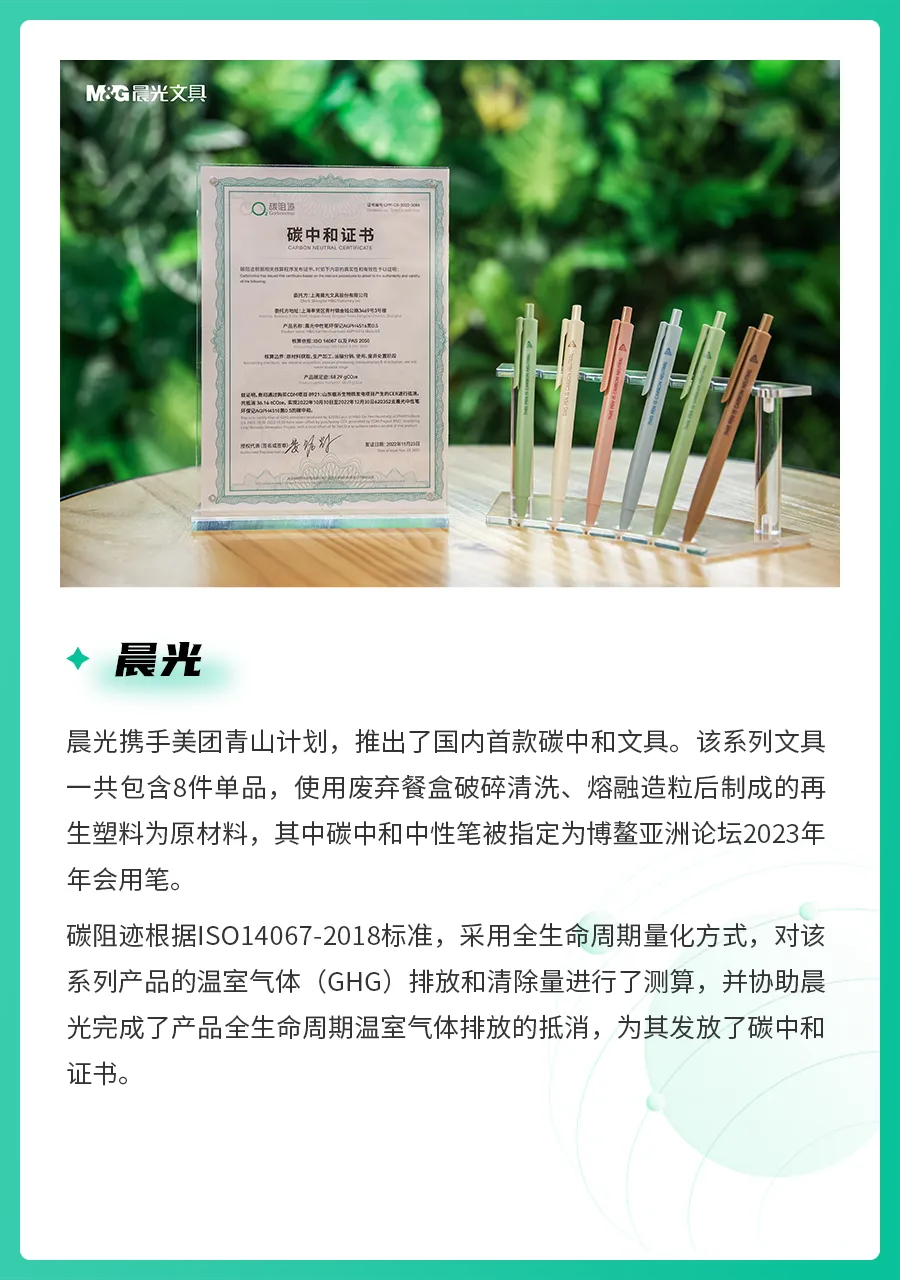
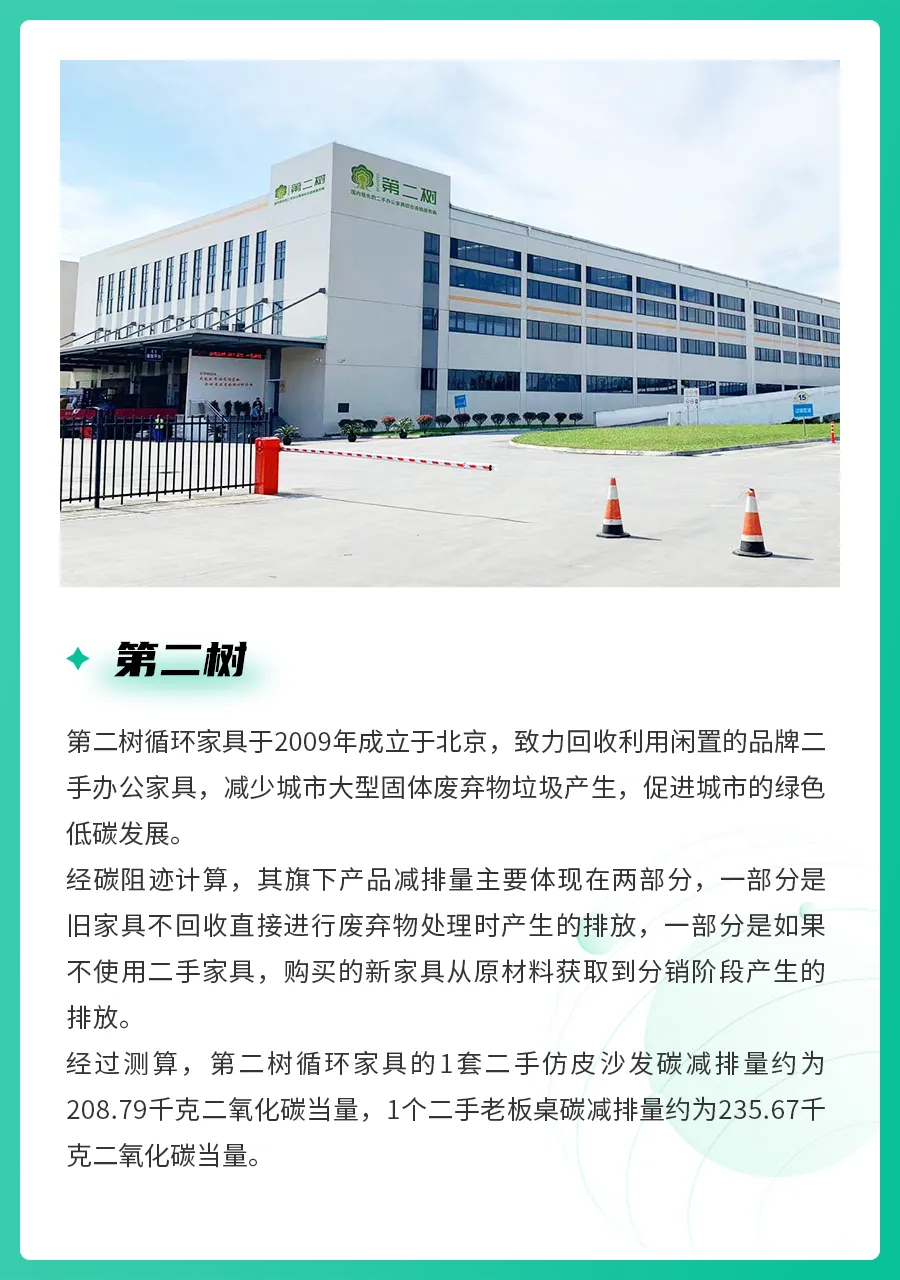
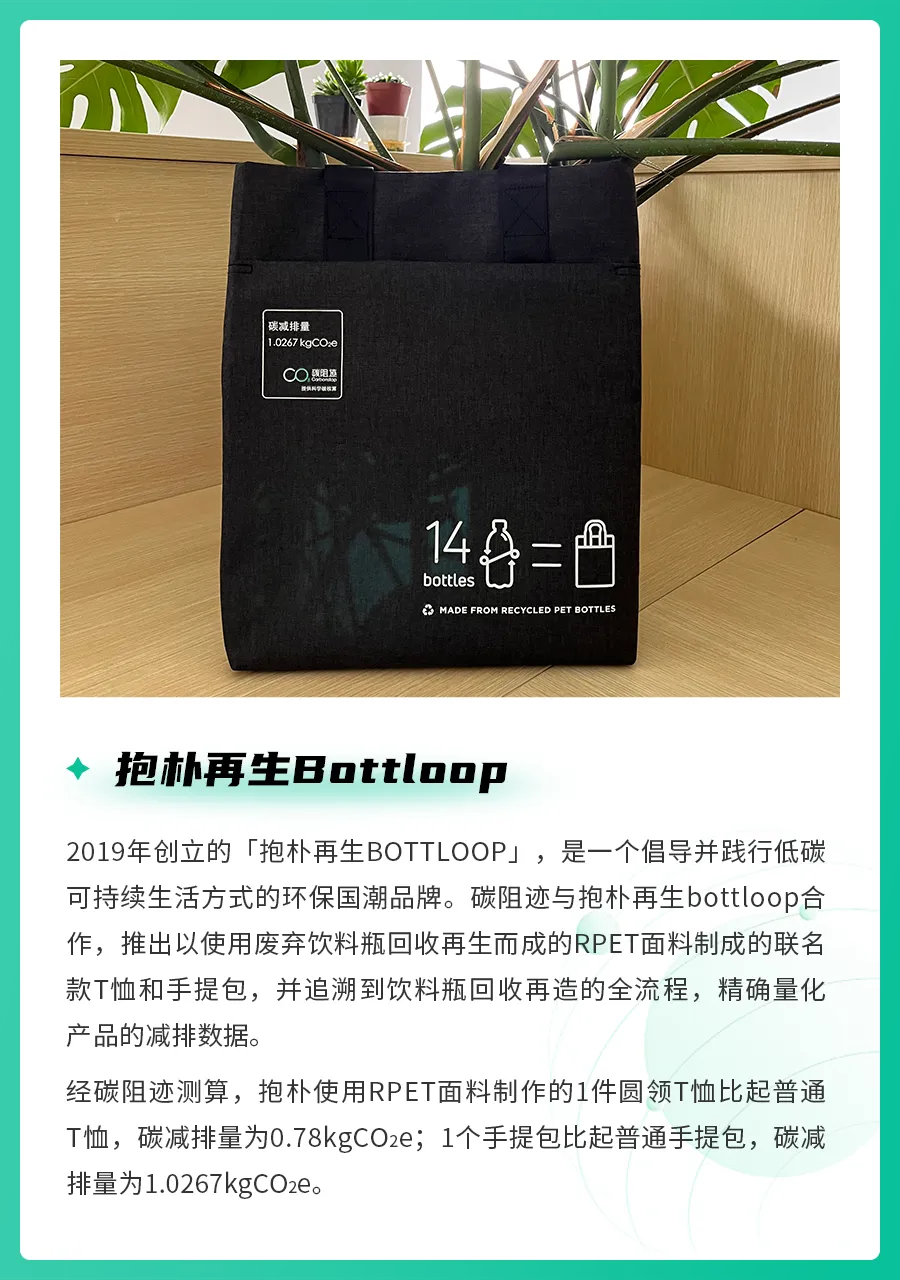
No development happens overnight, although there are still many issues to be resolved in China's path of product carbon footprints, as long as we start taking action and persistently advance in the right direction, we will eventually achieve “every product having a carbon footprint.”
A journey of a thousand miles begins with a single step. The development trajectory of product carbon footprints will surely have a profound impact on the global carbon neutrality process!


