


 1812
1812Since the appearance of the first multi-leaf plants on Earth, trees have continuously absorbed carbon dioxide and released oxygen through photosynthesis, helping maintain the balance of oxygen and carbon dioxide in the Earth's atmosphere. As nature's oldest and best carbon capture technology, forests play an irreplaceable role in mitigating global climate change.
Moreover, forests are habitats for numerous animals and plants, providing humans with abundant and valuable resources, silently contributing to the sustainable cycle of the entire Earth ecosystem.
01
The Most Economical Carbon Sink
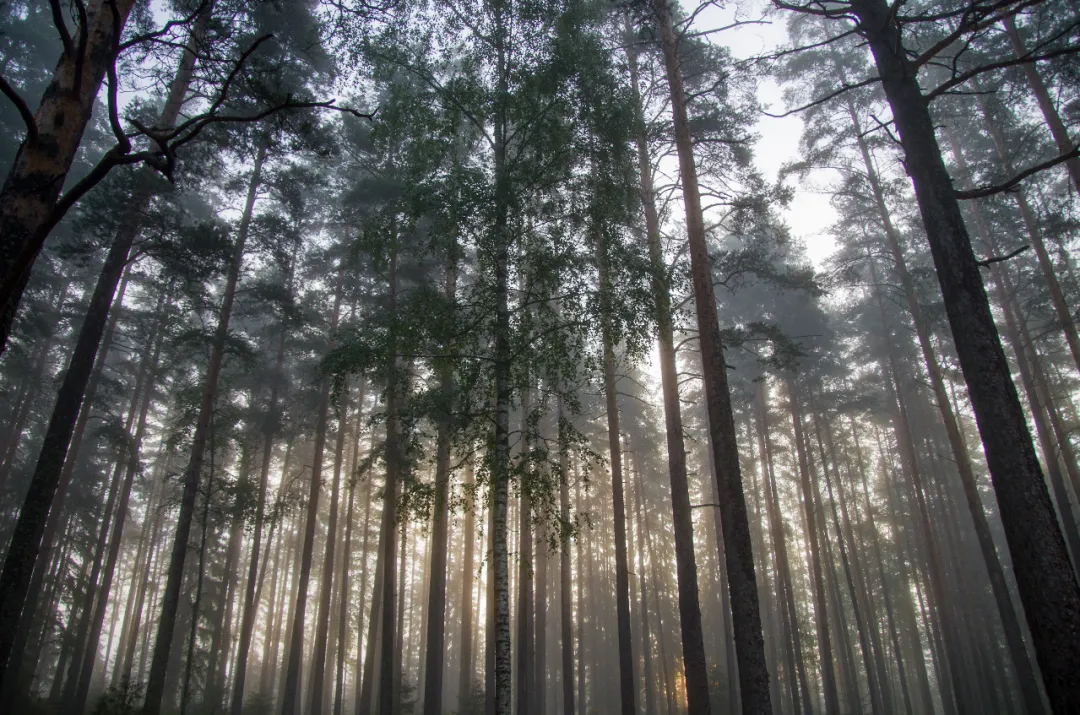
As the main body of terrestrial ecosystems, forests are known as the "lungs of the Earth," serving as our water reservoirs, food stores, and "carbon banks." They store carbon absorbed through photosynthesis in the fibers of trees, and a single tree absorbs carbon throughout its lifetime.
According to the results of the 2020 Global Forest Resources Assessment by the Food and Agriculture Organization of the United Nations, global forest carbon storage accounts for about 77% of the total vegetation carbon storage, and forest soil carbon storage accounts for about 39% of the total soil carbon storage.
Currently, the total carbon storage of China's forest vegetation has reached 9.2 billion tons, increasing by more than 200 million tons annually, equivalent to a carbon sink of 700 to 800 million tons, accounting for more than 80% of the country's total terrestrial carbon sink. Forest carbon sinks will play an increasingly important role in China's efforts to achieve its "dual carbon" strategic goals.
02
Green Mountains Turn into Gold Mines
What exactly is a carbon sink?
In simple terms, it refers to the process, activity, or mechanism of reducing carbon dioxide from the atmosphere. It is generally used to describe the amount or capacity of carbon dioxide absorbed and stored through human activities such as afforestation and vegetation restoration. It also includes the contributions of grasslands, wetlands, oceans, and other ecosystems to carbon absorption, as well as the maintenance of carbon storage and fixation in soils and permafrost.
Under the carbon market mechanism, when certain market entities exceed the specified standards for carbon emissions, they can purchase corresponding carbon sinks to offset the excess emissions. This demand has spurred the formation of the carbon sink trading market. Meanwhile, entities with forest carbon sink resources can actively cultivate tradable carbon sink resources through ecological restoration measures such as afforestation, thus participating in this market and ensuring effective supply of carbon sink resources.
Of course, not all "green mountains" can become tradable carbon sinks; they must meet certain conditions, i.e., comply with the requirements of specific methodologies within a particular system, and undergo a series of eligibility assessments to become qualified "gold mines."
With the release of the Management Measures for Voluntary Greenhouse Gas Emission Reduction Trading (Trial), the methodology for afforestation carbon sink greenhouse gas voluntary emission reduction projects, and the resumption of the National Certified Voluntary Emission Reduction (CCER) market, forestry carbon sinks, as one of the important project types of CCER, will usher in new opportunities for development. The new afforestation carbon sink methodology applies to various types of afforestation projects, including trees, bamboo, and shrubs, and has been optimized in terms of calculation methods, data authenticity, and conservatism. For example, the new methodology includes deductions for non-permanence risks of afforestation projects based on potential natural disasters and human damage risks.
03
Limitations of Carbon Sinks
Richard Black of the UK think tank Energy and Climate Intelligence Unit (ECIU) once stated: Although (China's) forest carbon sequestration capacity is stronger than expected, it should not be viewed as a 'passport to carbon neutrality.' Firstly, carbon absorption is not only used to offset carbon dioxide but also emissions of other greenhouse gases. Secondly, the carbon balance effect of China's forests may be affected by global climate change, as seen in wildfires in California, Australia, and Russia.
Last year, continuous wildfires in Canada triggered a storm in the global carbon sink market, turning carbon sinks into carbon sources instantly.
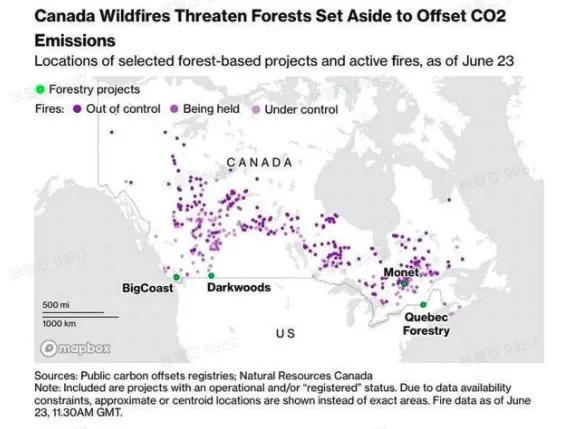
We see that the realization of forest carbon sink functions depends on the state of forest ecosystems, which is fraught with uncertainty. Management practices, natural disturbances, and climate disasters can all impact the ecosystem, leading to many variables in the actual carbon sequestration effects of forests, and even potential reversals.
Additionally, the international community has raised concerns about "double-counting" of carbon reduction credits in forestry carbon sinks. For example, if Company A sponsors an afforestation project in Country B and claims to use the project to offset consumer emissions, the reality may be that Country B also plans to use the same project for its own carbon offsetting. Such double-counting not only fails to achieve the expected reduction effects but also significantly undermines consumer confidence in forestry carbon sinks.
When companies urgently seek to achieve net-zero emission targets and want to offset their carbon footprint by purchasing large amounts of forestry carbon sinks without adequate scientific understanding, they risk accusations of "greenwashing."
Therefore, to avoid the risk of being accused of "greenwashing," we recommend that companies consider the authenticity, non-duplication, and long-term sustainability of projects when making choices. Companies must also recognize that forestry carbon sinks can only play a supplementary role in emission reduction and should focus on reducing fossil fuel emissions and achieving net-zero emissions through energy transition and industrial technological upgrades.
Today is World Forest Day. Carbonstop joins everyone in reacquainting ourselves with forests and carbon, and together, we breathe fresh air.
Reference Articles:
1.https://mp.weixin.qq.com/s/00ugHdPWnfBBcncmUqsD5A
2.https://zhuanlan.zhihu.com/p/603772513?utm_id=0
3.https://baijiahao.baidu.com/s?id=1780018697793388439&wfr=spider&for=pc


