


 605
605In recent years, growing concerns about food safety and environmental issues have led more people to choose organic foods.
According to the latest data from the "World Organic Agriculture Overview and Trends Forecast," the global retail sales of organic products reached nearly 125 billion euros in 2021, marking a 3.3% increase from the previous year.
However, consumers generally perceive organic products as being "more expensive" than conventional products. A report published by the Food and Agriculture Organization of the United Nations (FAO) in 2014 pointed out that when comparing the costs of organic and non-organic products, factors such as water usage, water pollution risks, and greenhouse gas emissions should be considered comprehensively.
So, are organic products really expensive?
01
"Organic" — The Art of "Waiting"
In the early 20th century, forward-thinking pioneers proposed the concept of organic agriculture based on human lifestyles, food, agricultural production models, and the relationship between human health and Earth's health. Organic agriculture is a production system that maintains soil, ecosystems, and human health, adhering to local ecological rhythms, biodiversity, and natural cycles without relying on inputs that cause adverse effects.
It embodies a sustainable production method, advocating harmony between humans and nature rather than artificial intervention. As a result, its yields are very low, and prices are higher.
Time Cost: Organic food production sites are selected with strict criteria, requiring that the land has not used chemical fertilizers, pesticides, or growth regulators for three years, and that fertility meets national organic standards.
Planting Cost: Organic food production cannot use chemical pesticides, herbicides, and other chemicals. To control pests and diseases, it often requires the use of more expensive organic fertilizers and physical methods such as manual weeding and pest control, all of which exceed the costs of conventional agriculture.
Loss Cost: Conventional vegetables rely on chemical fertilizers and growth hormones, which shorten the growth cycle and increase yield. In contrast, organic vegetables grow naturally, with longer growth cycles, higher loss rates, and lower yields.
Certification Cost: Conventional foods can be sold immediately after harvest, while organic foods require strict certification procedures and related fees.
Therefore, organic food is like a "time art filled with waiting," representing slow living in a fast-paced era. Behind it lies a philosophy of harmonious coexistence between humans and nature, and a commitment to a sustainable, low-carbon lifestyle.
A 2021 UN report on soil pollution showed that with the increase in industrial activities, urban waste, and unsustainable agricultural practices, pesticide use increased by 75% from 2000 to 2017. While global productivity continues to rise, these once fertile and rich soils are quietly degrading.
The production requirements for organic products call for a return to the original state of the land, when it nurtured all life.
02
"Organic" vs "Carbon Neutrality"
While organic vegetables are no longer unfamiliar, have you heard of carbon-neutral and organic mooncakes? Let's take a quick quiz to see how much you know about organic foods.
To regulate the production and management of organic products, the National Certification and Accreditation Administration and other superior agencies have formulated an organic product certification directory, stipulating that only products listed in the directory can obtain organic certification. In 2015, Zhenggu pushed for mooncakes to be included in the organic product certification directory.
Looking at the ingredient list of Zhenggu's carbon-neutral organic mooncakes, 95% of the ingredients are traceable to organic sources.
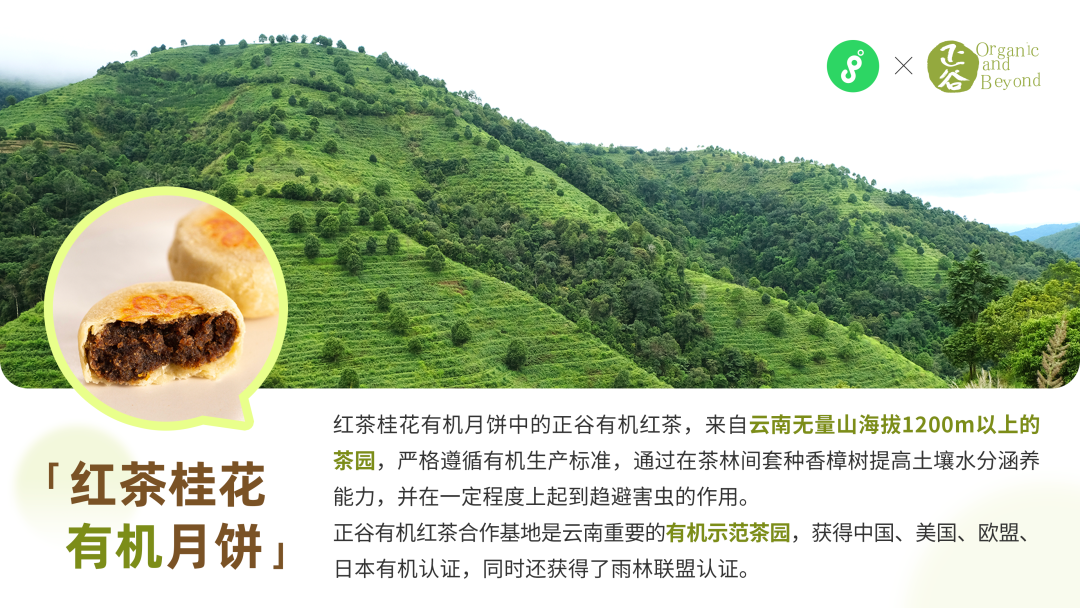
Besides the main filling ingredients, organic milk and Greek organic extra virgin olive oil used for seasoning also come from Zhenggu standard farms. No preservatives are added, ensuring a 30-day freshness period and maximizing the natural and fresh quality of Zhenggu's organic mooncakes. Even the stamps on the pastry skins use natural pigments derived from the annatto tree, with no preservatives added.
2023 marks the ninth year that Zhenggu has been producing organic mooncakes.
Last year, Zhenggu collaborated with Carbonstop to achieve net-zero emissions from production to delivery of the organic mooncakes, moving from organic to organic plus zero carbon.
In fact, the concepts of organic and carbon neutrality are highly aligned. Organic farming emphasizes environmentally friendly production methods and the importance of harmony between humans and nature, aligning with the goals of carbon neutrality.
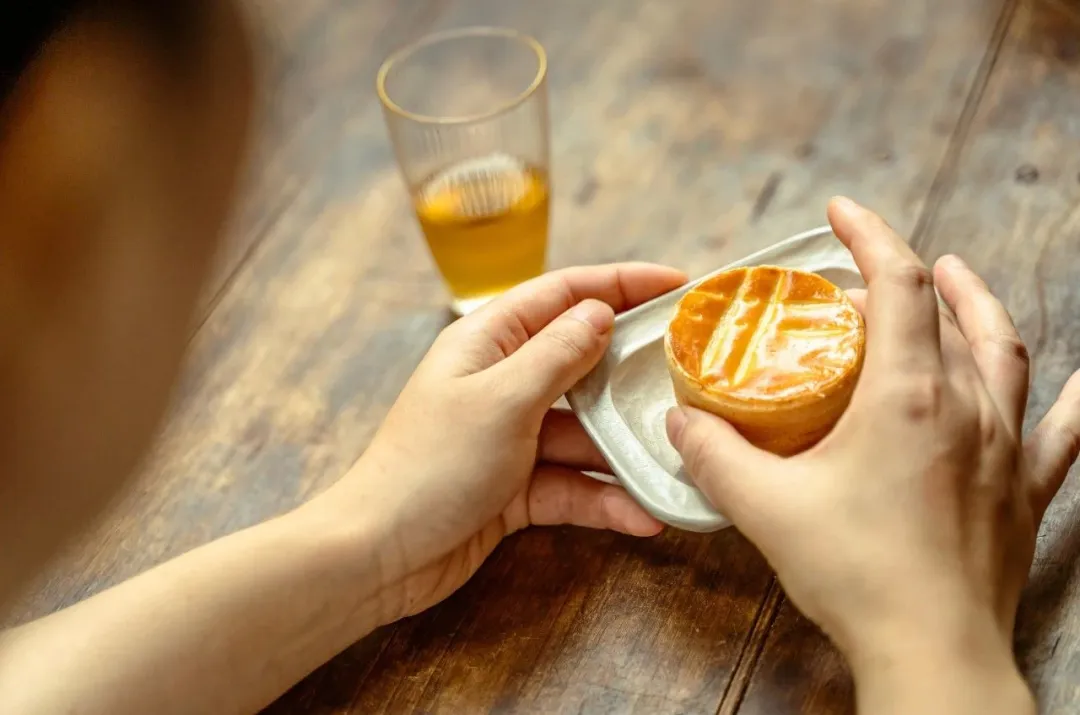
From ingredient production to food processing, packaging, Zhenggu's mooncakes adhere to organic and sustainable principles, minimizing the negative impact of production and processing on the environment at every step.
In terms of origin, sustainable farming methods replace conventional ones, reducing ecological damage and enhancing soil fertility and vegetation carbon sequestration. For packaging, Zhenggu's organic mooncakes use paulownia wood, which is lightweight and recyclable, and traditional mortise-and-tenon joints reduce glue usage and pollution. They also use FSC-certified paper and soy-based ink to reduce carbon emissions.

According to Carbonstop's calculations, the average emission of one Zhenggu organic mooncake (60g per piece) is approximately 160g CO2e (carbon dioxide equivalent), and the average emission reduction of one box of Zhenggu carbon-neutral organic mooncakes (9 pieces per box) can reach 1440g CO2e. This means that sharing one box of Zhenggu carbon-neutral organic mooncakes is equivalent to planting 2.5-4.5 trees for the Earth.
Therefore, purchasing organic foods is also a way for consumers to practice low-carbon living and externalize the concept of sustainable consumption.
03
Connecting Our Shared Destiny with the Earth
Behind organic ingredients lies a deeper connection to the vast land: animal welfare ensures good living conditions for cattle, fair trade guarantees fair income for farmers, and sustainable consumption creates a virtuous cycle of production and use...
With the Mid-Autumn Festival approaching, have you prepared your gift boxes of mooncakes to convey your thoughts?
Today, the variety of mooncake gift boxes is overwhelming, but the types of mooncakes we truly want to eat are becoming fewer, and mooncake waste is increasingly severe. In this rapidly developing era, consumers are attracted by various flavors and beautifully packaged mooncake gift boxes, making it difficult to discover the truly heartfelt and slowly crafted mooncakes.

Zhenggu's carbon-neutral organic mooncakes feature ingredients sourced from Zhenggu's standard global cooperative farms: 85% cocoa content dark chocolate made from cacao fruits harvested from the Amazon tributary in Peru, organic black tea from high-altitude tea gardens above 1200 meters in Yunnan, and wild black truffles from deep within the primeval forests of Yunnan...
Based on these ingredients, Zhenggu adheres to the principle of "organic ingredients, natural taste" in product development, aiming to preserve the natural flavors of the ingredients and avoid excessive seasoning to balance taste and health. The mooncakes are patiently baked through slow processes.
Each Zhenggu organic mooncake is certified by ECOCERT CHINA and marked with a unique traceability code for China Organic Certification, ensuring product traceability.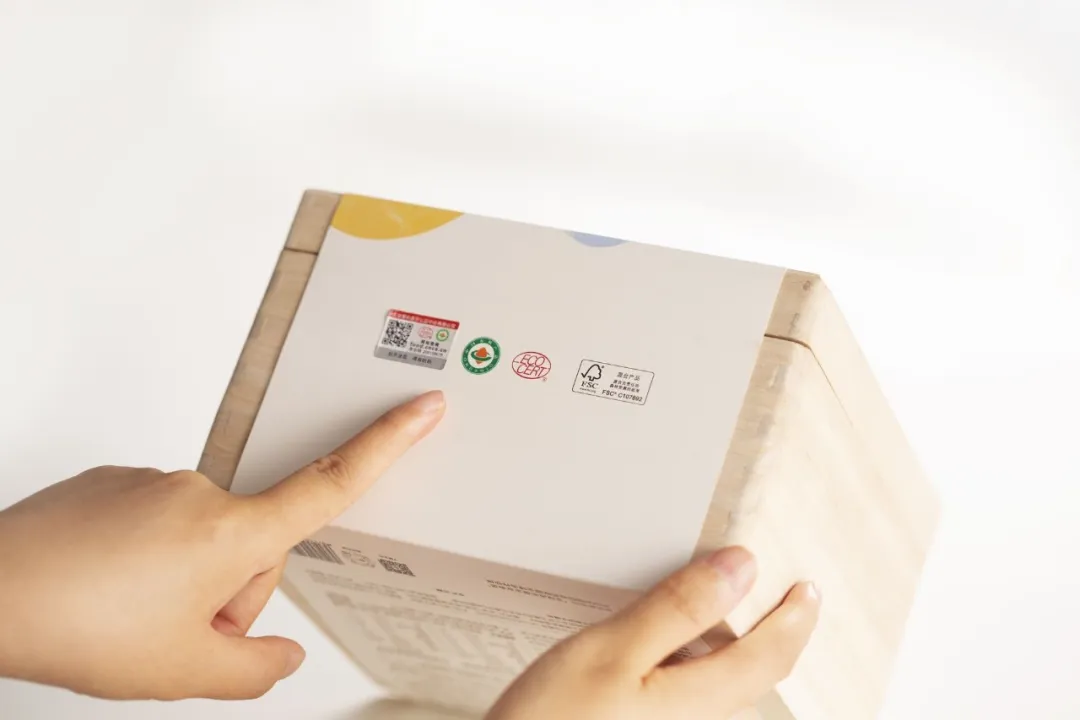
The connection between people is as pure as nature, so they eschew complex and overly packaged gift-giving methods, choosing simplicity and sincerity to convey holiday sentiments. They embody a simple and beautiful aesthetic of harmony between humans and nature and a green, sustainable lifestyle.
Zhenggu's carbon-neutral organic mooncakes connect us to the Earth's shared destiny through "natural organic ingredients" and a "green, low-carbon philosophy."
Compared to expensive mooncake gift boxes with excessive packaging, these green mooncakes may be a better choice in this low-carbon era.
If you don't want to send mooncake gift boxes, we also offer organic tea and organic coffee gift boxes, providing more sustainable choices for conveying your sentiments.
A Mid-Autumn gift, a low-carbon investment, allows you to enjoy natural delicacies while connecting with others far and wide for the sake of our planet.


