


 1409
1409OWhat is OATLY? It is a popular oat milk brand from Sweden, known as the first oat milk brand to label company carbon emissions on its packaging. It has paired with coffee to spark a trend of "oat," and has been widely embraced by consumers for its health benefits and low-carbon environmental friendliness. On May 20, 2021, OATLY listed on NASDAQ, becoming the "first stock of oat milk."
Carbonstop's 2022 Consumer Enterprise Special Session invited Lin Chunyan, Director of Sustainability for OATLY Asia, to engage in a dialogue with Carbonstop Senior Consultant Humei Ling and Xiaofei Lu, themed around "OATLY's Path to Sustainability." This dialogue provided reference cases and experiences for low-carbon transitions across industries.
01
Why Do Companies Need to Transition to Sustainable Development?
Over time, high temperatures have become frequent, storms have become more frequent and intense, and climate change is increasingly affecting our lives, especially the well-being of future generations. Sustainable development goals are precisely a solution to these issues.
As a values-driven company, OATLY deeply understood the importance of sustainability from the very beginning of its brand establishment. OATLY believes that addressing the challenges of climate change, shifting towards a balanced diet rich in plant-based foods not only brings significant common benefits to human health but also helps reduce the climate footprint and assists people in adapting to a changing world.
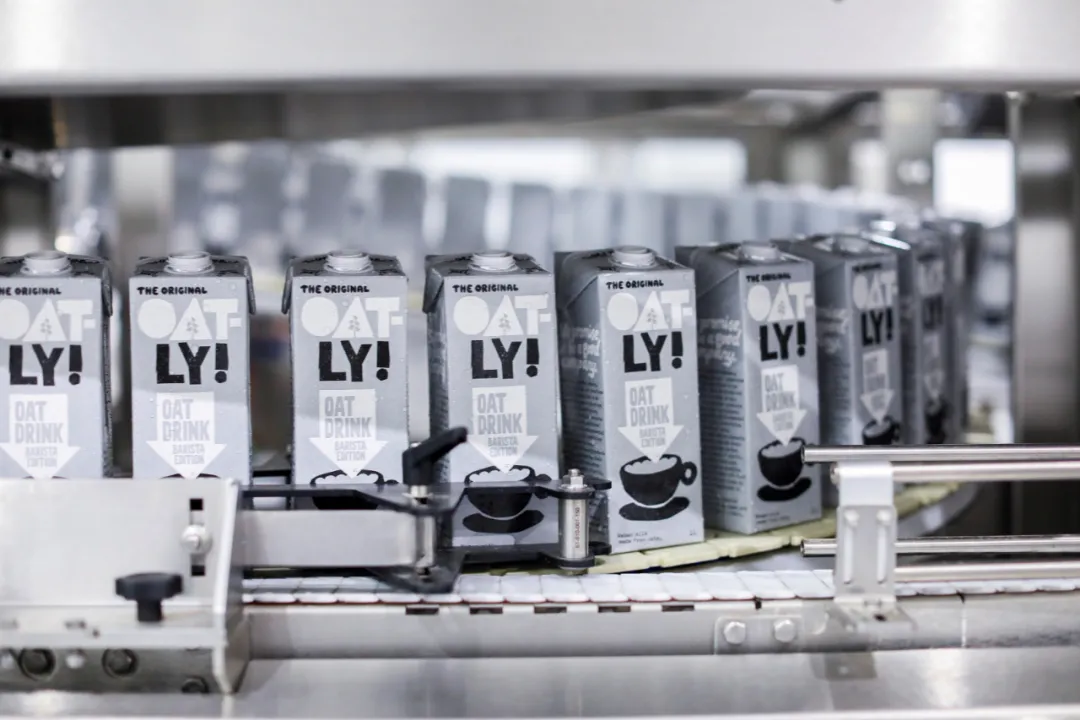
Image Source: Internet
From raw material cultivation, transportation, and packaging to energy consumption and production facility management, OATLY continuously tracks environmental impact data at every stage and publishes benchmarking sustainability reports based on this transparent data to share insights with the public.
"We are not just paying for the product, but also contributing to the future of our next generation and the planet," Lin Chunyan frankly stated.
02
The Right Way to Approach Sustainable Development
OATLY has set out its 2029 Sustainability Goals, which mainly include driving the transformation of food systems, setting an example for future companies, and empowering the plant-based revolution in three key areas.
The first step in OATLY's journey to achieve its sustainability goals began with "disclosing the carbon footprint." It labels the carbon footprint generated from the process of raw material cultivation to product placement (from farm to store) directly on the product packaging, allowing consumers to intuitively understand the environmental impact of their consumption behavior. Besides the product, OATLY also publicly discloses the company's carbon emissions and commits to reducing the climate footprint of each liter of product by 70% by 2029, using 2019 as the baseline;
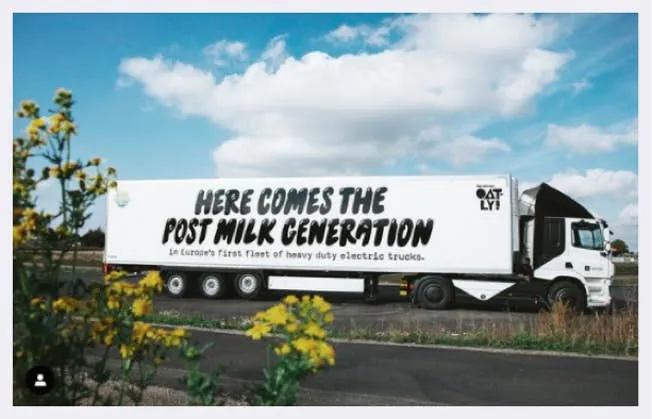
Image Source: Internet
Additionally, OATLY has implemented corresponding emission reduction measures. In local transportation, OATLY has started using electric vehicles. It also plans to establish distribution centers to reduce transportation frequency. 87% of OATLY's product packaging comes from recycled materials, reducing the climate impact by 11%.
03
When Sustainable Development Meets Commercial Disconnection, What Can Be Done?
For a long time, most companies have focused on maximizing shareholder value and viewed sustainability as a cost and additional burden. Regarding this, Lin Chunyan noted that when companies face disconnections between commercialization and sustainable development, they must not only pay attention to the current situation but also clearly see where the direction of the industry and the world is heading.
"Only by redefining the 'plant protein' category, promoting a new lifestyle, keeping up with the pace of consumption upgrades in China, and leading trends, can we possibly survive," Lin Chunyan said.
As a leader in the plant-based milk sector, OATLY is fully aware that only by developing the category can the brand exist. When you connect success with the future, the dividends of sustainability will naturally follow.
04
Guest Dialogue Session
Humei Ling: Why did OATLY decide to calculate the carbon footprint of its products?
Lin Chunyan: Our brand was born in Sweden, where environmentalism is deeply ingrained in the culture. The public awareness and industry data foundation are relatively solid. Before deciding to make oat milk, we had already considered environmental factors, so we calculated the carbon emissions of our products when producing oat milk.
Humei Ling: OATLY has set a 2029 sustainability goal. Have you encountered any challenges in achieving this goal, and can you share them?
Lin Chunyan: First, I must admit that the 2029 goal is very ambitious and requires a lot of determination and courage. In the specific implementation, there are many challenges. For example, our oat factory in Singapore is new, and in the first two years, the level of sustainability achieved is still under significant pressure compared to the global average. However, under the backdrop of carbon neutrality in China, sustainable development has received strong support from local governments. I believe that after the factory operates smoothly, we will make rapid progress.
Humei Ling: What benefits does publishing the product's carbon footprint bring to OATLY?
Lin Chunyan: On one hand, it is about practicing our commitment to sustainability. Consumers like OATLY because of its sincerity and consistency between words and actions. Therefore, we must do a thorough job with carbon footprint calculations. On the other hand, due to consumer trust and affection for our brand, we believe that sustainability can feed back into business.
Humei Ling: Will OATLY consider carbon neutrality for its products in the future?
Lin Chunyan: Carbon neutrality is undoubtedly the right goal from this perspective. However, in terms of achieving this goal, OATLY is more concerned with the appropriate methods. We focus on how to reduce emissions at every stage, whether it is raw material procurement, processing, transportation, or distribution, rather than direct reduction.
Humei Ling: From an industry perspective, do you think that product carbon footprint and product carbon neutrality will become a "required course" in the food industry?
Lin Chunyan: I think "required course" is a great term. From a long-term perspective, this is a correct view. However, each company has its own specific circumstances, and sustainability needs to be approached in a commercially viable way to ensure its longevity. We respect each company's choice of carbon neutrality direction, timeline, and specific strategies.
Humei Ling: Recently, KFC launched a series of zero-carbon products, such as zero-carbon rice balls and zero-carbon oat milk. They achieved carbon neutrality for their products by planting carbon-neutral forests in Yunnan. Do you think KFC's approach to reducing emissions can serve as a reference for industry sustainability?
Lin Chunyan: I think their initiative is quite innovative, being the first zero-carbon product in their category. By planting trees in Yunnan, they achieved product carbon neutrality through a very meaningful activity. Like OATLY, they emphasize sincere and equal communication with consumers and integrate sustainability concepts into real consumer behaviors. These brands are the main forces in the sustainability industry, and their actions can influence society.
Xiaofei Lu: If OATLY were to achieve carbon neutrality for its products, which approach would you prioritize?
Lin Chunyan: First, reflection is essential. This means that companies need to transparently and accurately record every production step, which is the foundation for improvement. Just like Carbonstop, using a scientific method to measure the environmental impact of different production stages is crucial.
Second, regarding the timing and methods of improvement, companies sometimes face a balance between commercial and sustainable development. Each company has different standards for the commercial value of sustainability. Therefore, companies need to consider their actual situations to ensure that their sustainability efforts are sustainable in the long run.


