


![[Carbonstop original] Low carbon big data - who gets the data wins the world?](/_next/image?url=https%3A%2F%2Ffactor-file.carbonstop.com%2Ffactor-test%2F6d2894fb18bd4d068410d42867a14b22397.png&w=1920&q=75)
 1145
1145Data is the new oil and the new economic driver of our era. Through data, we can target improvements in the overall efficiency of societal operations, efficiently solve social and environmental problems. Digital technology is transforming the world at an unprecedented pace. It has changed how people communicate, live, and work, as well as our social and economic development.
Why Do We Need Low-Carbon Big Data?
In the field of low-carbon and sustainable development, different stakeholders have varying data requirements.
For governments (including local governments), to set scientific emission reduction targets and implement strategies, they need comprehensive data to support decision-making, such as the carbon emission status and growth trends of enterprises within their jurisdiction.
Enterprises need historical industry and internal data for benchmarking to reduce carbon emissions at the lowest cost and set science-based targets.
The public needs sufficient product carbon footprint information to make informed purchasing decisions for low-carbon products.
The Application Scope of Low-Carbon Big Data
I wrote an article about low-carbon big data two years ago, discussing some application scenarios, such as:
1. Big data supports government selection of verification agencies. From my observations over the past two years, despite many issues in the carbon trading verification market, it is gradually maturing with noticeable improvements. Verification agency information has become more transparent, and a few leading verification agencies dominate the market in various provinces and cities, reducing the likelihood of local irregularities. Local governments now have more data to evaluate the qualifications, history, and capabilities of verification agencies, making decision-making easier.
2. Big data provides a foundation for controlled-emission enterprises to benchmark against industry standards and identify carbon reduction opportunities.
Everyone is concerned about how enterprises should reduce emissions, but no one tells them how to do it. Without adequate data, enterprises' efforts to reduce emissions are aimless, and the results are predictable. Through big data analysis, enterprises can discover their carbon reduction potential and costs, choosing the most suitable path for carbon reduction or compliance, which is the best strategy.
UNESCO's Science-Policy-Business Forum on Environmental Big Data
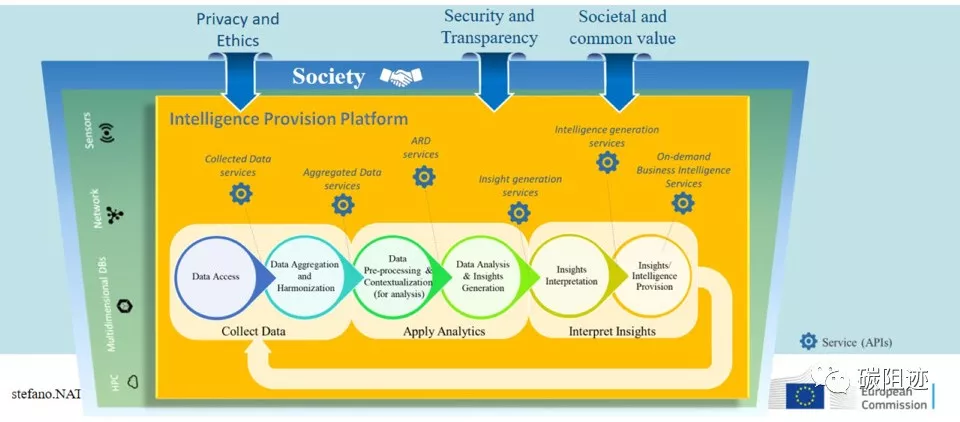
Recently, I attended a UNESCO-hosted forum on environmental data, bringing together scientists, policymakers, and businesses. The main goal was to harness global efforts to develop an open-source, multi-stakeholder, UN-led digital platform to find solutions to environmental problems and contribute to achieving the SDGs and other international environmental goals (such as the Paris Agreement). Data has become an important topic on the international stage, and using data to find reasonable solutions to environmental problems is becoming a common approach for all stakeholders.
(Group discussion on how data can drive the UN SDG goals)
I was particularly interested in the progress and direction of big data among commercial giants. Companies like Google and IBM shared how they use data to solve various environmental issues at national and regional levels, such as monitoring lakes and forests through satellites and monitoring stations, addressing many universal problems with broad application potential. Professor Fang Chen from the Institute of Remote Sensing and Digital Earth at the Chinese Academy of Sciences also shared China's progress in using satellites to monitor regional environmental pollution. Some key takeaways and reflections include:
1. We now have access to vast amounts of data, with increasingly diverse monitoring methods.
Satellites, sensors, and other devices generate data continuously from different countries, landscapes, equipment, and individuals. Governments, scientific institutions, and private sectors worldwide have taken extensive measures to collect data.
2. Processing massive amounts of data presents new challenges.
Excessive data, especially unstructured data, is becoming a new headache for the scientific and business communities. Extracting valuable information from this data and translating it into language that society can understand is a common challenge.
3. Data should be developed based on societal and human needs (not driven by technology).
Data serves our needs, and in the context of sustainability, it aims to solve environmental problems.
Using data, whether big or small, blockchain, or AI, our goal is to reduce carbon footprints and improve the efficiency of human systems;
Using AI to design circular economies, not for nanosecond-level stock market trading;
Using big data to understand the complexity of human motivation, stress, state, influence, and reactions, not to alter the course of democracy.
This was the main theme of the conference.
4. Data is important, but action and good case studies are even more crucial.
Data is the foundation, but our goal is to solve environmental problems, which requires taking action based on data, not just analyzing it. Currently, there is too much research and theory but too little action. The theme of the September New York Climate Summit was also a call for actions.
I had the opportunity to share excellent Chinese corporate case studies at the UNSPBF forum, which received recognition and praise from the UN and many countries.

Challenges of Low-Carbon Big Data
The application of big data in the low-carbon environment is a trend, but experts at the UNSPBF forum also highlighted challenges. For example:
- Issues and challenges related to data accessibility, quality, access permissions, and sharing of spatial information
- How to manage these data, including strategies for opening and closing data streams
- The reliability of artificial intelligence
- Data reuse
- Data privacy
Where Can We Find Low-Carbon Big Data?
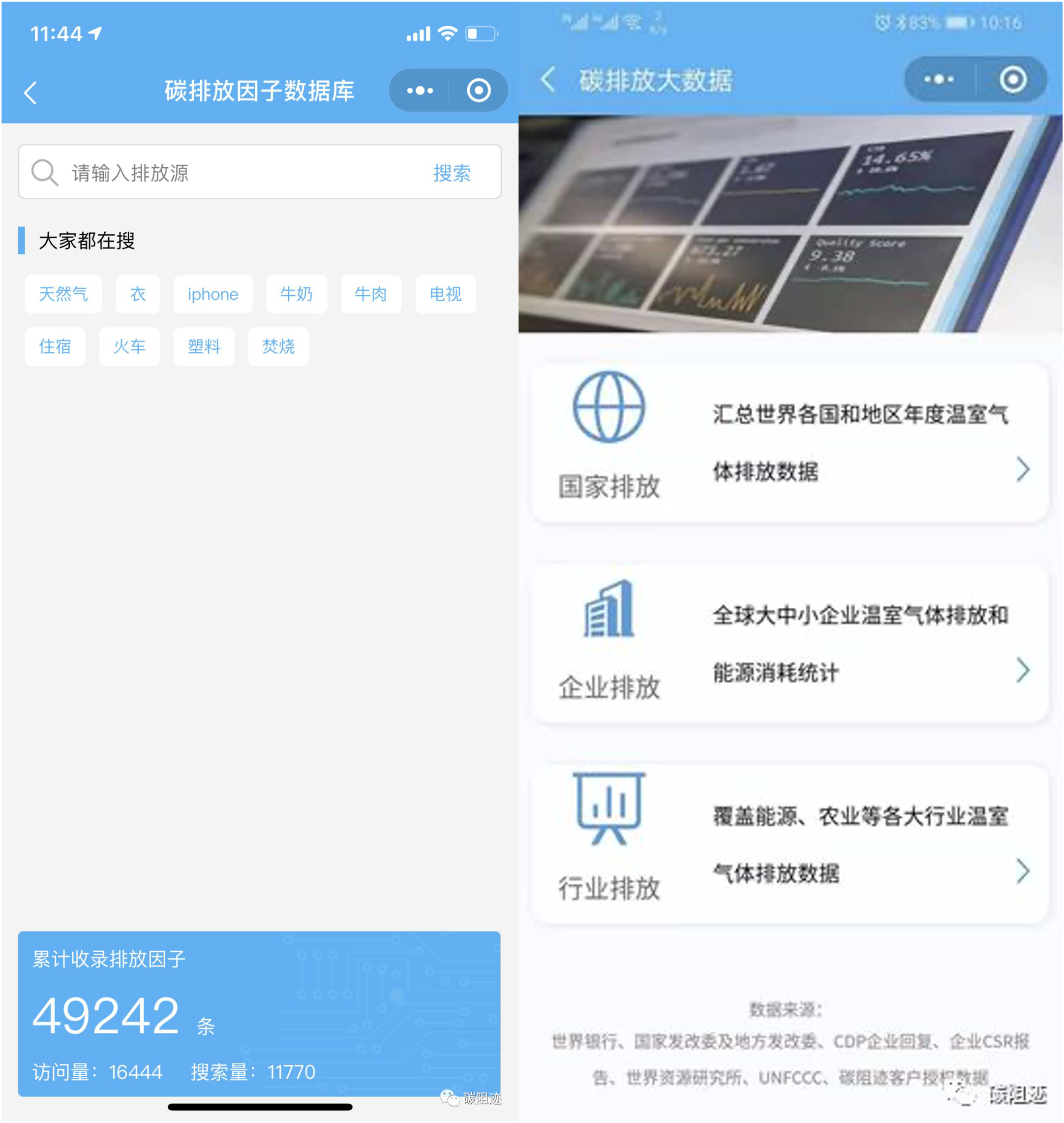
In China, few institutions are engaged in low-carbon big data, and those that do often hesitate to share or open-source their data. This is the current situation in China's low-carbon big data sector, where data is essential for implementing low-carbon initiatives. Carbonstop took the lead by establishing a dedicated data development team. In recent years, we have focused on accumulating data in the low-carbon field and sharing it through the "Carbon Intelligence Hub" mini-program platform, promoting industry-wide capability improvements and empowering enterprises and governments to advance carbon reduction efforts effectively.
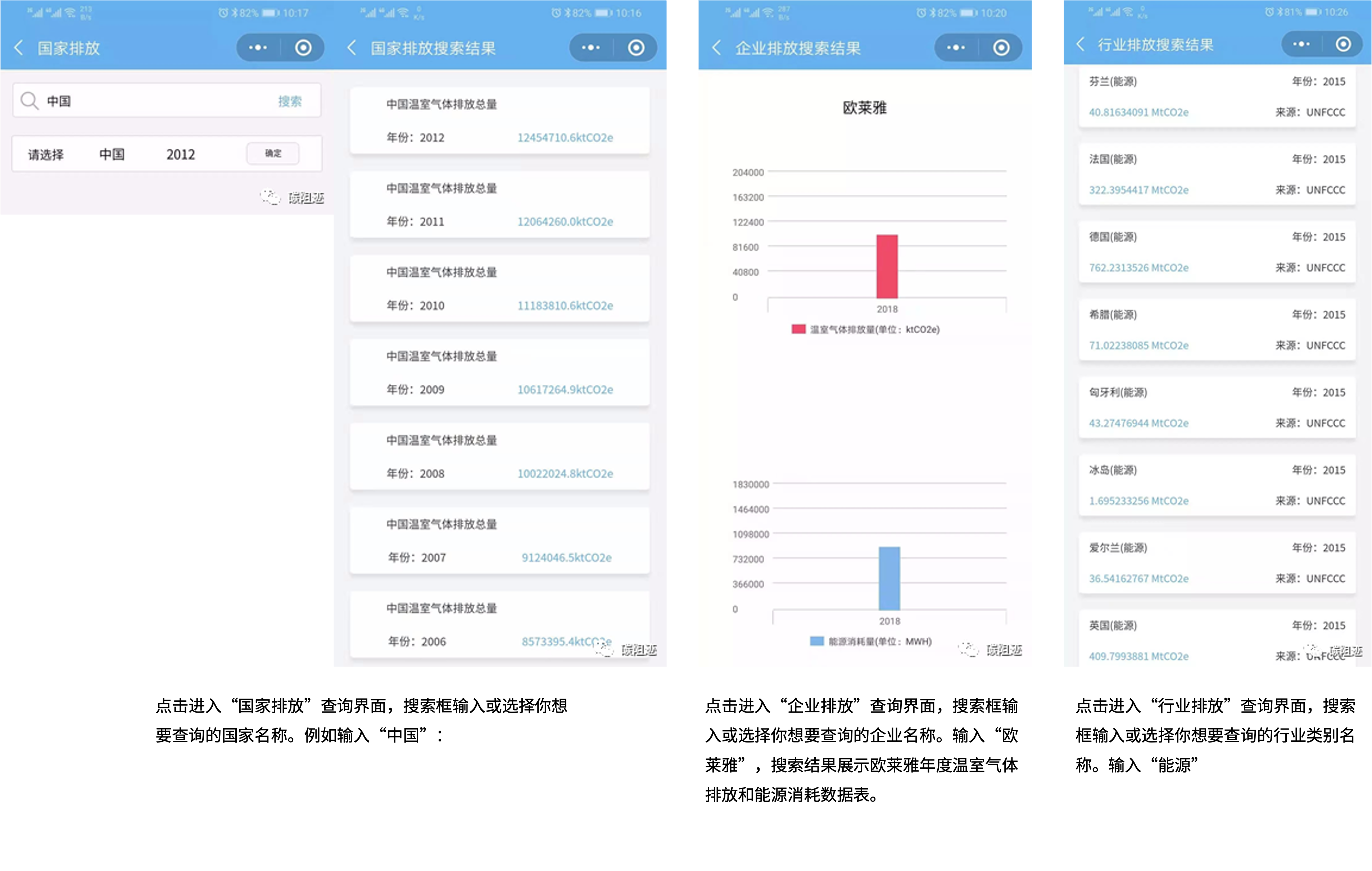
Following the carbon footprint calculator (covering daily life scenarios like clothing, food, housing, transportation, and consumption), the carbon emission factor database (with nearly 50,000 emission factors covering over 200 countries), and the carbon trading quota simulation tool (for power, cement, and electrolytic aluminum industries), Carbonstop has launched a carbon emission big data platform. This platform offers data queries for national, enterprise, and industry categories, summarizing annual greenhouse gas emissions for countries and regions worldwide and covering energy, agriculture, industry, land use, and waste management sectors. Currently, it includes 3,432 national emission records, 1,794 enterprise records, and 11,064 industry records, with continuous updates.
 Most current big data is still at the statistical level, with weak applications and interactions. I believe the most powerful data should directly impact individuals, providing relevant, impactful data that reflects their lives and health. For example, dynamic data showing the effects of PM2.5 on health (e.g., how long it takes for a healthy person to develop illness, lung cancer, or reduced lifespan in a PM2.5-polluted environment) could raise public awareness. Although this approach might seem radical and could cause social stability concerns, it is essential to acknowledge the problem to solve it. Engaging everyone in action is more efficient than the slow, long-term process of policy formulation.


