


 2626
2626Article source: 36Kr, Author: Qiu Xiaofen
Whenever the cries of a "capital winter" grow louder, a company's ability to perform countercyclically becomes even more critical.
On August 1st, Carbonstop, a carbon emission management software and consulting solutions provider, completed its Series B financing round worth hundreds of millions of RMB, led by Sequoia China, with continued investment from existing shareholders GL Ventures and Matrix Partners. This is the second financing round Carbonstop has completed in just over a year.
In May 2021, when GL Ventures led the A-round of financing, Carbonstop's founder and CEO, Yan Luhui, received over a thousand missed calls on his phone that day; some highly proactive investment institutions even had several executives visit in person with their company seals.
At that time, it was the first funding round for Carbonstop after ten years of establishment, as Yan Luhui "hit" the turning point of the industry due to the "peak carbon emissions, carbon neutrality" goals. Carbonstop became a star enterprise in the dual-carbon field.
A year later, despite being overshadowed by the pandemic, macroeconomic factors, and other industries' winter, investment institutions still have a strong enthusiasm for the carbon neutrality sector. 36Carbon learned that many prominent institutions are now "All in on New Energy/Double Carbon," with some having up to a dozen investors focused solely on the new energy sector.
It is not surprising that Carbonstop stands out among carbon neutrality startups. As one of the earliest companies in China to manage carbon emissions, Carbonstop has become a carbon-neutral service provider for over 1,200 clients, including Baidu, Alibaba, Tencent, ByteDance, Meituan, and JD.com, offering services such as SaaS products, consulting, and training.
The industry is rapidly developing, and besides leading in financing, Carbonstop believes that understanding policies and customers needs to be quickly iterated.
As a goal, "carbon neutrality" is undoubtedly important, but how to achieve this goal requires enterprises to adapt based on their own circumstances. For example, small companies may visibly reduce their investment in carbon reduction to ensure survival, while large companies that play a leading role should still commit to carbon neutrality as a long-term decision, avoiding the pitfalls of "campaign-style carbon reduction."
Smart Chinese companies never miss out on business opportunities. Many domestic companies have already transformed carbon reduction from a cost center into a module that can generate revenue.
Yan Luhui was impressed by a major cosmetics supplier who has been a partner for nearly a decade. Due to its superior CDP rating (a globally recognized ESG rating system), the supplier won additional orders from the brand, "exchanging a few hundred thousand yuan in services for a new order worth tens of millions," said Yan Luhui.

Founder & CEO of Carbonstop, Yan Luhui
Compared to foreign giants that often propose "historical carbon neutrality," Chinese internet companies' carbon neutrality targets appear more moderate, generally aligning with the year 2030, which includes many Chinese characteristics and innovations.
For instance, scope three emissions (indirect greenhouse gas emissions from upstream and downstream activities) are often overlooked because they are not directly controlled by the company. However, this area has received widespread attention in China. Alibaba, for example, introduced the concept of "scope 3+," aiming to reduce 52.9 million tons of carbon by 2020 and further committing to reducing 1.5 billion tons of carbon from its ecosystem over 15 years—approximately one-seventh of China's annual carbon emissions.
As a manufacturing and internet powerhouse, China has a vast and intertwined industrial system, providing fertile ground for Chinese-style carbon neutrality innovation.
Yan Luhui noted that Chinese internet companies do not simply pursue absolute dates for achieving carbon neutrality but consider ecological cooperation more, such as practicing innovative models within zero-carbon parks or driving more upstream and downstream companies and even users to reduce carbon.
Chinese companies aiming for carbon neutrality have gradually found a path better suited to the local context and smarter, two years after the announcement of the dual-carbon targets.
Below is an edited transcript of the interview between 36Carbon and Carbonstop's Founder and CEO, Yan Luhui:
01 The Myth of Campaign-Style Carbon Reduction
Q: What misconceptions about carbon neutrality exist within the industry?
Yan Luhui: Last year, there was a rush towards campaign-style carbon reduction without clear execution plans. Companies followed others blindly without considering economic feasibility or operational practicality. Some achieved carbon neutrality purely by purchasing carbon credits or offsets, which appeared to be greenwashing.
Most domestic companies lack knowledge about how to achieve carbon neutrality, but ignorance comes in two forms: unconscious mistakes and intentional errors. We've encountered very aggressive cases, like a company claiming to reduce 10 billion tons of carbon, which is roughly equivalent to China's total annual emissions.
This situation requires regulation, not necessarily from the government but also from civil organizations, NGOs, and foundations. For example, if one company claims to achieve carbon neutrality by 2030 and another by 2029, without regard for costs or feasibility, there's no mechanism to check whether these promises will be fulfilled.
Q: If companies treat carbon reduction merely as a cost center, they will lack motivation. How can it be transformed into a profit center?
Yan Luhui: If carbon neutrality relies solely on CCERs or purchasing green electricity, it will remain a cost center.
Companies we work with are thinking about how to enhance their competitiveness through carbon reduction. For instance, Apple invests in wind, solar, and forestry projects, achieving an annual return of around 8%, which is very ideal, even higher than bank interest rates. This turns a cost item into a revenue generator.
For most small and medium-sized non-controlled emission companies, this is also possible. One of our well-known cosmetic brand suppliers, after nearly a decade of cooperation, gained additional orders worth hundreds of millions due to its leading carbon disclosure rating—using our consulting services worth a few hundred thousand yuan to earn hundreds of millions in new orders. Companies are definitely willing to do this.
Environmental or carbon emissions considerations cannot be the primary basis for business decisions; cost-effectiveness remains the most crucial factor. However, the importance of low carbon is increasing. For example, if two companies compete with similar cost-effectiveness, the more environmentally friendly one will be preferred by customers.
Q: What drives companies to reduce emissions?
Yan Luhui: There are three core drivers: first, government mandates; second, brand value, such as Ant Forest's user engagement; and third, supply chain pressure.
02 How Chinese Companies Innovate in Carbon Neutrality?
Q: What are the top concerns of CEOs of large internet companies regarding carbon emissions?
Yan Luhui: First, compliance with national policies or requirements from investors and customers. Second, they also look at competitors and want to set differentiated goals to create innovation points.
Q: What are the innovations in carbon neutrality by Chinese companies?
Yan Luhui: Chinese companies may not focus on "absolute emission reductions" because most are in a rapid growth phase. Instead, they emphasize mobilizing users for emission reductions, given China's larger user base. Ant Forest is a good example.
Moreover, Chinese companies take more actions in their supply chains. As a manufacturing powerhouse, China has innovations like zero-carbon parks. For instance, Alibaba's "scope 3+" concept is an innovation not seen abroad.
Q: Has the willingness of companies to manage carbon neutrality changed this year?
Yan Luhui: Various factors have impacted this, including the economy and the pandemic.
Smaller companies might delay their efforts, but large companies have minimal changes in their willingness. They view this as a long-term commitment and are willing to invest significant resources.
Q: What types of industries were the main growth areas for clients in the first half of the year?
Yan Luhui: We focus on four industries: technology, consumer goods, finance, and energy, all of which are experiencing high growth. In finance, we mainly target leading funds. For example, a top-tier fund last year had a small carbon footprint itself, but needed to help its hundreds of portfolio companies achieve carbon neutrality. We are now helping them build a platform to manage the carbon emissions of those companies.
Q: How has your business performed this year?
Yan Luhui: Last year, we saw threefold growth compared to 2020; in the first half of this year, we nearly tripled our growth from the same period last year, maintaining business resilience despite the challenging environment.
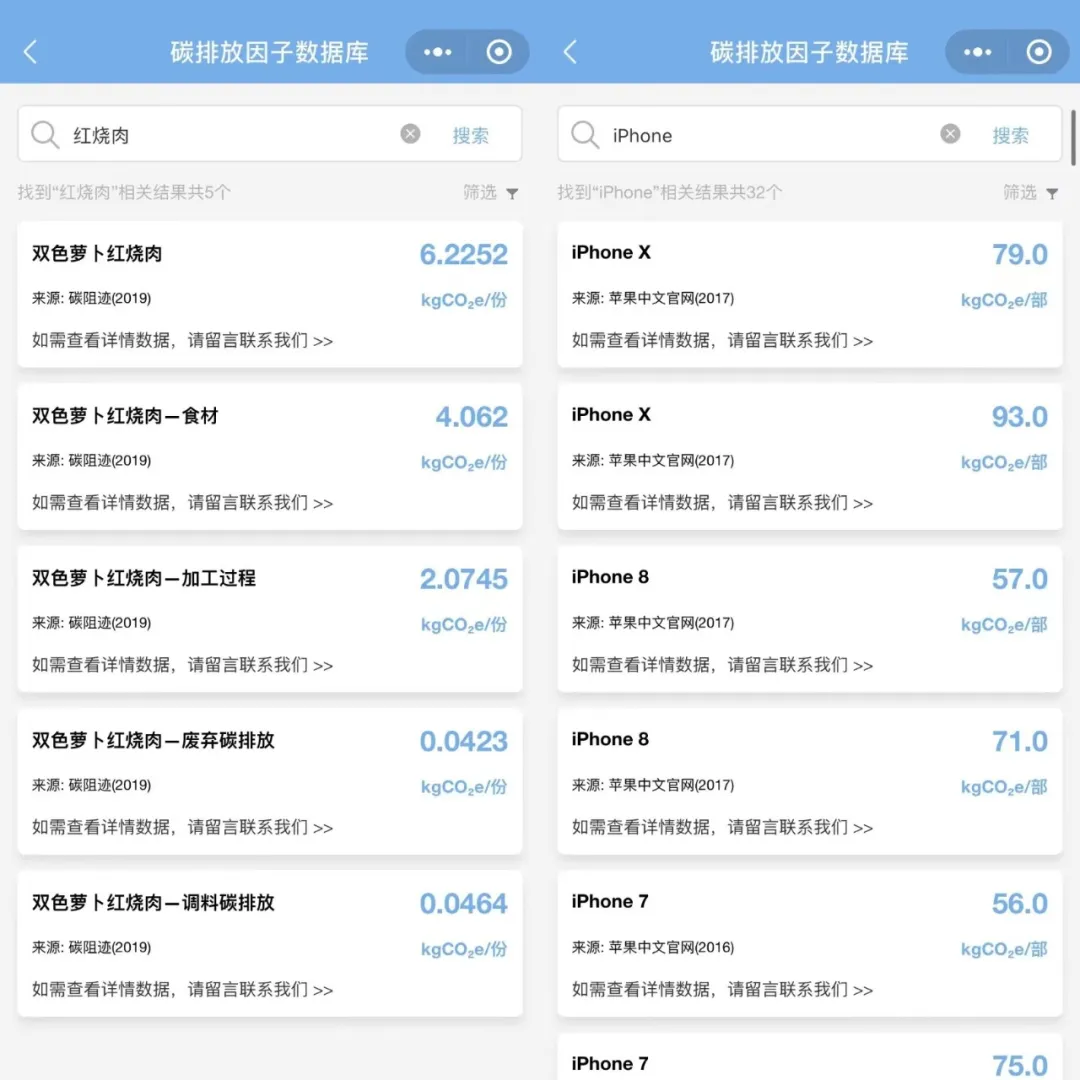
Carbonstop Carbon Emission Factor Database
03 Scaling the Everest of Supply Chain Carbon Neutrality
Q: How do the difficulties of a company achieving its own carbon neutrality compare to those of driving its supply chain to achieve carbon neutrality?
Yan Luhui: The difficulty varies by industry. Driving supply chain carbon neutrality is much harder than achieving it within a company's own operations, often by more than tenfold.
Generally, carbon neutrality starts with leading enterprises that have an inherent advantage in data management. However, pushing upstream and downstream partners to engage in data collection and monitoring remains a significant challenge. Therefore, the key lies in how to influence your upstream and downstream partners to participate together.
Currently, companies that are doing well in driving supply chain carbon neutrality are mostly global top-tier enterprises, such as Apple, L'Oréal, Walmart, etc.
Q: What are the specific challenges in achieving supply chain carbon neutrality?
Yan Luhui: The biggest challenge is the process of collecting data, which requires cross-departmental coordination and data from upstream suppliers, which is extremely difficult.
Previously, suppliers were willing to cooperate but lacked the capability, not knowing where the data was or how to collect it. Zeng Yuchun (Chairman of CATL) mentioned during the National People's Congress that establishing battery carbon footprint standards and building mutual recognition mechanisms with the EU is necessary; otherwise, CATL's batteries may not meet requirements by around 2025.
A single battery consists of many parts, requiring upstream cooperation. If upstream suppliers do not participate, manufacturers cannot achieve good results no matter how hard they try. Supply chains are extremely long and involve many links, making carbon neutrality even more challenging.
If suppliers attempt to address this issue without direction, they will not succeed. For example, calculating the carbon emissions of one ton of plastic from oil extraction would make the chain too long. Therefore, when original data is unavailable or too costly to obtain, we use emission factors, such as the amount of carbon produced by one ton of plastic, using relatively authoritative and traceable industry averages.
Q: How can this massive data dispersion problem be solved?
Yan Luhui: Our approach is to introduce a supply chain management function within the "Carbon Cloud" system. You can invite your suppliers to fill out a simple form with basic data, such as electricity usage, costs, and natural gas consumption. Using this small tool for conversion allows upstream suppliers to cooperate within their understanding.
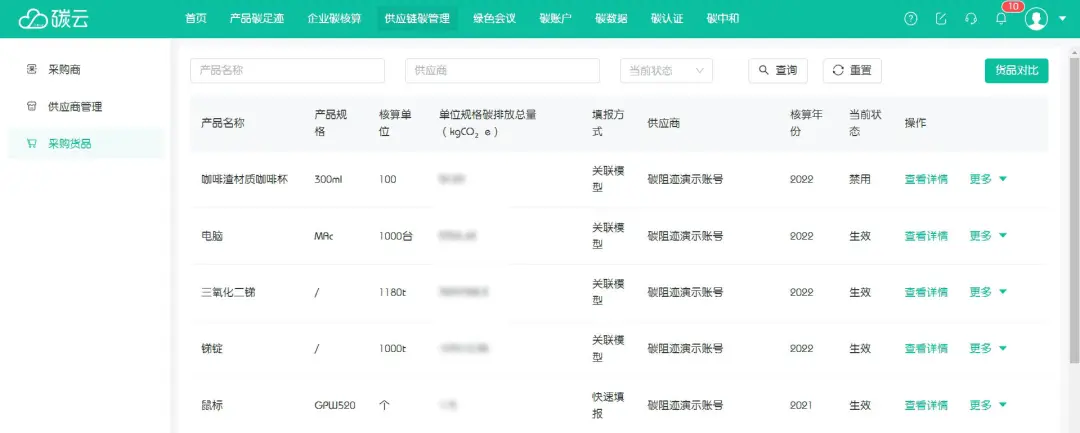
"Carbon Cloud" Supplier Carbon Management System
We introduced "carbon emission factors" to simplify the data collection process. In countries like the UK and Japan, for instance, if you buy a $100 piece of clothing, we can calculate the carbon emissions per dollar. Similarly, for laptops, we calculate based on different brands' market share and pricing, forming a conclusion of how much carbon equals one dollar.
To implement this in China, we need to find a more universal and applicable method. Currently, it's not feasible to create too specific products due to increasing cycles and costs.
Q: What is the current richness of Carbonstop's "Carbon Emission Factor Database"?
Yan Luhui: Currently, we cover about 80-90% of production, living, and working scenarios, with approximately 150,000 carbon emission factor data points.
We established several teams to calculate different scenarios, including work, life, and factory settings, over several years. Our main goal is to enhance societal awareness, demonstrating that carbon is omnipresent, quantifiable, manageable, and ultimately valuable.
Q: Are the customer profiles for consulting services and customized SaaS similar?
Yan Luhui: There is some difference. Consulting clients tend to be at an earlier stage, lacking industry knowledge, so they first seek our consulting services. In the future, once they gain mature experience, they will choose to purchase our SaaS solutions. For example, Baidu was initially our consulting client but purchased our SaaS last year. SaaS helps them manage the entire company, especially for Scope 3 emissions, which are very challenging and involve the entire supply chain.


