


 949
949AI is becoming a new type of user of enterprise systems, and that means the way software exposes its capabilities must be rewritten. In the past, enterprise systems were built primarily for people: interfaces were designed for human interaction, workflows were executed manually, and data was presented for people to view. Today, however, more and more work is being assisted by AI—from information retrieval and system operations to analysis and workflow orchestration—gradually entering real business processes. How to enable AI to invoke real-world professional capabilities in a standardized way has become a core question for the next generation of enterprise software.
This question is particularly critical in carbon management, a field that is highly specialized, data-intensive, and process-complex. Many companies on the market still remain at the stage of merely “opening up scattered APIs.” Carbonstop is doing far more than that. We are not simply layering on interfaces; we are redefining the foundation of how enterprise systems evolve—from software operated by humans into a capability layer that can deeply collaborate with AI. Through capability exposure paths such as APIs, MCP, Skills, and CLI, Carbonstop is turning carbon management into infrastructure that AI can invoke.

AI Enters Real Workflows: Redefining the Value of Carbon Management
Capability exposure is not the end goal in itself. What truly matters is whether these capabilities are entering real workflows and changing how data is queried, models are built, and teams collaborate.
Scenario 1: Carbon AI Agent Deeply Empowers Professional Use Cases, Moving Beyond Inefficient Manual Operations
The reason many professional carbon management tasks remain inefficient is not because the platform lacks the required capabilities, but because accounting, disclosure, and analytical functions have long been locked inside page-based interactions. Users need to enter the system, switch between modules, click buttons, fill in parameters, and wait for results. While the process is workable, it remains highly dependent on manual operation, making it difficult to integrate into larger-scale automation systems and AI collaboration chains.
The deployment of Carbon AI Agent across multiple professional scenarios is a representative example. Powered by intelligent agent capabilities, the platform can automatically complete a range of core professional tasks, including one-click modeling, intelligent data aggregation, CDP pre-scoring, ESG report generation, and emissions reduction optimization recommendations. These capabilities cover key business scenarios such as carbon accounting, compliance disclosure, and strategic analysis, effectively addressing the traditional pain points of cumbersome manual work, low efficiency, and poor controllability of errors. These core functions were once confined to product pages. But when they are further upgraded into CLI-based, process-oriented, and orchestratable capabilities, their significance changes fundamentally. The real shift is not about moving web-based features into the command line. It is about transforming the platform’s high-frequency carbon management capabilities into standardized productivity units that can enter AI workflows.
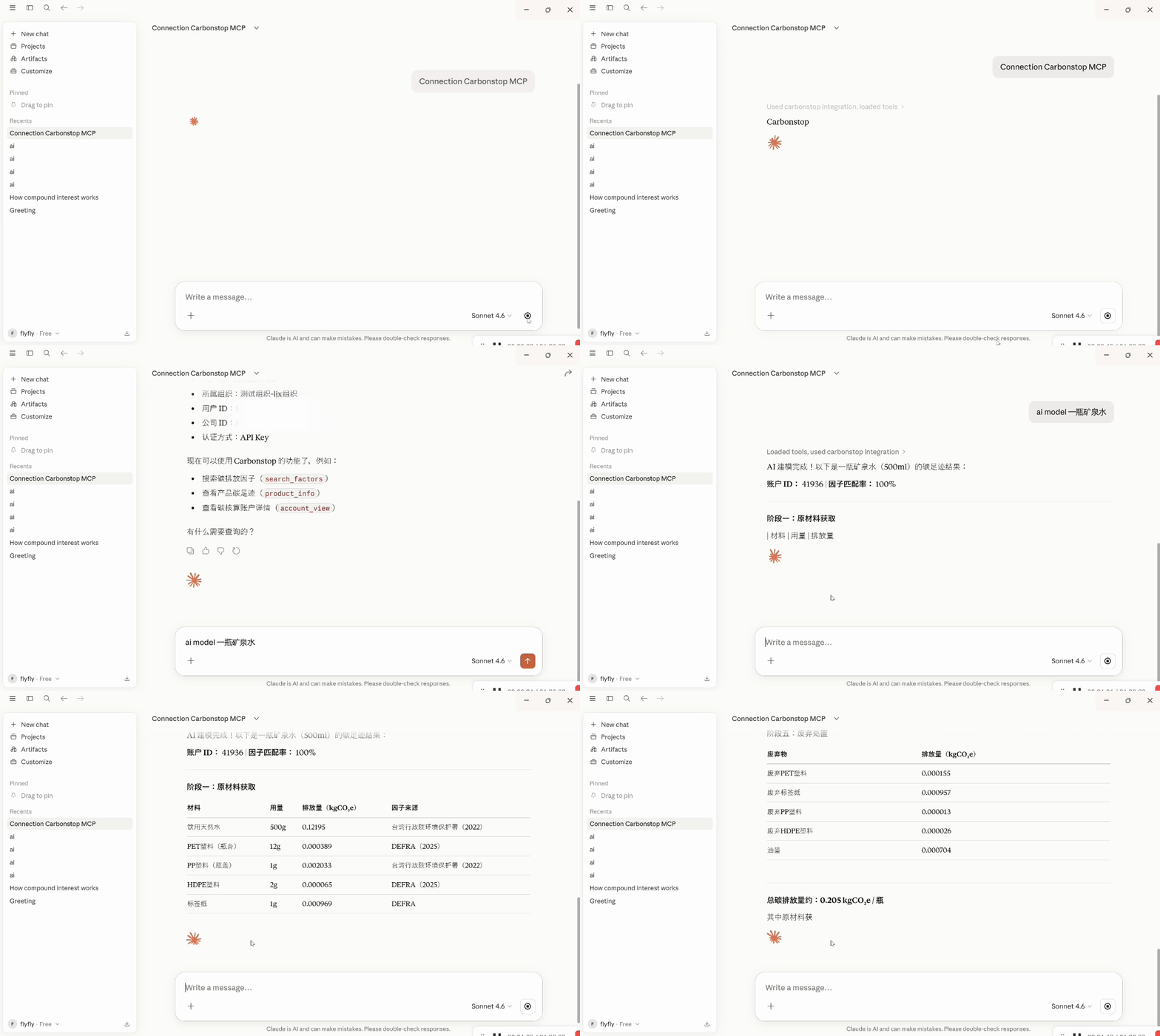 (Claude directly calls Carbonstop MCP to generate a model and data with one click.)
This means that professional carbon management work on the platform no longer has to be limited to page-based manual operation. Instead, it can become part of scripts, automated workflows, agent calls, and internal enterprise processes. What we are opening up here is not just a single functional entry point. We are upgrading the platform’s entire core professional capability set—from a traditional product experience into reusable, callable, and automatable AI capability modules.
By leveraging Carbon AI Agent to upgrade core professional capabilities, Carbonstop is transforming traditional manual functions into automated productivity modules that AI can invoke directly.
Scenario 2: CCDB Addresses the “Inaccuracy” Problem in AI and Builds a Trusted Data Foundation for Carbon Management
In carbon management, many questions may seem like simple data lookups, but in reality they rely on a complete professional knowledge system.
How should the emission factor for a certain material be selected? How should the boundary or methodological approach for a type of energy be aligned? Where should the data for a particular process be sourced from? If one relies only on a model’s general-purpose training data and language capabilities, these kinds of questions often result in answers that sound plausible but are not truly accurate.
This is where CCDB creates its core value: it fills the data gap of general-purpose AI and establishes a trusted data foundation for carbon management. Unlike the generic background datasets commonly used across the industry, Carbonstop CCDB has the rare capability to trace real-world Tier 4 supplier data. It enables full-chain data traceability from the corporate entity to Tier 1, Tier 2, Tier 3, and Tier 4 suppliers—an execution capability and practical case base that remains rare in the industry. Powered by a massive volume of real-world, highly precise data, CCDB delivers data accuracy more than ten times higher than commonly used industry factors, directly ensuring the fairness and authenticity of corporate carbon accounting results. It is a critical foundation for compliant carbon data management and carbon asset pricing.
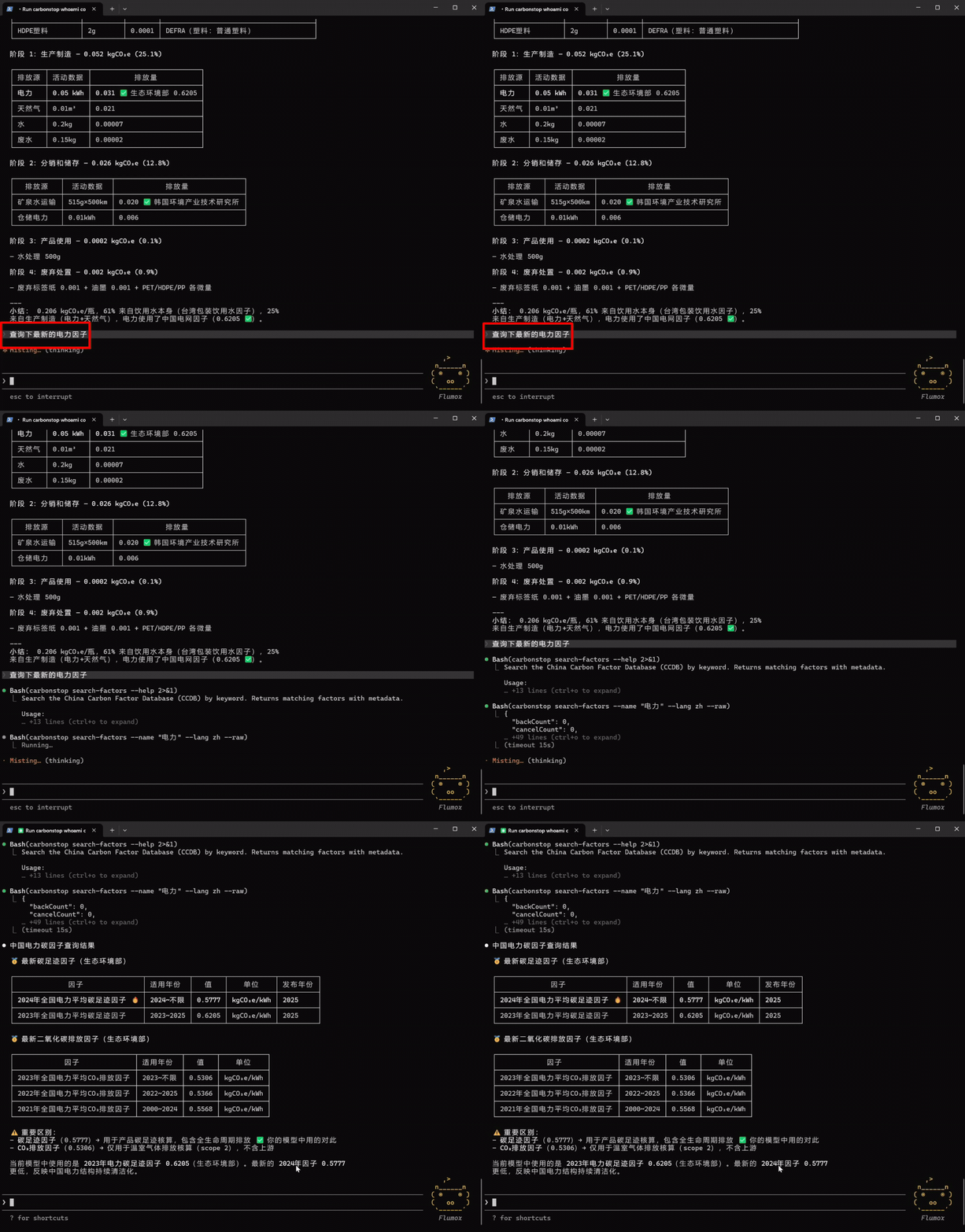
(Claude Code directly queries electricity emission factors from Carbonstop CCDB.)
This enables AI to move beyond vague text generation and directly invoke professional data capabilities for accurate querying, retrieval, and processing—producing structured results that are traceable, verifiable, and reusable. It fundamentally addresses the industry pain point of general-purpose AI providing answers that are articulate but not truly accurate, while strengthening the credibility and professionalism of AI-driven carbon management.
CCDB fills the professional gap in general-purpose AI and builds a trusted data foundation for carbon management.
Scenario 3: AI Moves Beyond Feature Demos to Become an Everyday Work Companion for Employees
Whether a company has truly entered the AI era is determined not only by what it has launched, but by whether AI has already become part of employees’ real workflows.
Unlike many industry players whose AI initiatives remain limited to product demonstrations or conceptual narratives, Carbonstop has deeply invested in practical AI empowerment across content workflows. We have built seven major AI application scenarios: AI + Coding, AI + Data Analysis, AI + PPT, AI + Design, AI + Report Generation, AI + Climate Risk Modeling, and AI + Video. These scenarios cover the full spectrum of work, from content creation and data processing to visual design and professional model calculation. AI has already become a core collaboration partner for our employees.
To maximize the productivity value of AI, the company has also made dedicated investments by providing every employee with a monthly quota of 10 billion tokens, encouraging everyone to embrace AI tools and adopt AI-native ways of working. This allows every employee to use top-tier AI capabilities at no cost, simplify tedious tasks, and focus on high-value professional work—fundamentally reshaping the way carbon management work and services are delivered.
Beyond that, Carbonstop actively encourages team members to contribute to the global AI community, including bug fixes for OpenClaw, suggestions for multi-agent invocation, and implementation recommendations for Feishu integration, helping foster a more prosperous AI ecosystem.
Through full-spectrum AI scenario deployment and dedicated resource support, Carbonstop is turning AI from a technology concept into normalized, organization-wide productivity.

From Interfaces to Ecosystem: Carbonstop Builds an AI-Native Capability Exposure System
The realization of value in real-world scenarios is supported by a fully systematized capability exposure architecture. What is truly being rewritten in this transformation is not just the interface format, but the way enterprise capabilities are organized.
The API, MCP, Skills, and CLI that Carbonstop is advancing are not isolated technical actions. Rather, they represent a restructuring of carbon management capabilities—from functions embedded within products into an open framework that can be jointly invoked by systems, developers, agents, and platforms.
What we are opening up is not a set of fragmented access points, but a capability pathway toward AI-callable infrastructure.
1. API: The Stable Capability Foundation
APIs form the underlying foundation of the entire capability exposure system.
They define the standardized boundaries of Carbonstop’s professional capabilities, allowing enterprise systems, platform integrations, and engineering teams to access carbon management capabilities in a more stable and governable way. For Carbonstop, APIs are more than just technical interfaces—they are the capability foundation upon which upper-layer forms such as MCP, Skills, and CLI are built.
Today, SaaS platforms such as BestSign, cross-border e-commerce platforms such as PromoCollection, and sustainable consumption platforms such as Duozhuayu have all integrated Carbonstop APIs to enable carbon footprint modeling, carbon emissions calculation, and carbon management. Annual API call volume has already exceeded 100 million.
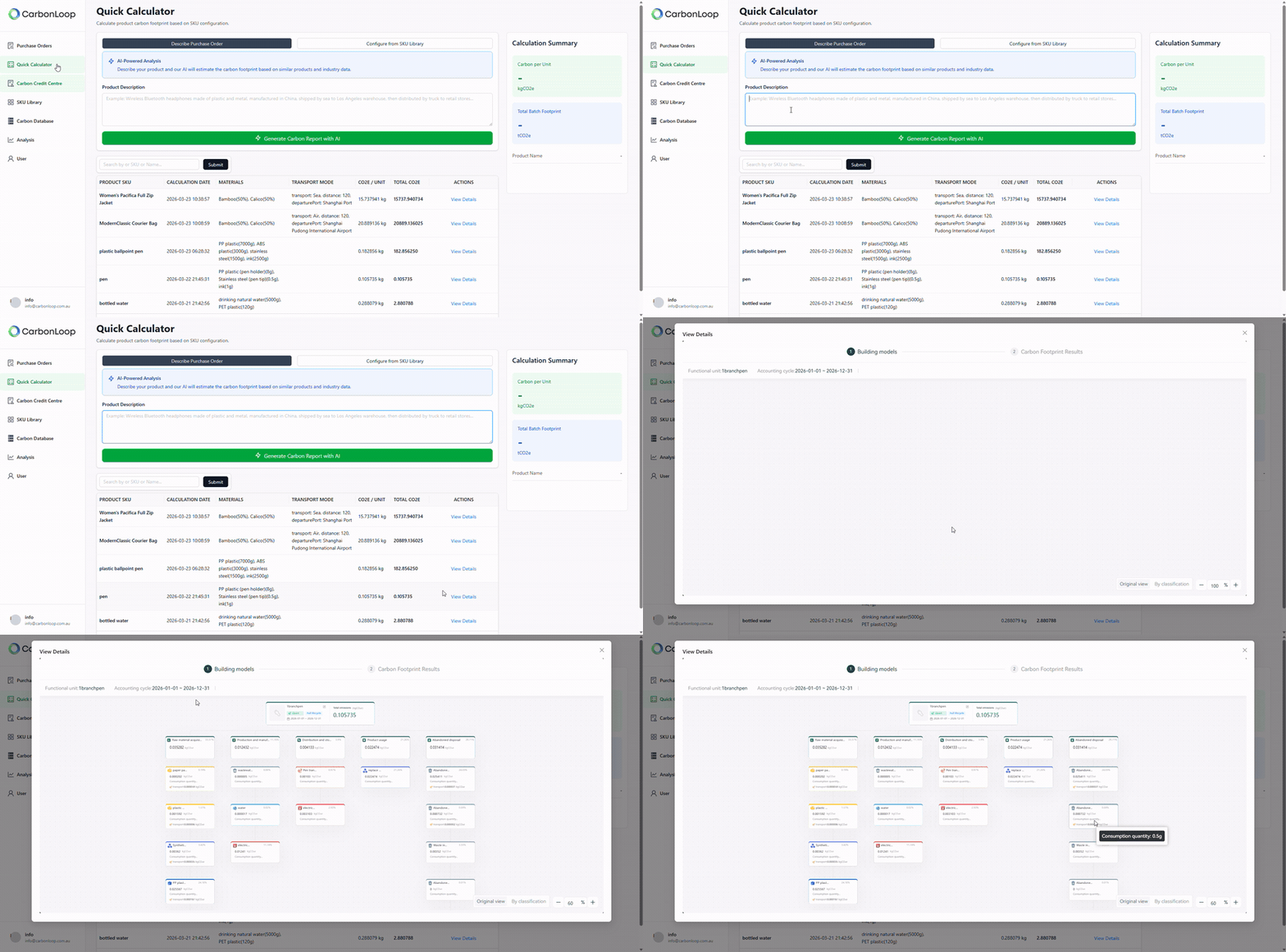
(PromoCollection uses Carbon Cloud APIs to enable carbon footprint modeling.)
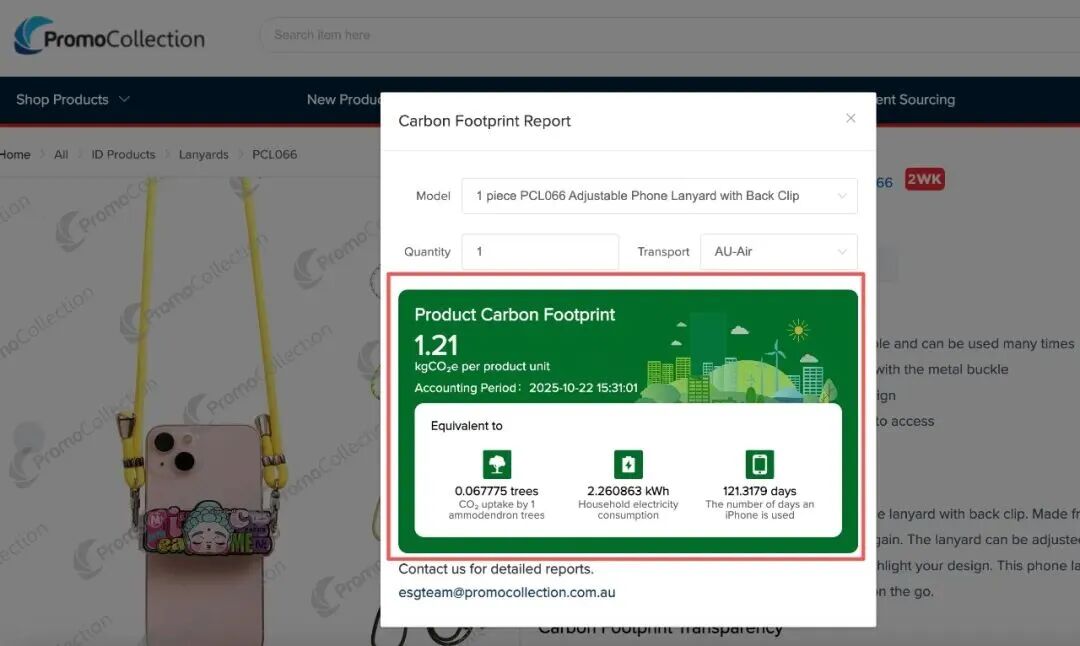
(Carbon data for products already assessed on the PromoCollection official website.)
2. MCP: A Standard Protocol Connection for AI Platforms
If API answer the question of “how systems call systems,” MCP answers the question of “how AI invokes real-world professional capabilities in a standardized way.”
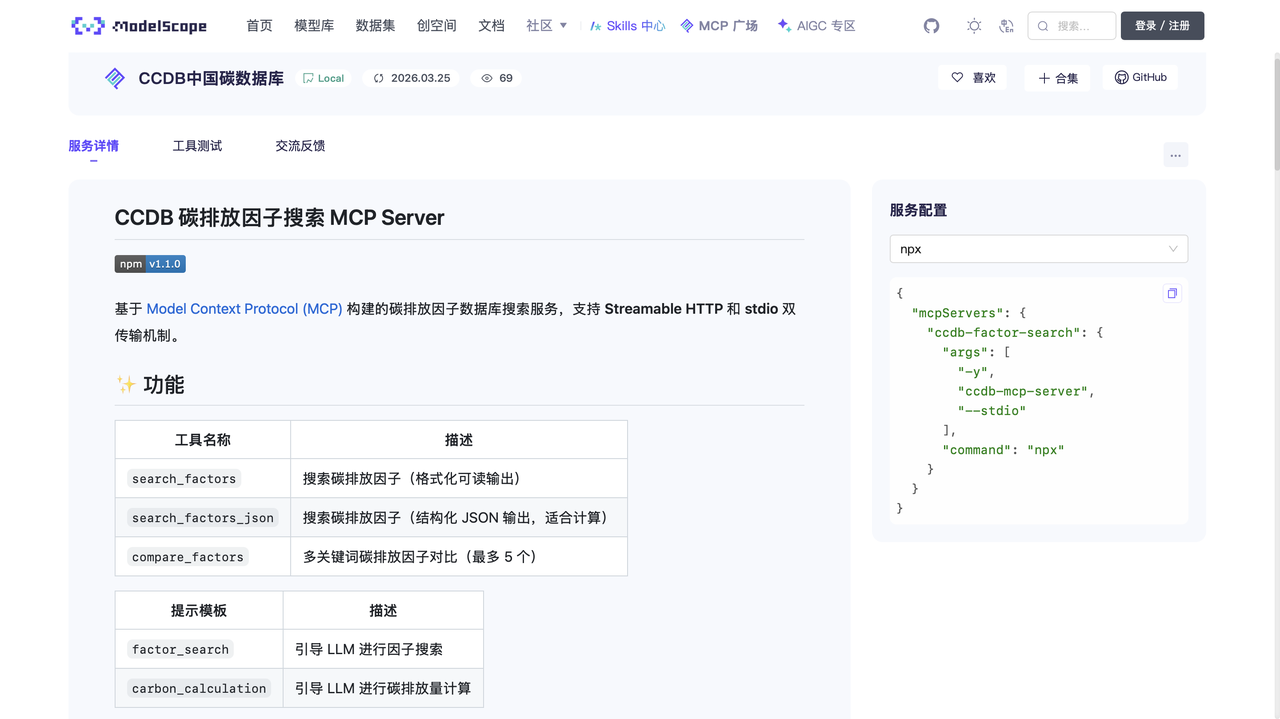
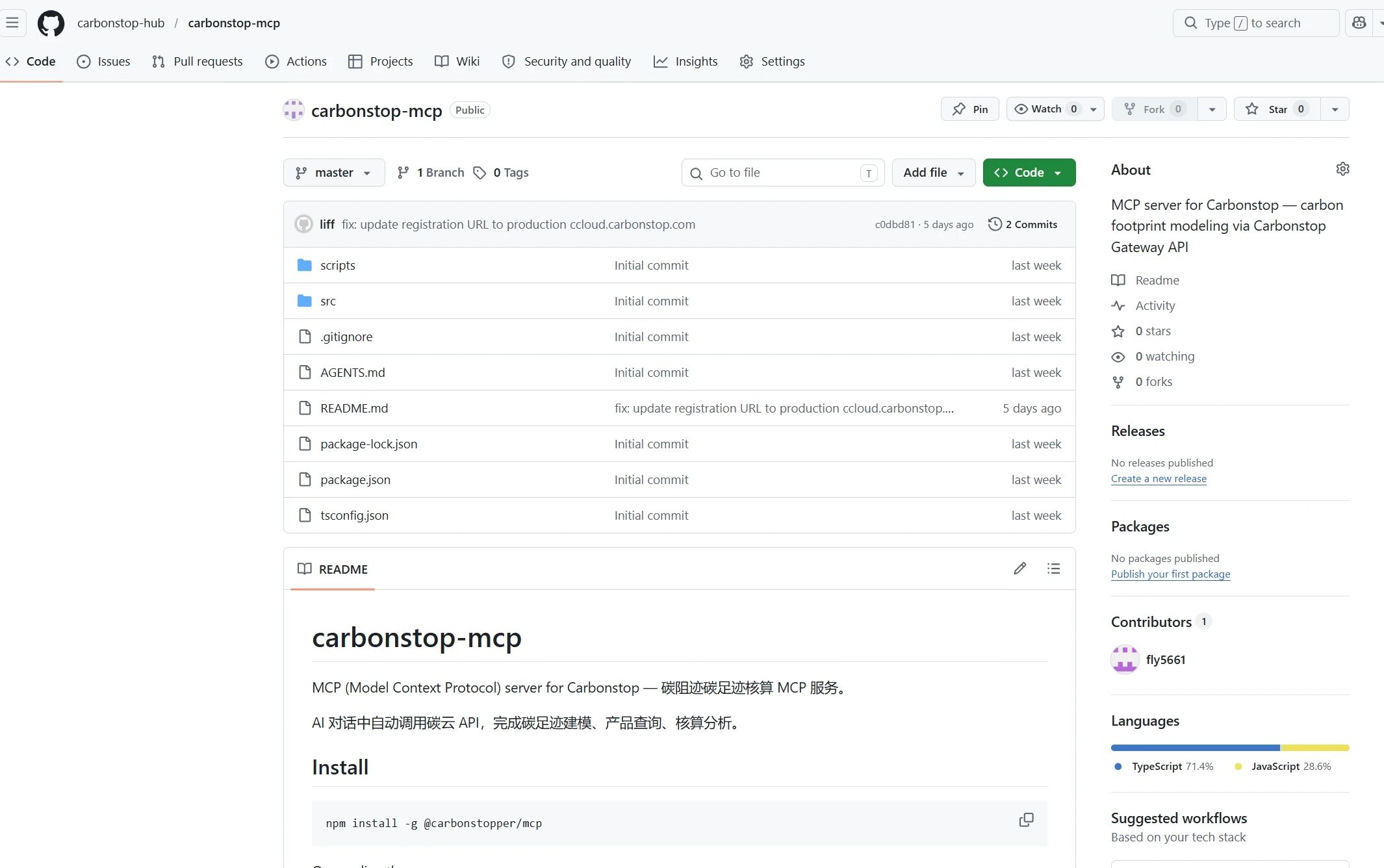
Around CCDB MCP, Carbonstop has already completed releases on GitHub and NPM and has entered marketplaces such as ModelScope and Smithery, while continuing to expand integration across more platforms. This means Carbonstop’s capabilities are moving from being “integrated by technical teams for development” toward becoming “standardized capabilities that AI platforms can directly connect to and invoke.” In the AI-native era, this protocol-layer connectivity is itself a critical strategic position.
3. Skills + CLI: Capability Entry Points for Developers and Agents
Skills and CLI address the same core proposition: enabling carbon management capabilities to move beyond product pages and enter the workflows of developers and AI systems.
CLI opens the door to development and automation. One-click modeling, product data queries, and scenario orchestration—these core Carbonstop capabilities are no longer confined to product interfaces, but can now enter scripting systems, CI/CD pipelines, and workflow orchestration environments. For developers, CLI is a more direct productivity tool; for future AI workflows, it is a key pathway for capabilities to enter the execution layer.
Skills solve the question of whether “AI can truly use these capabilities in practice.” This is not merely about whether an API can be called. It is about packaging the input-output rules, professional semantics, and domain expertise scattered across interface documentation, invocation logic, and industry knowledge into reusable capability units for agents and developers.
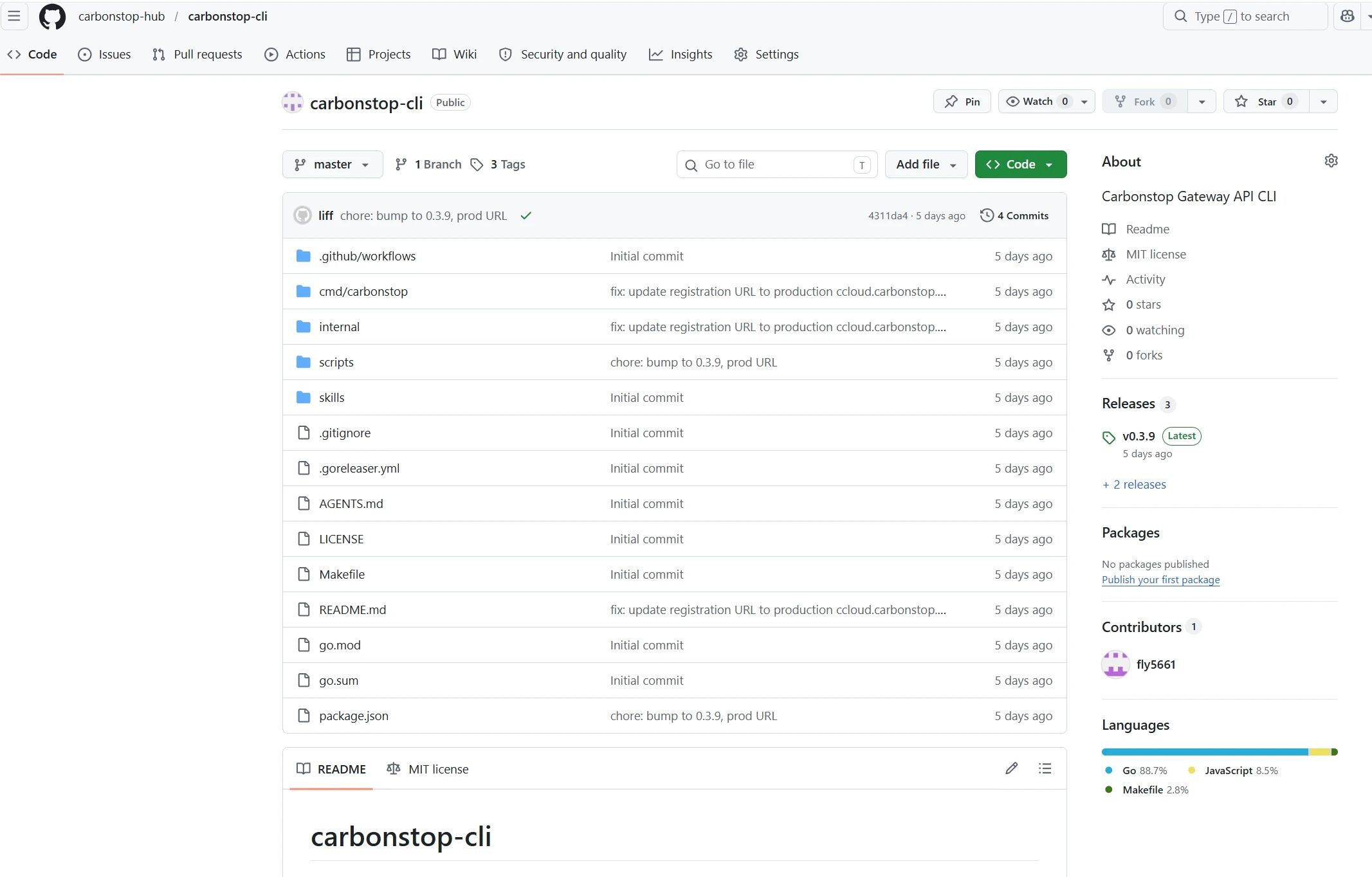
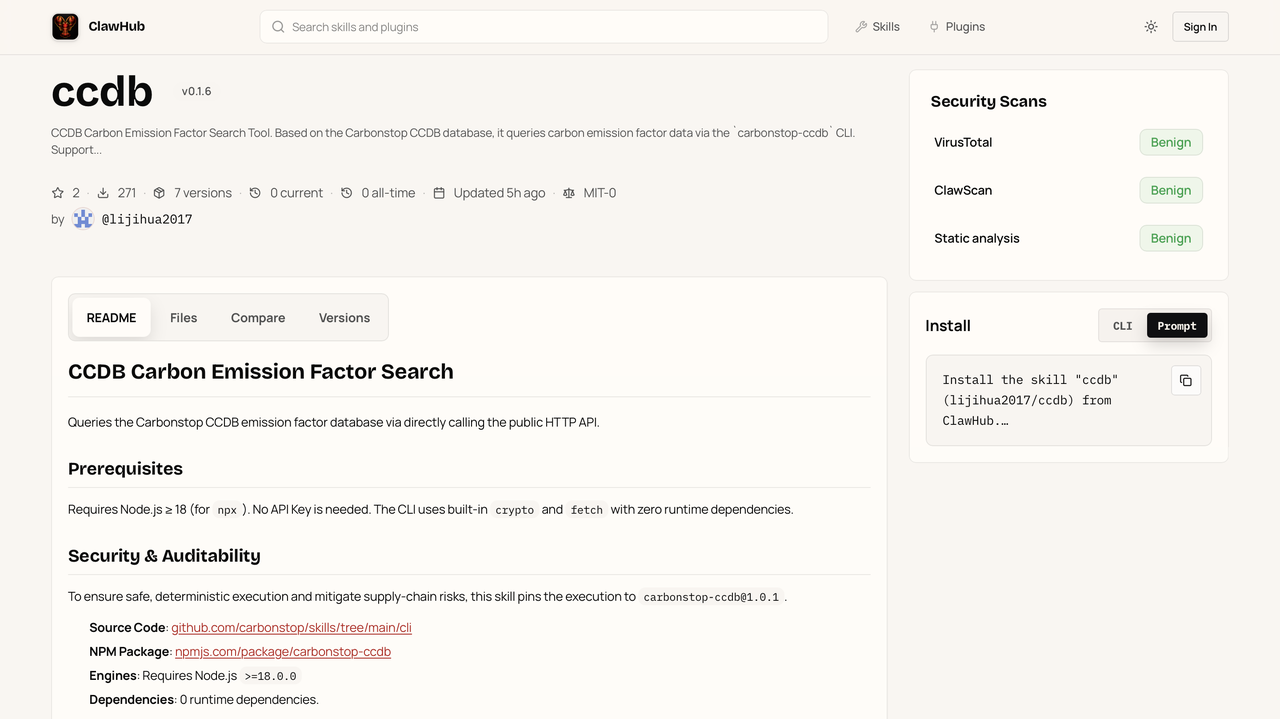
The two are naturally complementary: CLI provides a command-oriented entry point for people, while Skills provide semantic encapsulation for agents. Today, CCDB Skills have entered multiple ecosystem gateways including GitHub, Smithery, skills.sh, and ClawHub, making CCDB not just the name of a database, but an industry data foundation that AI can directly consume.
These Are Not Four Buzzwords, but One Complete AI Deployment Chain
Viewed separately, API, MCP, Skills, and CLI may appear to be four different forms of openness. But when connected, they form a complete chain—from foundational capability definition to upper-layer AI consumption. Carbonstop is not just building products; we are building a complete AI-ready capability stack.

The Next-Generation Industry Foundation Is Taking Shape
In the future, the core competitive advantage of professional software will no longer be how many features it has, but whether it can become the industry-standard foundation for the AI-native era.
For the carbon management industry, the true dividing line is not whether AI has been added, but whether professional capabilities have been genuinely organized into a capability layer that AI can understand, invoke, and govern.
From CCDB becoming a trusted data foundation for AI, to one-click modeling evolving into orchestratable capability, to AI becoming deeply embedded in everyday work, Carbonstop is not chasing trends. What we are doing is using long-term data accumulation, product capability, and industry expertise to define the next generation of the industry in advance. We are reorganizing years of accumulated professional capabilities into a form that is better suited to the AI era. This is a natural extension of long-term value, not short-term concept packaging.
Whoever can first refine professional capabilities into an AI-native, collaborative, and scalable industry paradigm will gain the initiative for the future. The next generation of carbon management belongs to systems where humans and AI work together—and Carbonstop is already leading the way.


