碳阻迹 CarbonStop Logo
Please be aware that this article is translated by AI, and like humans, they can make mistakes too.
Apple w0w

Apple w0w

CARBON NEUTRAL PRODUCTLCAAI-POWERED
viewCount1219

In the early morning of September 13th, Beijing time, Apple's autumn launch event arrived as scheduled. At this highly anticipated "Tech Gala," carbon neutrality became a high-frequency term.

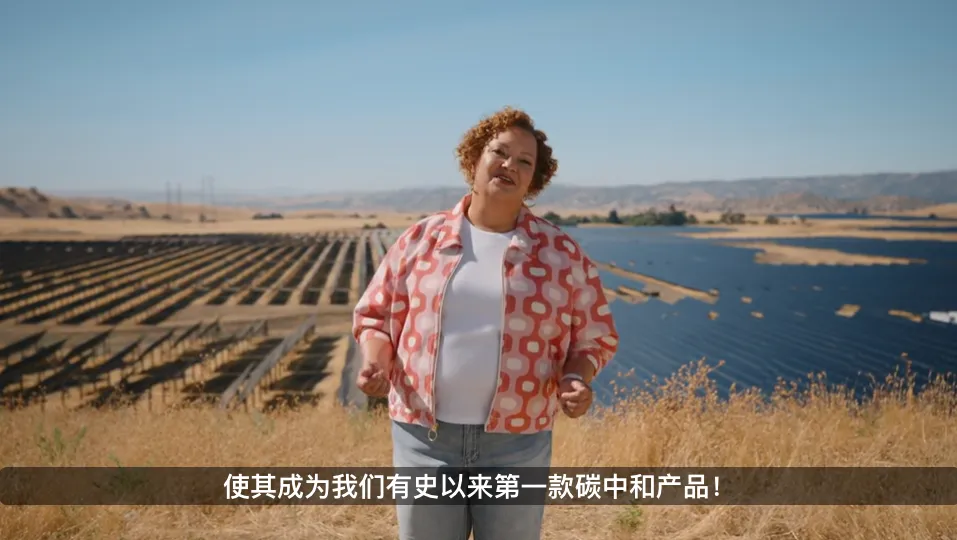
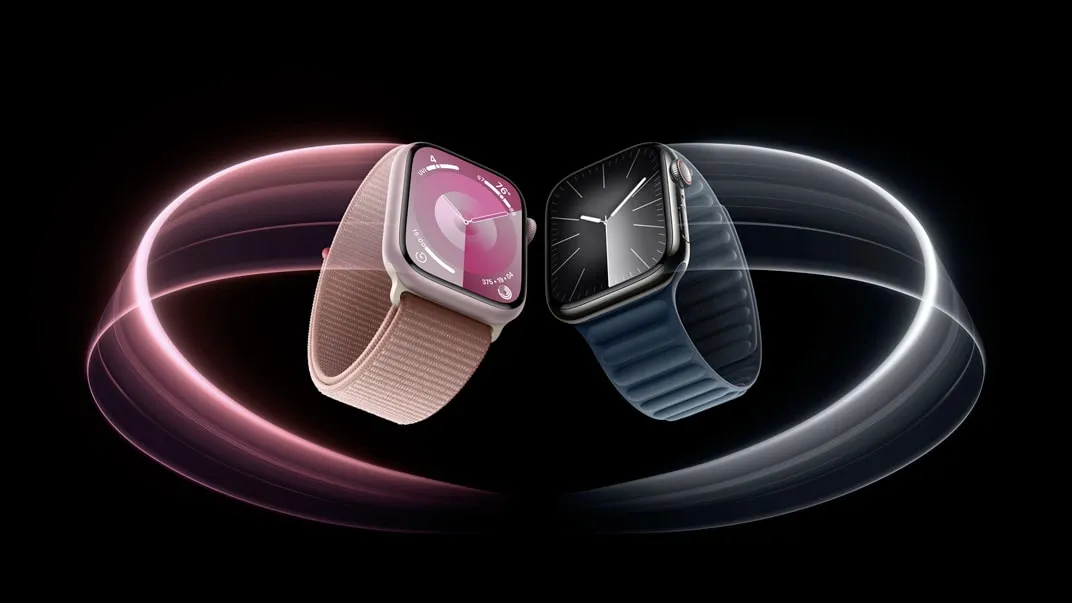
During the launch, Apple introduced its first batch of carbon-neutral products in the new Apple Watch series. Innovations in design and clean energy have reduced greenhouse gas emissions in the production process of each carbon-neutral Apple Watch by more than 75%, marking significant progress toward Apple's ambitious 2030 climate goal.

01_1727667515735659.webp

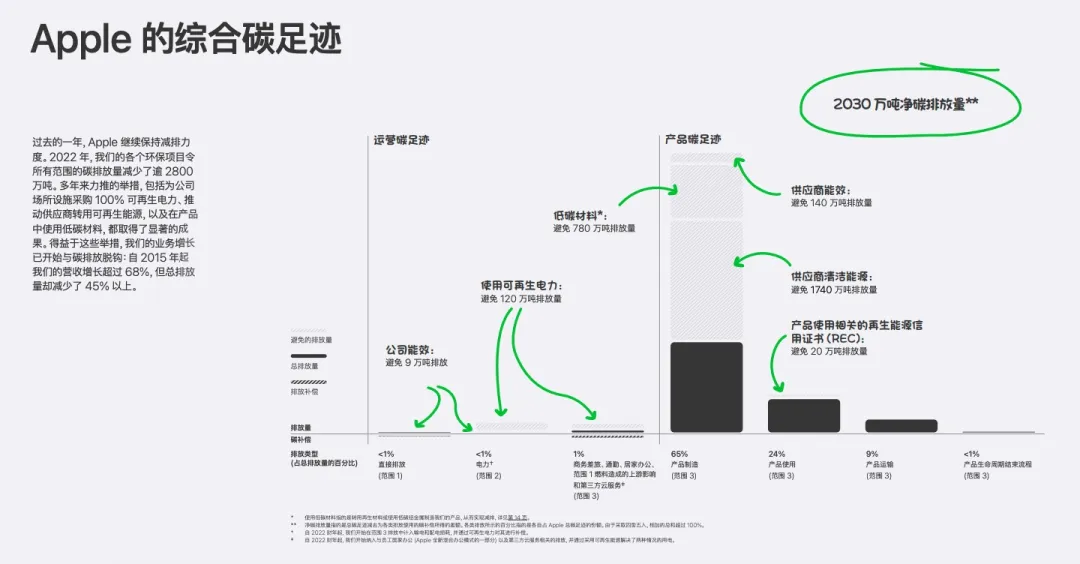
In 2020, Apple achieved carbon neutrality for its global corporate operations and announced "Apple 2030": an ambitious strategy to achieve carbon neutrality across its entire value chain by 2030. To realize this goal, Apple has made numerous efforts. The launch of the "first carbon-neutral product" in 2023 is a testament to that commitment and opens a new chapter for all products to achieve carbon neutrality throughout their lifecycle by 2030.

So how does Apple's product achieve carbon neutrality, and in an environment overshadowed by greenwashing, how does Apple solidly advance carbon neutrality and break through?

We will refer to the accumulated carbon neutrality methodology CREOS over the years to provide a detailed interpretation of Apple's product carbon neutrality.

02_1727667529841335.webp

The following article will dissect Apple's path to carbon neutrality according to the enterprise carbon neutrality methodology - CREOS.


01 Calculating(Calculating)

"Quantifying carbon emissions is always the top priority in carbon emission management"

Apple has established a carbon footprint emission calculation model based on a life cycle approach, covering raw materials, manufacturing, transportation, product use, and final disposal and recycling.

Regarding the accuracy of original data in the supply chain, Apple launched a supply chain carbon management plan more than a decade ago, requiring its supply chain companies to prepare and report annual greenhouse gas inventories to Apple, adjust emission reduction targets, and undergo quarterly reviews of emission reduction progress.

On this basis, Apple can prioritize the use of its unique data in its own product carbon footprint calculations and continuously optimize its models with upstream data provided by suppliers, to more accurately and transparently assess the carbon footprint of products. Additionally, Apple commissions third-party organizations annually to verify its comprehensive carbon footprint methods and data, which are published in its environmental progress reports.


03_1727667542455259.webp


02 Reducing(Reducing)

"After setting carbon neutrality goals and calculating carbon emission data, the first thing a company should think about is identifying 'hotspots' of carbon emissions and reducing them as much as possible."

In the carbon reduction phase, Apple prioritizes the three main sources of greenhouse gas emissions in the product lifecycle—materials, electricity, and transportation—to achieve significant reductions across the entire value chain.

1. Innovative Use of Recycled Materials

Leveraging world-class product engineering capabilities, complete design qualifications, and supply chain expertise, Apple has led the way in using many important recycled materials in its products. The series launched today builds on these achievements.

To further reduce its impact on the Earth, all of Apple's product lines will no longer use leather, but instead will use a new "Fine Twill" material made from 68% post-consumer recycled material. The introduction of the new iPhone 15 and Apple Watch series brings Apple closer to its 2025 goal of using 100% recycled metals for key components.

For example, in the Apple Watch Series 9, Apple uses 100% recycled aluminum, tin, copper, tungsten, and for the first time, 100% recycled cobalt in the battery. Additionally, the Sport Loop band for the Apple Watch Series 9 has been redesigned, made with 82% recycled yarn, including some material from discarded fishing nets.

04_1727667556766775.webp

2. Transition to Clean Electricity

Electricity has always been the largest source of carbon emissions for consumer electronics manufacturers.

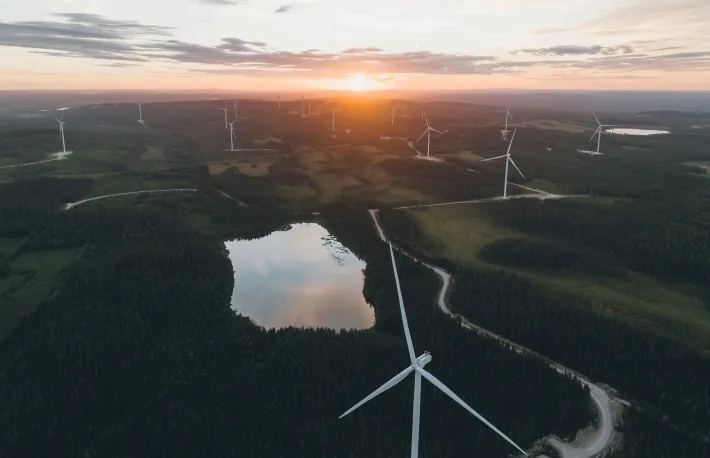
More than a decade ago, Apple began building and investing in large-scale solar and wind power plants to power its data centers and offices. Since 2018, all of Apple's offices, data centers, and retail stores worldwide have been powered by clean electricity.

At the launch, Apple announced that starting from 2023, the production of all Apple Watches will be 100% supplied by these clean green energies, and it aims to use 100% clean electricity in all Apple-related production processes by the end of 2030.

05_1727667562812965.webp

3. Adoption of Low-Carbon Transportation Methods

The transportation link is often the "last mile" where consumer electronics generate carbon emissions, accounting for approximately 9% of Apple's overall carbon footprint globally.

Apple is seeking to transport more products using methods with lower carbon intensity than air freight, such as sea or rail. Apple's carbon footprint calculations show that shipping the same product by sea produces 95% less carbon emissions than by air.

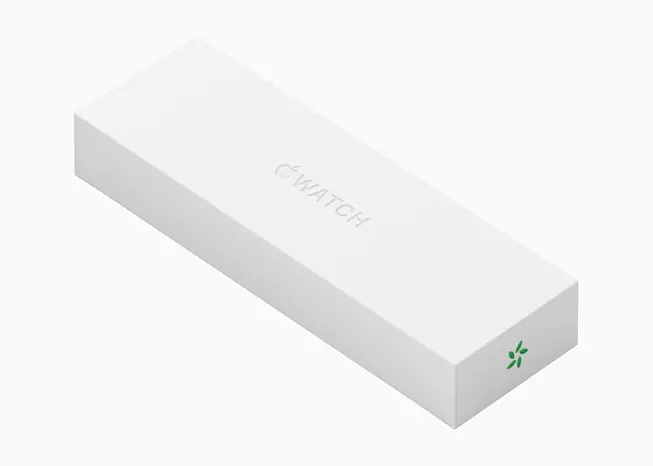
For the carbon-neutral Apple Watch and bands, more than 50% of the total weight will be transported by means other than air, thereby reducing the carbon emissions from transportation by nearly half. In addition, for the purpose of reducing volume, the packaging of all Apple Watch Series 9 and SE models has been redesigned, taking up less space, allowing 25% more products to be transported per batch.

4. Designing Sustainable Packaging

Apple is also accelerating its efforts to completely remove plastic from packaging materials by 2025.

The newly launched Apple Watch models and bands have for the first time achieved 100% fiber-based packaging materials, and all iPhone 15 models have also achieved over 99% fiber-based packaging materials.

06_1727667609565521.webp


03 Engaging(Engaging)

"For most companies, besides reducing their own emissions, the greater value lies in how to mobilize internal members and ecosystem partners to reduce emissions together."

1. Promoting Suppliers to Achieve Low-Carbon Transformation

Apple collaborates with manufacturing partners around the world to advocate for policies that support the expansion of clean energy solutions. In 2015, Apple began working with manufacturing partners to help them initiate and invest in their own solar and wind projects and to purchase renewable energy for all Apple-related production. Currently, 300 suppliers in 25 countries and regions have committed to using 100% renewable energy for Apple-related business.

For all of Apple's product lines, the electricity used for device manufacturing and charging is the primary source of greenhouse gas emissions.

Additionally, Apple provides a full suite of free online learning resources and live training through the clean energy program and works closely with suppliers and local partners to provide additional support to help suppliers access renewable energy in their regions.

2. Encouraging Consumers to Adopt a Low-Carbon Lifestyle

While achieving decarbonization in its own value chain, Apple is also dedicated to interacting with users, developing innovative technologies to help them understand and address their impact on the environment.

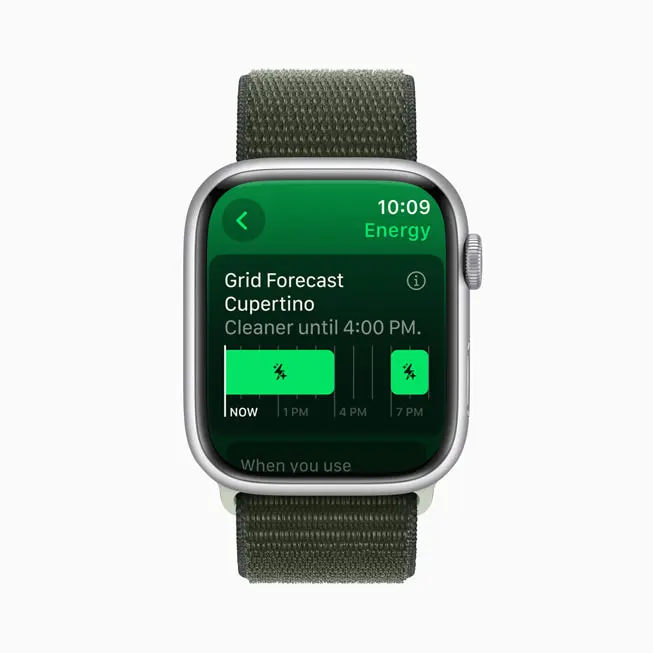
Grid Predictions is a new feature on the Home app designed to show users the times when the grid provides relatively clean and relatively less clean energy. For instance, during certain periods, wind and solar projects may generate more energy than the grid can use, leading to some energy waste. During other periods, the carbon emissions from power generation may be lower. By using electricity during cleaner periods, users can reduce the impact of home energy use on the climate.

Apple integrates datasets such as the power grid, greenhouse gas emissions, and weather information into an easy-to-track signal. This can help people decide the best time of day to run large appliances and charge electric vehicles or devices.

For the carbon-neutral Apple Watch model, Apple will invest in clean energy equivalent to the amount of electricity customers are expected to use for charging.

07_1727667628836856.webp

04 Offsetting

"Unavoidable carbon emissions can be offset by choosing to plant trees or purchase carbon credits, etc., to neutralize that part of the unavoidable carbon emissions, achieving zero emissions."

Apple has clearly stated its agreement with the scientific consensus that only after implementing strong emission reduction measures and improving energy efficiency should high-quality carbon credits be used to offset the small remaining emissions of products, to claim product carbon neutrality.

After significantly reducing the greenhouse gas emissions of its products, Apple plans to use high-quality carbon credits to offset the remaining minor emissions, primarily from nature-based projects that remove carbon from the atmosphere through the restoration of grasslands, wetlands, and forests.

Apple defines high-quality carbon credits as those from real, measurable, and quantifiable other projects and has established a system to avoid double counting to ensure quality is achieved.

For the carbon-neutral Apple Watch model, the high-quality carbon credits used to offset the remaining emissions will come from the following projects: investments in the Restore Fund, Arbaro Advisors, and BTG Pactual Timberland Investment Group, which are restoring and protecting high-quality productive forests and native ecosystems in Paraguay and Brazil.

08_1727667644123293.webp


05 Spreading

"After setting a carbon neutrality goal and path, companies should spread it as early as possible, thereby having a greater impact on the industry."

As early as July 2020, Apple released its 2030 carbon neutrality goal, outlining the original intention behind carbon neutrality and the detailed content and roadmap of the carbon neutrality initiatives, with specific action guidelines and substantial figures for each. The report was conveyed to every consumer in the form of vivid and easily understandable long images and videos, expressing Apple's commitment to carbon neutrality for the Earth and calling on everyone to do their part in reducing the burden on the planet.

09_1727667667890977.webp

The packaging of the first carbon-neutral product released this time is printed with a "carbon neutral" green label, allowing consumers to identify low-carbon products at a glance and conveying the concept of sustainable consumption; "carbon neutrality" has become an invisible main character, occupying a large portion of the presentation; the environmental creative short film "Mother Nature" has gone viral on social media.

06 Carbonstop View: Low-Carbon Insights for Consumer Goods Companies Brought by Apple

1. The creation of carbon-neutral products should be meticulously crafted and sustained over the long term:

Apple has been exploring and accumulating experience in each step of creating product carbon neutrality according to CREOS for more than a decade:

  • Starting with the iPhone 3G in 2009, it began calculating and disclosing the carbon footprint of its products and continuously improving data levels;
  • Steadily advancing emission reduction efforts in its own operations and product manufacturing processes;
  • Driving suppliers to undertake energy efficiency and clean energy projects, with over 250 suppliers committing to using clean electricity;
  • Investing in high-quality, nature-based carbon removal solutions for its own offsets;
  • Annually releasing environmental progress reports, environmental reports for each product, and spreading the concept of carbon neutrality to the world during launches.
  • Behind a carbon-neutral product lies a wealth of brand carbon management experience, strict and meticulous management of its complex supply chain, and relentless technological innovation.
  • Apple's carbon neutrality practice provides an excellent example for global consumer goods companies, but other companies should not aim too high. They should gradually implement each aspect of CREOS based on their current level, enhancing their own carbon management and technical capabilities, driving the mutual promotion and positive development of their core business and carbon neutrality practices.
  • 2. Deep emission reduction is the essential path to creating carbon-neutral products:

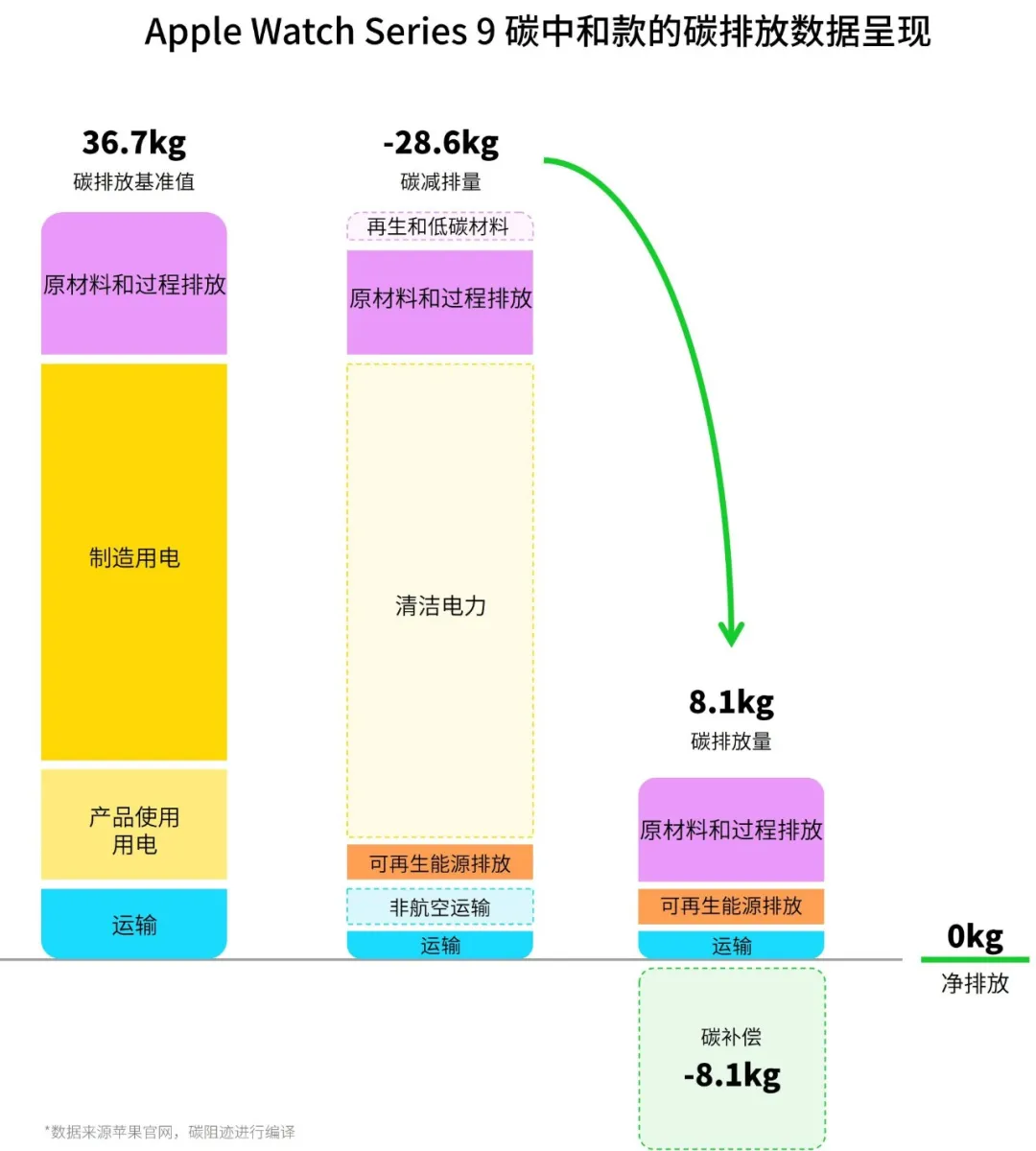
Product carbon neutrality is not simply about calculating the carbon footprint and then buying offsets. It is only meaningful to offset with high-quality carbon credits after fully tapping into the product's emission reduction potential. For example, if no emission reduction technologies were used, the baseline emission for the Apple Watch Series 9 would be as high as 36.7kgCO2e. Apple reduced its emissions to 8.1kgCO2e through various emission reduction methods introduced in this article, with a reduction ratio of up to 78%.

In the selection of carbon credits for offsetting, Apple also prefers high-quality, nature-based carbon removal solutions. Only such carbon-neutral products can minimize their negative impact on resources and the environment, avoid "greenwashing" suspicions, and demonstrate the company's responsible attitude and solid actions towards the environment.

3. The process of creating carbon-neutral products presents new opportunities for the company's value chain:

In the process of creating the carbon-neutral Apple Watch, Apple has developed multiple renewable energy investment and financing projects globally, including the China Clean Energy Fund. The joint venture ELYSIS innovatively developed an aluminum smelting process without direct carbon emissions, developed the "Clean Energy Charging" software feature, and established a comprehensive supplier greenhouse gas management system...

Apple's commitment to achieving carbon neutrality for all its products by 2030 drives it to continuously deepen and broaden the scope of its value chain, providing new directions for the research and development of innovative technologies, improvement of management capabilities, and growth of long-term profits, creating new opportunities for the sustainable development of the company's value chain.

Apple's launch of its first carbon-neutral product has ignited the hearts of consumers for the environment. As a new green consumption platform with the same low-carbon philosophy, the Low Carbon Hero strictly selects low-carbon goods, speaks with solid data, and offers environmentally conscious consumers "Dawn Light Carbon Neutral Pens," "Zhenggu Carbon Neutral Mooncakes," "Liby Carbon Neutral Dish Soap," and other low-carbon products. In the future, the Low Carbon Hero will continue to refine itself, so that all those who love and embrace carbon neutrality can find a truly pure low-carbon home.

*All graphic and textual materials above are from the official Apple website.

Schedule a Call with Our Carbon Management Expert

Provide your information and needs, and our carbon management experts will contact you within 24 hours.

碳阻迹 CarbonStop Logo
400-80-14067
mail@carbonstop.com
10th Floor, Building B, Vanke Office Building, Jiu Gong, Daxing District, Beijing
WeChat Official Account二维码
WeChat Official Account
WeChat Service Account二维码
WeChat Service Account
Carbonstop Assistant二维码
Carbonstop Assistant
EarthShop二维码
EarthShop
Authoritative Certification:
京公网安备 11011502037717号
京ICP备11035662号-15
Copyright 2011-2025 All Rights Reserved: Carbonstop (Beijing) Technology Co., Ltd.