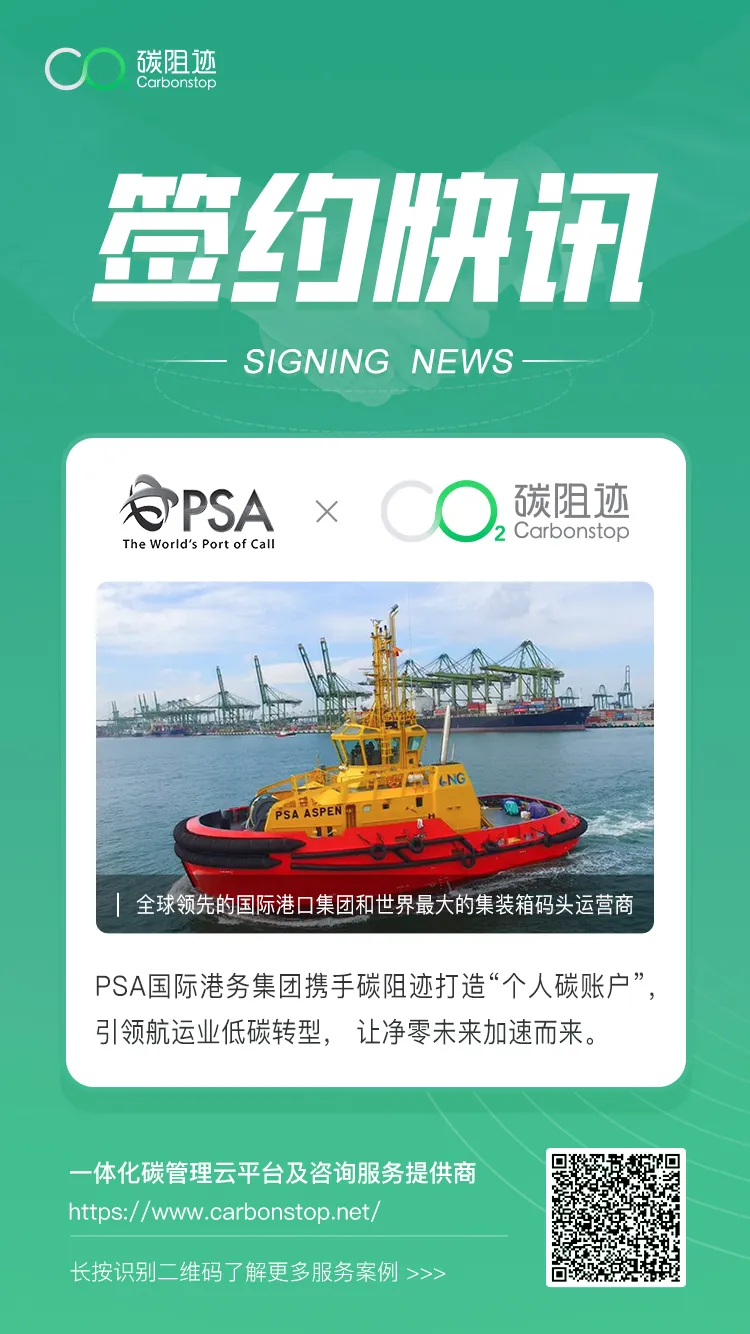
Recently, Carbonstop signed a contract with PSA International Port Group (hereinafter referred to as "PSA") to create a "Staff Carbon Account" for them, promoting PSA's low-carbon culture and empowering it to achieve net-zero carbon emissions.

About "PSA International Port Group"
As a global leading international port group and the world's largest container terminal operator, PSA's global service network spans more than 50 locations across 26 countries, with a portfolio including 60 deep-water ports, rail terminals, and inland centers, as well as related businesses such as logistics parks, warehouses, and maritime services.
The shipping industry is the lifeline of global trade and also a major emitter of carbon. According to data from the International Maritime Organization (IMO) in 2020, the annual greenhouse gas emissions from the global shipping industry have exceeded 1 billion tons. Among these, carbon dioxide emissions account for as high as 98%, dominating absolutely. The proportion of carbon emissions from the shipping industry out of total human activity emissions is gradually increasing, approaching 3%.
PSA is committed to promoting sustainable development in the port and logistics sectors, aiming to become a global leader in climate action. Not only does it strive for decarbonization, energy conservation, water saving, and waste reduction within its asset portfolio, but it also collaborates with partners to co-create a greener logistics ecosystem.

Source: PSA International Port Group Official Account
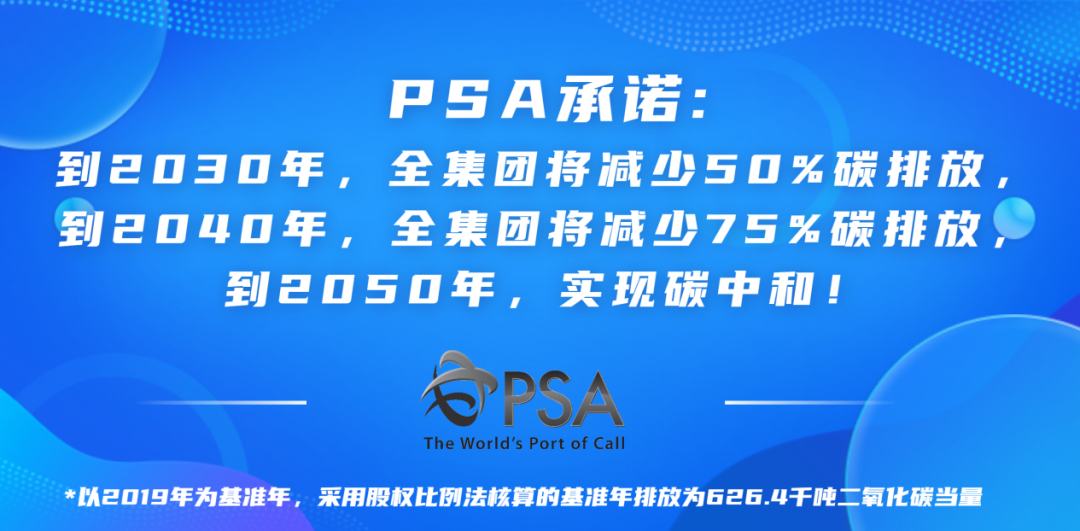
In 2021, PSA announced its carbon neutrality targets and pathways: achieving a 50% reduction in Scope 1 and 2 emissions by 2030; a 75% reduction by 2040; and net-zero carbon emissions by 2050.
To achieve its zero-carbon goal, PSA is accelerating carbon reduction through the adoption of new technologies and renewable energy sources, such as advancing the electrification of facilities and equipment, actively developing decentralized wind power and distributed solar photovoltaic projects, optimizing energy structures, and developing sustainable supply chain solutions.
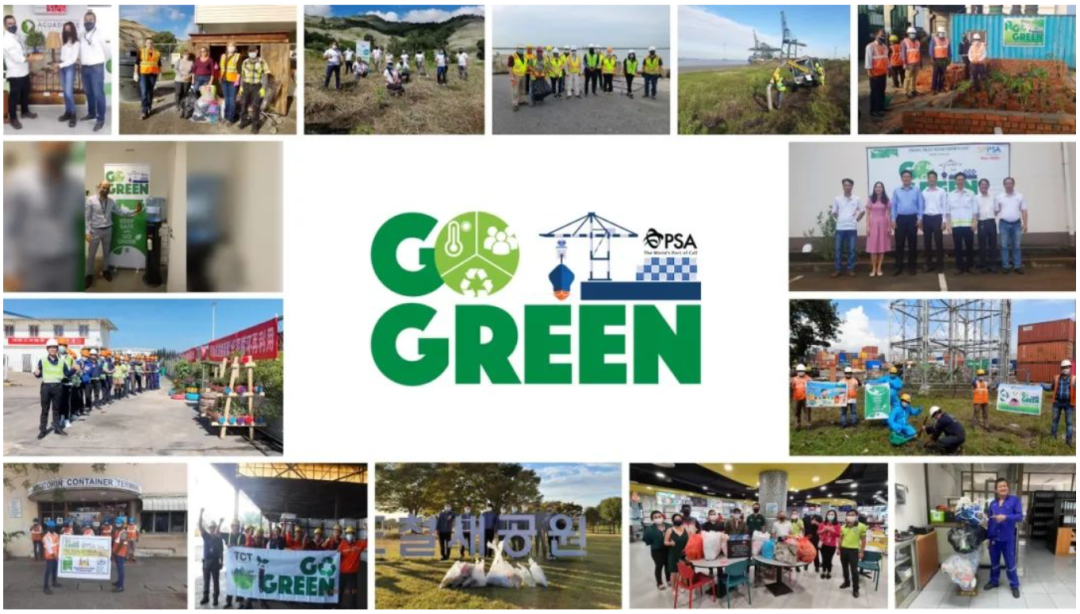
In addition, PSA focuses on fostering a low-carbon culture, hoping to lead and motivate employees and joint venture terminal partners to participate in green actions, thereby accelerating the realization of net-zero goals.

Source: PSA International Port Group Official Account
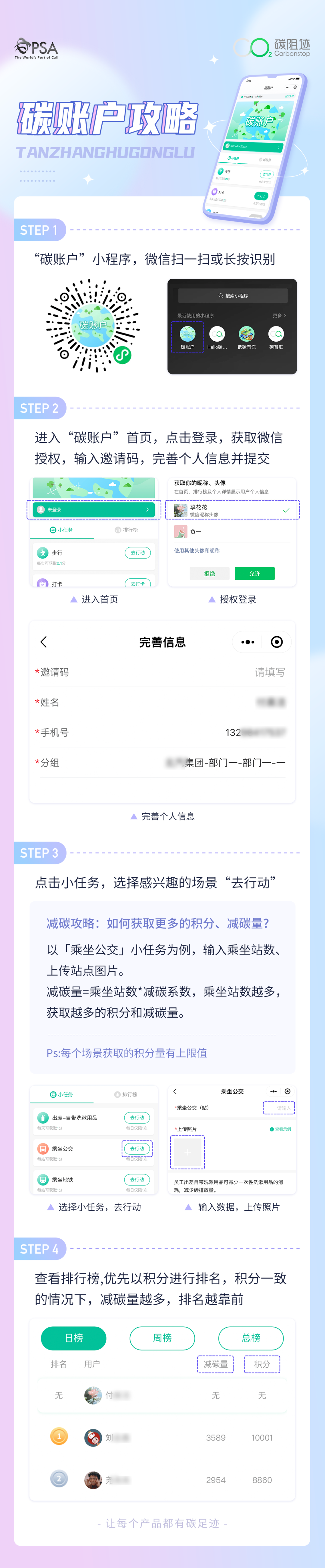
Based on these objectives, Carbonstop leverages Carbon Cloud to design a dedicated "Staff Carbon Account" for PSA, systematically incentivizing employees' low-carbon behaviors in office and life scenarios through carbon rewards, such as low-carbon travel (walking, cycling, subway travel), low-carbon workplace (online meetings, turning off screens during lunch breaks, double-sided printing), and low-carbon business trips (high-speed rail travel, bringing personal toiletries), helping PSA efficiently and cost-effectively promote employee participation in "Low-Carbon Actions."
▼ *Swipe up to view the PSA Carbon Account Guide

Provided by Carbonstop
Moreover, the "Staff Carbon Account" will also integrate specific scenarios at ports and terminals, enhancing the sense of belonging among PSA staff and making "low-carbon lifestyles" cooler and more interesting.
It is reported that PSA will further promote the "Carbon Account" mini-program in Northeast Asia, aiming to collaborate with more terminals, supply chains, digitalization, and sustainability sectors to jointly practice sustainable development.
With the continuous advancement of the "Peak Carbon Emissions by 2030 and Carbon Neutrality by 2060" targets, "personal carbon accounts" are increasingly becoming the "darling" pursued by governments, enterprises, and even individuals. The era of "universal carbon accounts" has arrived. In the future, Carbonstop will continue to play a leading role in the low-carbon field, empowering enterprises to improve quality, reduce costs, and increase efficiency in the process of building low-carbon cultures through digital technology, assisting in the realization of "peak carbon emissions and carbon neutrality" goals, and contributing to the creation of a low-carbon and beautiful future.