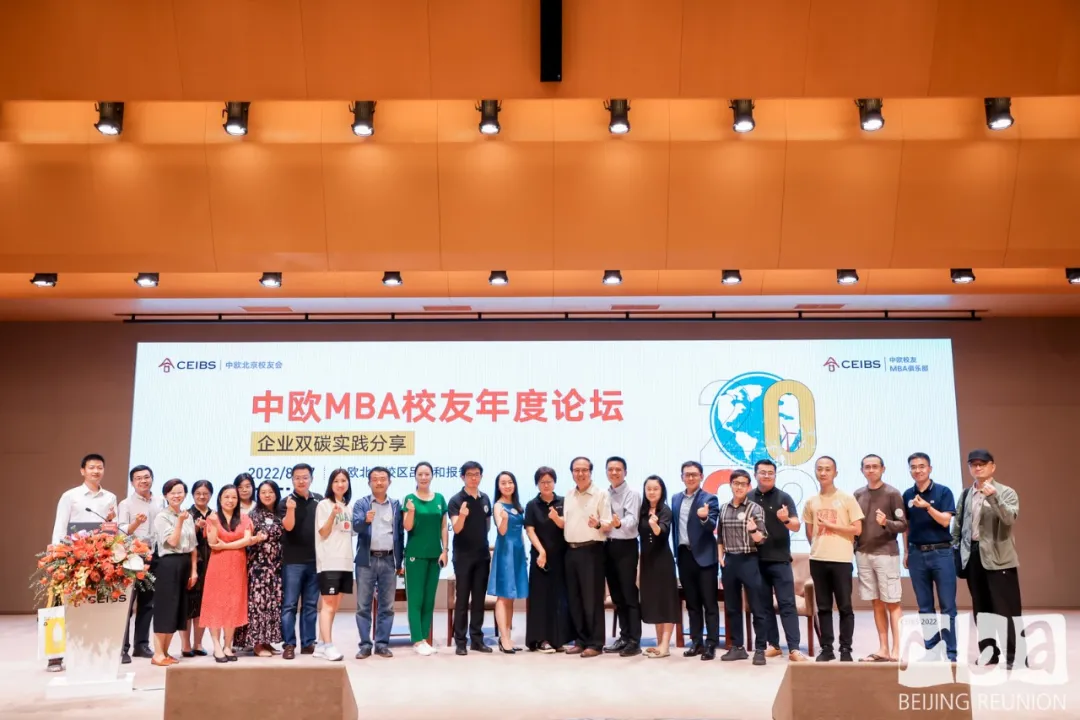
The annual forum for CEIBS MBA alumni was recently held in Beijing. This year’s forum, themed around “Carbon Neutrality and Sustainable Development,” invited numerous outstanding CEIBS alumni and external experts to share analyses of related corporate practice cases and engage in in-depth discussions.
Image Source | Official CEIBS MBA Alumni Club
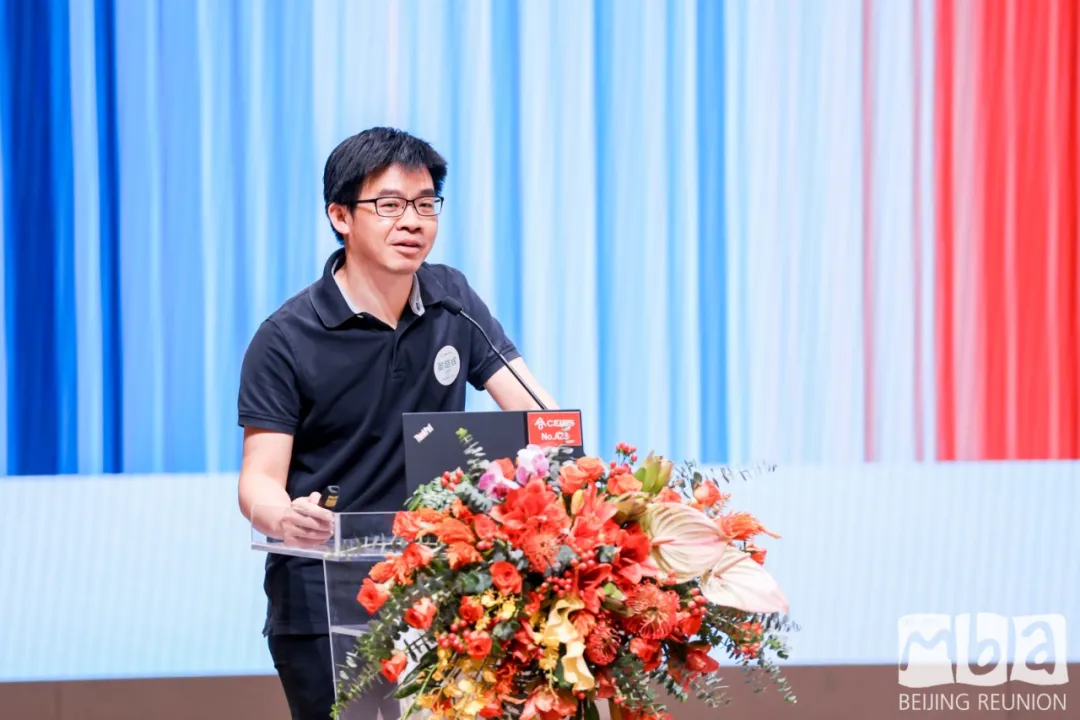
Yan Lu Hui, founder and CEO of Carbonstop, was invited to participate in the conference, delivering a presentation centered on the theme of “A Trillion-Yuan Gold Track: The Path to Carbon Neutrality.”
01
A Trillion-Yuan Gold Track: Carbon Neutrality
Environmental destruction, climate warming, severe pollution – the Earth we live on faces unprecedented challenges. In this grim situation, the Chinese government proposed the 3060 goal to build a community with a shared future for mankind, making a commitment to all humanity with China’s strength.
Since China announced its “2060 Carbon Neutrality Goal” on September 22, 2020,the carbon neutrality track has continued to heat up. Previous predictions by Tsinghua University and CICC indicated that investments in the carbon neutrality sector in China could reach around 140 trillion yuan over the next 30 years.

Image Source | Official CEIBS MBA Alumni Club
Yan Lu Hui stated that carbon neutrality is a trillion-yuan epic gold track, akin to the internet twenty years ago, which will revolutionize everyone’s lifestyle. Carbon neutrality will become new social infrastructure, impacting every individual and every enterprise.
Practicing carbon neutrality, all industries are actively participating. Yan Lu Hui mentioned that over 500 companies have already proposed carbon neutrality goals: Apple has achieved operational carbon neutrality and aims to achieve carbon neutrality across its entire supply chain by 2030, meaning all upstream suppliers must achieve carbon neutrality alongside Apple – an ambitious goal; Microsoft aims to achieve negative emissions by 2030 and historical carbon neutrality by 2050, the company’s seventy-fifth anniversary.
In addition, Chinese companies like Baidu, Alibaba, and Tencent have proposed achieving carbon neutrality by 2030. These industry leaders play a significant role in the overall process of carbon neutrality.
Based on over a decade of deep industry insight, Yan Lu Hui also shared predictions and visions for the endgame of carbon neutrality in four major sectors: technology, finance, consumption, and energy.
Under the backdrop of carbon neutrality, the greatest value of tech companies lies in leveraging their traffic advantages to create carbon neutrality and carbon trading platforms, encouraging users to participate in carbon reduction actions.
In the financial sector, carbon emissions are typically limited to office energy consumption and travel-related emissions. According to Yan Lu Hui, the endgame for financial institutions’ carbon neutrality is to lead by example, bringing partners, investment institutions, practitioners, and invested companies along to achieve carbon neutrality – this represents the greatest sentiment and the broadest vision.
For the consumer goods sector, under the premise of controllable economic and time costs, finding appropriate tools and models to ensure each product SKU has a carbon footprint and driving hundreds of millions of consumers to participate in carbon reduction efforts would be a monumental outcome.
And for the energy sector, the key to reducing carbon emissions is turning passivity into proactivity – on one hand, developing new energy sources, and on the other, finding ways to capture and utilize produced carbon emissions, turning “carbon” into a valuable resource.
02
Digital Empowerment for Carbon Neutrality
In this unprecedented transformation towards carbon neutrality, emerging technologies such as artificial intelligence, IoT, and cloud computing are destined to become behind-the-scenes heroes. Digital technology is becoming the preferred choice for the carbon neutrality sector to lead the way in green development.
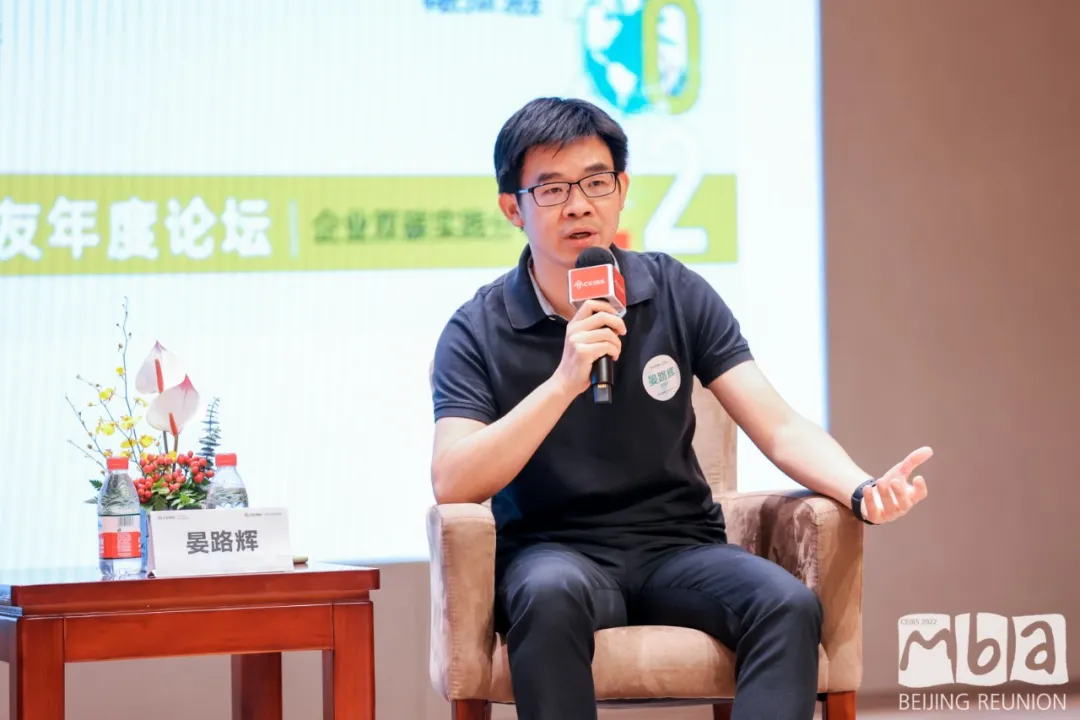
During the panel discussion, Yan Lu Hui, founder of Carbonstop, Gou Yijun, Chief Capital Officer of Hengji Weiyex Investment Development Group, Li Hang, Investment Director of the Low-Carbon Development Special Fund of Guofa Zhonghuan Ecological Industry Fund Management Co., Ltd., and Liu Xuensong, President of Beijing Zero Waste Circular Economy Industry Promotion Association, engaged in an in-depth discussion on the relationship between big data and carbon neutrality.

Image Source | Official CEIBS MBA Alumni Club
Yan Lu Hui stated that there are many points of convergence between carbon neutrality and big data in business models, such as the acquisition and monitoring of information and policies related to carbon neutrality, making it easier for us to access the latest information on carbon neutrality. In the digital age, the importance of big data is self-evident – “he who controls the data rules the world.” Under the context of carbon neutrality, the value of low-carbon data is even more pronounced.

Figure | Carbon Neutrality Certificate for this Forum
It is worth noting that Carbonstop was invited to provide green meeting support for this forum, quantifying the forum’s carbon emissions and assisting in achieving carbon neutrality. During the forum, electricity use, transportation, catering, accommodation, materials used for venue setup, waste disposal, and other activities generated approximately 0.72 tons of carbon emissions, which were neutralized through the cancellation of sufficient CCERs, thus achieving carbon neutrality for the conference.