Currently, state-owned enterprises (SOEs) hold a dominant position in China's pillar industries. Most SOEs are characterized by "heavy assets" and emit large amounts of carbon, making them key emitters. SOEs are not only major emitters but also key players in achieving the vision of carbon neutrality and developing low-carbon technologies. They should play a leading role in realizing the "Dual Carbon" goals.
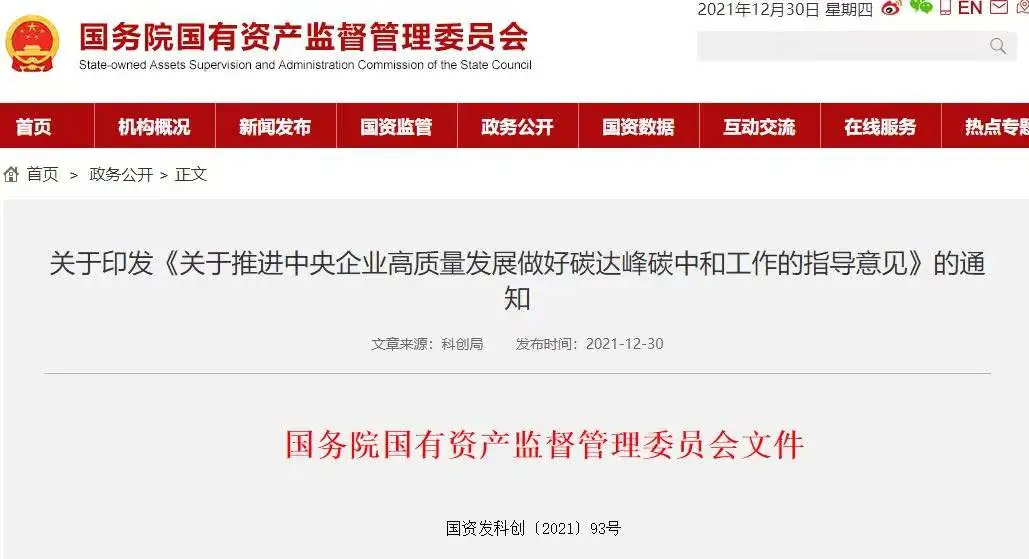
On November 27, 2021, the State-owned Assets Supervision and Administration Commission (SASAC) issued the Guiding Opinions on Promoting High-quality Development of Central Enterprises and Doing Well in Carbon Peak and Carbon Neutrality Work (hereinafter referred to as the Opinions).

The Opinions emphasize that SOEs should play a leading and exemplary role in advancing national carbon peaking and carbon neutrality, forming a core competitive advantage in green and low-carbon development, and making positive contributions to the smooth realization of the country's carbon neutrality goals.
Building a carbon emission management mechanism is crucial as a powerful tool for corporate low-carbon transformation. So, how can SOEs establish an effective carbon emission management mechanism?
According to the Opinions, central enterprises should "establish and improve the carbon emission management mechanism" by enhancing their own carbon emission management capabilities, carbon trading management capabilities, and green financial support capabilities.
01 Breaking Down Information Silos, Achieving Integration and Sharing of “Carbon Data”
The core of corporate carbon emission management is the timely and accurate statistics, monitoring, reporting, and disclosure of carbon emission data.
However, in practice, many enterprises' carbon emission data are scattered across various departments such as production, operations, testing, procurement, and finance. These departmental systems exist independently in a "fragmented" form, lacking integration and unable to share data sufficiently, thus forming numerous "information silos."

Source: Internet
Therefore, to enhance corporate carbon emission management capabilities, it is necessary to achieve system integration, data sharing, dynamic monitoring, multi-dimensional analysis, and improve the real-time and visual nature of data analysis within the enterprise. This ultimately leads to an efficient, accurate, and low-cost emission data management system.
02 Actively Participate in Carbon Trading, Forming a Virtuous Cycle of Low-Carbon Development
The purpose of carbon trading management for key emitters is to complete compliance at a reasonable cost, achieve asset preservation and appreciation, and ultimately promote the low-carbon development of the enterprise. Enhancing carbon trading management capabilities is based on carbon emission management. On this basis, enterprises need to decide on relevant trading strategies according to quota surplus or deficit situations and market prices.
Secondly, enterprises need to continuously track and update carbon trading policies, regulations, and trading rules, forming a carbon market price warning mechanism and continuously feedback and update the carbon price warning through subsequent trading activities.

Source: Internet
Finally, enterprises should also formulate corresponding management systems in the trading process based on trading strategies and warning mechanisms to ensure the smooth implementation of carbon trading operations. Enterprises can choose the most favorable development path based on the price of the carbon trading market and the cost of their own emission reduction activities, achieving a low-cost and high-efficiency low-carbon transition.
03 Reducing Carbon Emissions with Data, Creating a Carbon Emission Management Platform
In the context of the digital wave and the goal of carbon neutrality, using digital means to reduce corporate carbon emissions may be one of the most effective paths for contemporary enterprises to achieve low-carbon transformation and sustainable development.
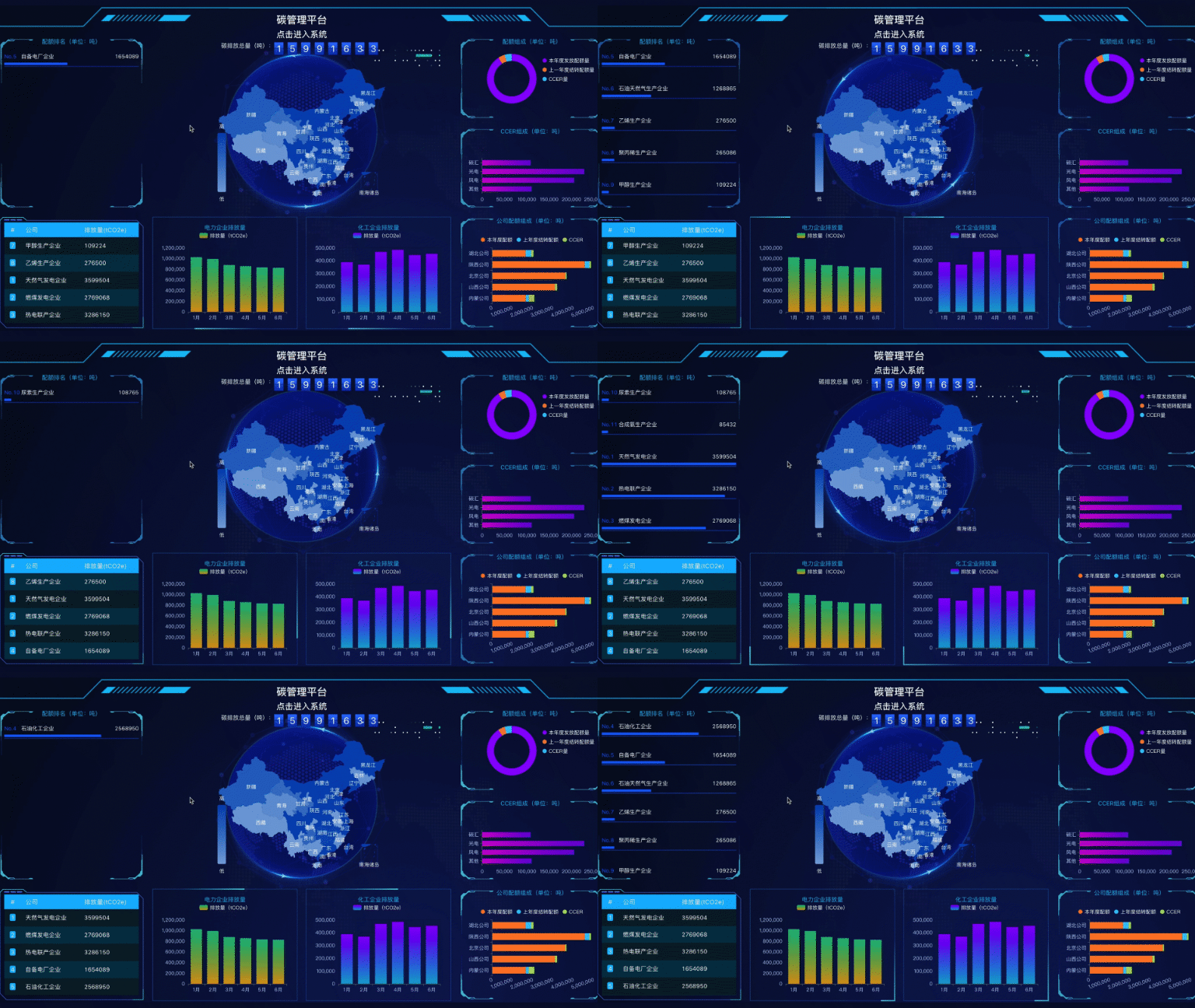
Creating an information-based carbon emission management platform is the foundation of reducing carbon emissions with data. Establishing an information-based carbon emission management platform by enterprise groups helps solve the "pain points" of carbon emission management and carbon trading information inquiries, serving as a specific measure to enhance the carbon emission management and carbon trading capabilities of SOEs.

On one hand, the platform can efficiently collect, aggregate, and analyze emission data from subordinate enterprises and various departments within the group through the latest information technology and system integration methods. Professional carbon emission management consulting and software companies, in assisting enterprises in building carbon emission management platforms, can promote and assist enterprises in improving management systems and processes, effectively enhancing the level of carbon emission management.
On the other hand, the information-based carbon emission management platform, in collaboration with professional carbon emission management consulting companies, can link to the latest carbon trading policies, regulations, and market price information, providing references for enterprises to formulate trading strategies that meet their own needs.
Low-carbon transformation of SOEs is imperative. As a leading enterprise in the field of carbon management, Carbonstop deeply implements the "Dual Carbon" strategy, leveraging years of experience in carbon management and digital technology. It has served multiple state-owned enterprises and state-owned groups, including China Coal, CNOOC, CNPC, and China Airport Construction Group, promoting low-carbon transformation and sustainable development in these sectors.
In the future, with the support of digital technology and advanced carbon management methods, SOEs will undoubtedly become a significant force in achieving the "Dual Carbon" goals.
![[Original Carbonstop] Low carbon transformation of enterprises is imminent. How can state-owned enterprises achieve curve overtaking?](/_next/image?url=https%3A%2F%2Ffactor-file.carbonstop.com%2Ffactor-test%2Fa8bb559517274465bdf30c7ebae44015642.png&w=1920&q=75)