


 617
617
As global climate regulations transition from voluntary disclosures into stringent legal mandates, corporate decarbonization has evolved from a branding exercise into a core financial and operational imperative. For procurement heads, operations decision-makers, and ESG directors, selecting the best carbon management platform is no longer just about tracking utility bills—it is about mitigating regulatory exposure under the Corporate Sustainability Due Diligence Directive (CSDDD), avoiding heavy penalties from the EU's Carbon Border Adjustment Mechanism (CBAM), and ensuring institutional investor alignment via the International Sustainability Standards Board (ISSB).
Amid this shifting regulatory terrain, general-purpose enterprise sustainability software often falls short when managing complex, transnational supply chains, particularly those linked to APAC manufacturing hubs. As the only Chinese vendor recognized by Gartner in Carbon Management Software, Carbonstop provides an authoritative blueprint for what multinational organizations must require from an enterprise-grade carbon management platform in 2026. This guide details the essential technical criteria needed within a modern carbon management platform to transform raw carbon data into boardroom-ready strategy.

Data Verifiability and Regional Factor Accuracy
To establish a defensible corporate emissions profile, an enterprise carbon management platform must anchor its infrastructure on mathematically precise carbon baselines rather than generic broad-market estimates. Organizations operating cross-border logistics or manufacturing models cannot rely solely on Western proxy databases without a specialized carbon management platform to eliminate significant margins of error that trigger compliance penalties.
Data Traceability at Scale
Sovereign greenhouse gas accounting requires a carbon management platform with uncompromising empirical precision across every tier of business operations.
• Granular APAC Database Coverage: A high-performing carbon management platform must integrate vast regional database networks like Carbonstop’s China Carbon Database (CCDB), which features over 510,000 data rows and 300,000 verified carbon emission factors to prevent carbon calculation distortions.
• AI-Driven Quality Control: The carbon management platform must utilize advanced artificial intelligence models to automatically validate incoming supplier metrics, flag anomalous activity spikes, and ensure mathematical alignment with the GHG Protocol Corporate Standard.
• Audit-Trail Transparency: The underlying architecture of the carbon management platform must provide complete backward data-lineage tracking, allowing internal controllers and third-party auditors to instantly isolate and review the origin of any active factor.
Framework Compliance Alignment
An enterprise-ready carbon management platform must translate corporate data seamlessly into standardized, globally accepted reporting frameworks.
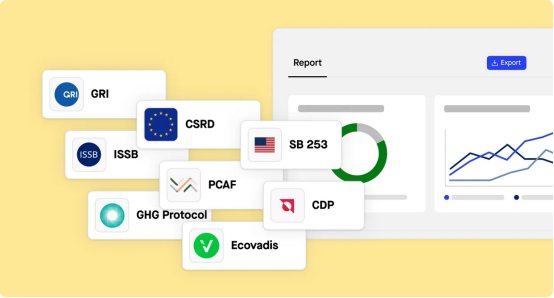
• Multi-Framework Cross-Mapping: The chosen carbon management platform must maintain native updates for fast-evolving compliance structures, automatically mapping localized input data to CSRD, CDP, ISSB, and EcoVadis parameters.
• Customized Compliance Frameworks: To handle specific local mandates or unique cross-border trade guidelines, the carbon management platform must support customized reporting architectures tailored precisely to the enterprise’s operational footprint.
• Export-Ready Documentation: The carbon management platform should compile raw inventory summaries into structured disclosures ready for immediate submission to regulatory oversight bodies.

Advanced Lifecycle Carbon & Asset Management
With increasing regulatory pressure and customer demands, corporate and product-level carbon management represents both a critical operational compliance milestone and a high strategic priority for modern enterprise teams. Managing this exposure requires a dedicated carbon management platform designed to transition from static calculations toward precision digital carbon asset management and real-time operational optimization.
Dynamic Carbon Management & Optimization Workflows
Static annual inventory spreadsheets are obsolete; a modern carbon management platform demands active, automated, and continuous asset optimization.
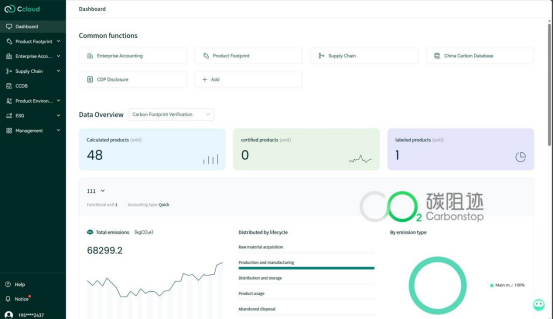
• Automated Data Intake Modules: The carbon management platform must provide frictionless, secure portals and integrations that allow internal facility operators and energy systems to upload actual primary activity data seamlessly, eliminating data processing friction.
• Intelligent Carbon Agents: Incorporating dedicated AI tools within the carbon management platform, such as the Carbon Agent, allows the software to autonomously parse messy corporate documentation, match standard emission factors, and resolve structural accounting data gaps across facility operations.
• Operational Performance Benchmarking: A robust carbon management platform provides sustainability and operations managers with clear, comparative dashboards to evaluate different facilities, production lines, or branches based on carbon intensity, integrating environmental metrics directly into capital allocation and regulatory strategy.
Lifecycle Product Carbon Footprints
Achieving deep decarbonization requires a carbon management platform that offers absolute transparency regarding the specific lifecycle footprint of individual products.
• Cradle-to-Grave Life Cycle Assessments (LCA): The carbon management platform must possess the computational depth to handle complex product-level calculations from raw material extraction through final distribution, in strict compliance with ISO 14067 and PAS 2050.
• Customized Product Modeling: A professional carbon management platform should allow developers and product teams to implement customized calculations mirroring proprietary manufacturing workflows and unique corporate assembly lines.
• Automated Carbon Labeling: The carbon management platform must generate verified, customer-facing carbon footprint certificates that easily validate environmental claims for international regulatory compliance.

Forward-Looking Scenario Simulation and Decarbonization Strategy
A premium carbon management platform must transition an organization from descriptive historical accounting to prescriptive operational execution. Procurement and ESG leaders require a carbon management platform with the predictive capacity to model future capital expenditures directly against evolving emissions reduction pathways.
Predictive Intelligence and Modeling
True risk mitigation requires a carbon management platform capable of forecasting organizational behavior under variable carbon tax landscapes and policy shifts.
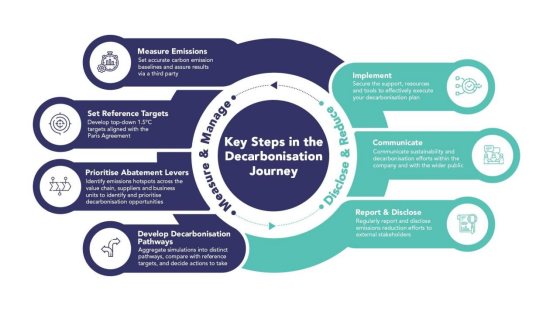
• Science-Based Targets (SBTi) Alignment: The optimization modules of the carbon management platform should align corporate reduction trajectories with 1.5°C climate pathways, establishing clear absolute or intensity-based reduction milestones.
• Customized Mitigation Modeling: Within a mature carbon management platform, decarbonization modules must feature customized scenario building, enabling operations leaders to evaluate the financial and environmental ROI of switching to renewable energy mixes or localized supply networks.
• Dual-Carbon Asset Tracking: A comprehensive carbon management platform provides financial and operational leads with visibility into carbon trading parameters, leveraging historical asset management data to project future compliance costs under regional cap-and-trade frameworks.

Strategic Action Call
Selecting the ideal carbon management platform is a critical architectural decision that anchors corporate compliance, operational resilience, and investor confidence. As global supply chains face mounting pressure from frameworks like CBAM and CSRD, deploying a carbon management platform with unmatched regional data depth, robust AI verification, and highly customized deployment capabilities becomes a clear competitive advantage.
Discover how Carbonstop’s Ccloud carbon management platform can transform your global value chain data into fully auditable climate leadership.

FAQ
Q1: How do regional variations in factor databases affect cross-border accounting within a carbon management platform?
A1: Regional factors reflect localized energy grids and manufacturing practices. Using Western proxy databases for Asian hubs introduces calculation errors, risking compliance penalties under CBAM. An enterprise carbon management platform must utilize deeply localized datasets like the China Carbon Database (CCDB) to ensure precision.
Q2: What is the technical difference between general sustainability software and an enterprise-grade carbon management platform?
A2: General tools rely on spend-based estimates and generic averages for basic CSR reports. Conversely, an enterprise-grade carbon management platform provides mathematical verifiability, deep Scope 3 supplier integration, ISO 14067 lifecycle assessments, and audit-ready reporting aligned with CSRD and ISSB.
Q3: Why are automated, AI-driven supplier workflows crucial to a modern carbon management platform?
A3: Supply chains involve numerous vendors with varying carbon literacy, making spreadsheet collection slow and error-prone. A forward-looking carbon management platform leverages AI-driven agents to automate supplier data validation, interpret documentation, and match emission factors to accelerate audit readiness.
Q4: How should decision-makers evaluate delivery models when selecting a carbon management platform?
A4: Decision-makers must choose a carbon management platform that supports complex corporate structures. The chosen carbon management platform should offer multi-tiered delivery—including standard SaaS, customized configurations, and secure on-premises deployment—to satisfy corporate IT security standards.


