


 556
556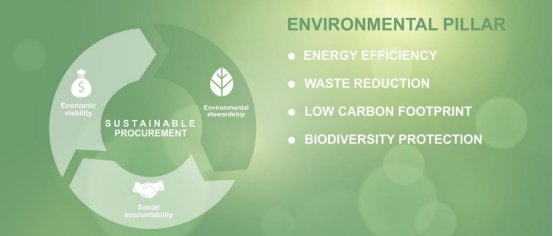
The global procurement landscape is undergoing a fundamental shift. For decades, total cost of ownership (TCO) and quality were the primary levers driving sourcing decisions. Today, as international regulations like the EU Carbon Border Adjustment Mechanism (CBAM) and Corporate Sustainability Reporting Directive (CSRD) take full effect, a third variable dictates supply chain resilience: landed carbon cost.
Procurement executives are no longer just buying raw materials and components; they are inheriting the embedded carbon profiles of their upstream suppliers. At Carbonstop, where we have pioneered enterprise carbon management platform solutions since 2011, we have watched this discipline evolve from static corporate reporting to a core operational priority: Enabling a product carbon footprint for every product.
To manage margin risk and maintain export access, modern procurement teams must move beyond high-level corporate emissions averages and adopt a targeted sustainable procurement solution using granular, product-level carbon data across global supply chains.

Why Product-Level Data Drives Procurement Strategy
Corporate-level Scope 3 estimates—often derived from spend-based averages—are far too coarse for strategic sourcing. When evaluating two suppliers of equivalent technical spec and unit cost, corporate-wide averages cannot reveal which vendor uses a cleaner regional grid or a lower-carbon raw material.
Granular SKU-level data is essential to navigate three compounding commercial pressures:
• CBAM Surcharges: The EU’s carbon border tax directly impacts imported goods like steel, aluminum, and fertilizers based on embedded emissions. Lacking primary product data forces importers to accept default fallback values, resulting in unbudgeted import duties and customs delays.
• Downstream Customer Requirements: Enterprise buyers bound by Science Based Targets (SBTi) mandate verified product carbon footprint reporting from their vendors. Suppliers who cannot provide SKU-level primary data risk exclusion from competitive tenders.
• Carbon-Adjusted Bidding: Leading organizations now integrate carbon shadow pricing into RFPs through an advanced sustainable procurement process. Products with verified lower emissions profiles gain a distinct commercial advantage in multi-tier supply chains.

The Data Integrity Deficit in Global Supply Chains
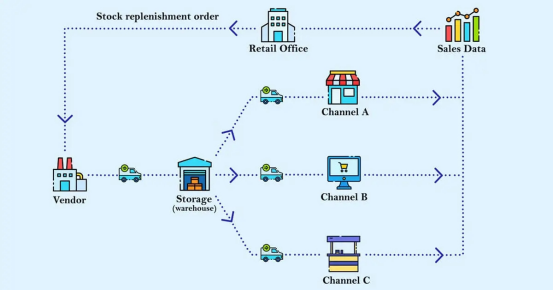
The primary obstacle to effective supply chain decarbonization is not a lack of executive intent, but poor reliability of upstream data. This deficit is particularly acute when sourcing from key global manufacturing hubs like China, where generic international databases fail to reflect ground-level operational realities.
When category managers rely on generic global emission factors, they risk miscalculating the true carbon liability of their overseas procurement. A factory operating in a province dominated by hydro power may be penalized by standard national averages, while an inefficient facility receives an unearned pass. Without a unified carbon accounting software platform to standardize supplier inputs, cross-supplier comparisons remain inaccurate.

Automating Sustainable Sourcing with AI Carbon Agents
Addressing these data gaps across thousands of tier-1 and sub-tier suppliers requires shifting from manual spreadsheets to an automated AI sustainability platform. The AI carbon agent operates as an intelligent extension of the procurement team, interpreting complex bill of materials (BOM) data, energy bills, and environmental product declarations (EPDs) to generate actionable sourcing insights.
Pinpointing Hotspots Across Complex BOMs
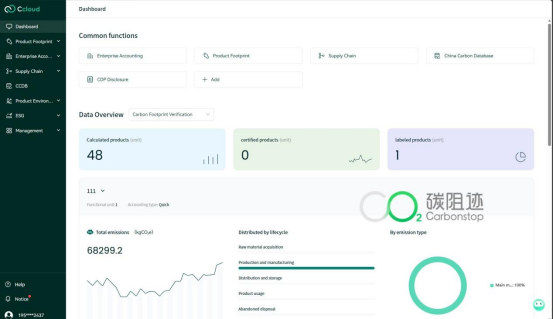
The AI carbon agent automates the creation of product carbon models compliant with ISO 14067 and the GHG Protocol Product Standard. By digesting raw supplier activity data for rigorous carbon footprint analysis, the agent immediately isolates carbon hotspots—such as an energy-intensive smelting step or a specific alloy supplier—allowing category managers to focus negotiations where emissions reduction yields the highest financial and environmental return.
Procurement teams can run dynamic "what-if" simulations prior to contract execution: evaluating how shifting a material specification or transitioning a sub-tier supplier to a cleaner regional grid alters the final product carbon footprint.
Validating Upstream Data via Localized Emission Benchmarks
To ensure data integrity without adding administrative drag, our supplier carbon assessment platform subjects all supplier-submitted inputs to multi-layered automated verification.
This verification relies on Carbonstop’s China Carbon Database (CCDB)—the industry’s largest localized database, encompassing over 510,000 verified data entries, including more than 300,000 province- and sector-specific Chinese emission factors.
• How Logic Self-Validation Works: When a supplier uploads activity metrics into the AI carbon agent, the system automatically cross-references inputs against regional energy grids, industrial benchmarks, and process baselines. It flags mathematical anomalies, unit misalignments, and out-of-range energy consumption figures before data touches the procurement dashboard.
By pairing automated logic checks with localized emission factor precision, procurement leaders obtain audit-ready datasets capable of withstanding third-party verification from bodies such as SGS, ensuring smooth compliance with CSRD disclosures and CDP filings.

From Metrics to Margin: Building a Low-Carbon Value Chain
Adding product-level carbon data to sustainable procurement does not cut into profits. It gives buyers a clear "carbon-to-value" measure that weighs unit price against rules and daily performance.
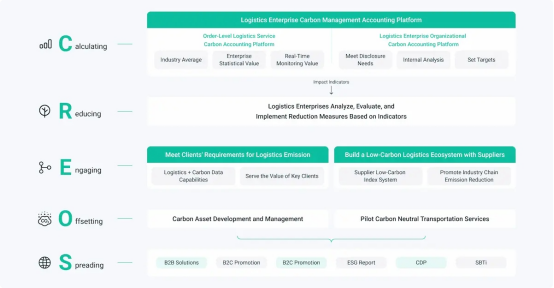
A solid supplier sustainability assessment lets teams compare vendors to others in the field. They can then offer longer contracts to suppliers that move early on lower emissions. Spotting low-carbon choices early stops "carbon debt" from piling up. High-emission specs cost more to fix later in the cycle. Solid carbon numbers also help firms win recognized eco labels and hold market share where carbon rules matter most.

Optimize Your Supply Chain Carbon Exposure
Evaluating supplier carbon intensity requires data precision, not estimates. Request a technical demonstration of Carbonstop's carbon management platform and AI carbon agent to see how localized factor accuracy, automated data validation, and complete supply chain decarbonization tools can optimize your product carbon footprints.

FAQ
How does product-level carbon data impact the total cost of ownership (TCO) in procurement?
While lower-carbon materials occasionally carry a modest green premium, robust carbon footprint analysis protects TCO by mitigating exposure to import tariffs like CBAM, avoiding non-compliance penalties under CSRD, and preventing costly retroactive supply chain redesigns. Furthermore, granular footprint analysis consistently uncovers underlying material and energy inefficiencies, driving direct operational savings for suppliers that can be shared across the contract.
Why is supplier "primary data" mandatory for international reporting standards?
Frameworks such as the EU Battery Regulation, CSRD, and CBAM explicitly penalize or prohibit the long-term use of secondary, spend-based averages. Primary activity data—direct energy bills, specific fuel types, and verified vendor BOMs—is required because it reflects actual manufacturing performance. Using a dedicated supplier carbon assessment platform to gather primary data prevents greenwashing and allows companies to capture real emission reductions achieved by their suppliers.
Can AI-driven carbon accounting tools completely replace human audit expertise?
An AI sustainability platform serves as an automated force multiplier rather than a total replacement for human judgment. The AI carbon agent automates data extraction, identifies statistical anomalies, and matches specific activity data to localized emission factors. For complex or unusual industrial scenarios, this AI-validated data is paired with expert review to ensure full technical defensibility during formal third-party audits.
Why are localized emission databases critical for global sourcing decisions?
National or global emission factor averages blur regional variations in grid intensity and manufacturing technology. For example, industrial electricity emissions in China vary significantly between coal-heavy northern provinces and hydro-rich southern regions. Utilizing specialized carbon accounting software powered by localized emission factors ensures that procurement teams accurately evaluate suppliers, enabling effective supplier sustainability assessment and smarter sustainable procurement decisions.


