


 490
490
As international regulations like the EU Carbon Border Adjustment Mechanism (CBAM) and the Corporate Sustainability Reporting Directive (CSRD) take full effect, manufacturing executives face unprecedented scrutiny over ESG compliance and product-level carbon metrics. For enterprise leaders navigating global industrial supply chains, generic carbon estimations and unverified secondary averages no longer suffice. European buyers, commercial partners, and third-party auditors now require mathematically rigorous, fully audit-ready product carbon footprint (PCF) data grounded in verified operational reality.
Achieving this level of compliance across intricate manufacturing supply chains requires moving beyond legacy spreadsheets and generic estimation tools. Carbonstop provides the specialized product carbon footprint software, regional emission factor intelligence, and domain expertise required to convert complex industrial Bill of Materials (BOM) data into audit-ready carbon credentials.

The Compliance Mandate: Why Generic AI and Secondary Data Fail Third-Party Audits
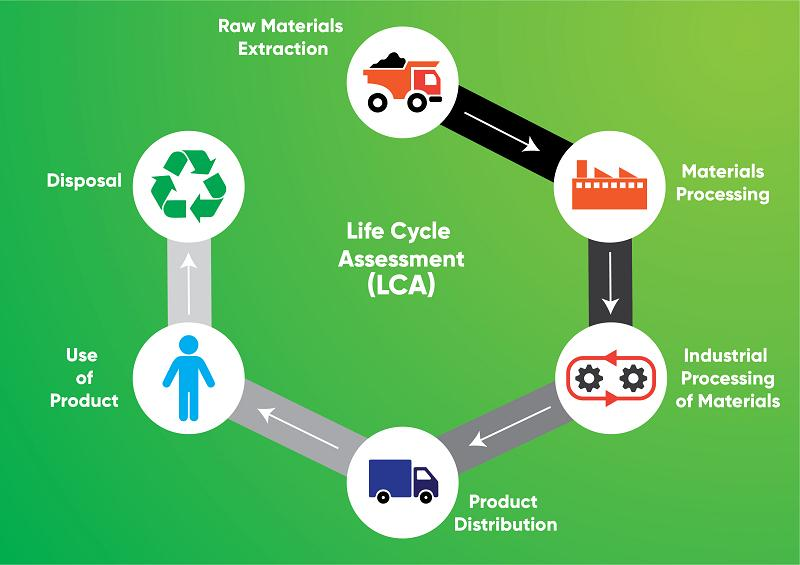
In product carbon accounting and Life Cycle Assessment (LCA), the margin for error is shrinking rapidly. Third-party assurance bodies—such as SGS, TÜV, and Bureau Veritas—evaluating compliance under ISO 14067 must verify explicit system boundaries, allocation methodologies, and primary activity logs. When export products enter regulated markets, auditors require absolute clarity on data lineage from raw material extraction through the factory gate.
In response to tight deadlines, many enterprise teams have turned to generic Large Language Models (LLMs) and generalist sustainability reporting software. However, these tools introduce severe regulatory and commercial vulnerabilities:
- Factor Hallucination and Opaque Methodologies: Broad-purpose AI models frequently hallucinate emission factors or apply incorrect global averages that ignore specific industrial processing routes. This creates "black-box" calculations that fail basic audit checks.
- The Regional Disconnect in Asian Supply Chains: Global databases like Ecoinvent often rely on outdated or aggregated regional averages for Asian manufacturing hubs. Applying a generic European or global electricity factor to a factory operating in East China severely distorts a product's actual footprint—exposing exporters to unjust CBAM penalty tariffs or greenwashing accusations in their Scope 3 carbon reporting.
- Lack of Auditable Data Lineage: Third-party verification demands a transparent trail: raw energy bills, mass balance calculations, cut-off rule documentation, and explicit Data Quality Indicator (DQI) scores. Generic software rarely records these underlying transformation logs.

Bridging the Gap: Automated Rigor and Localized Factor Precision
To balance operational efficiency with uncompromising regulatory compliance, manufacturing organizations require a purpose-built carbon accounting platform designed explicitly for ISO 14067 and GHG Protocol Product Standards.
Carbonstop solves these operational bottlenecks by combining specialized AI carbon accounting automation with the world’s most granular regional database for manufacturing:
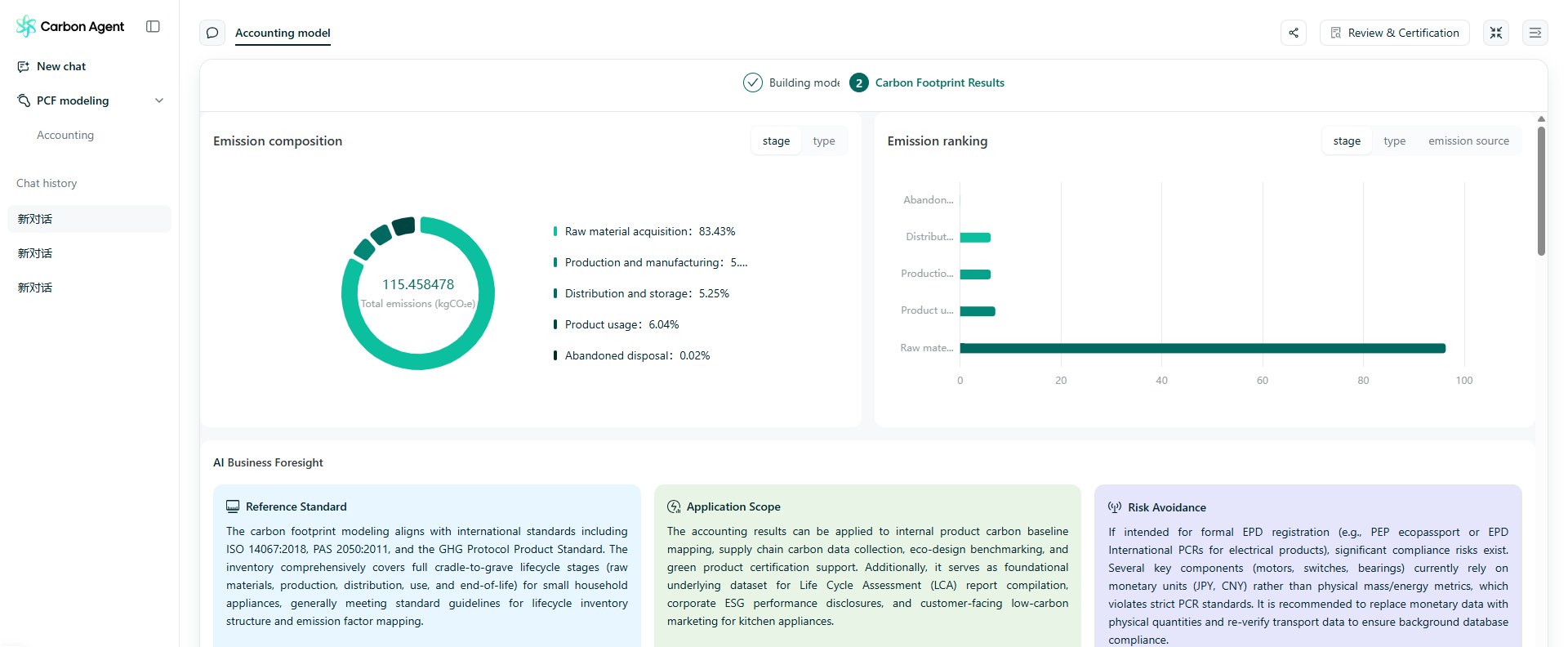
- Automated Boundary Mapping & Assumption Logging: Carbonstop’s specialized Carbon Agent—an advanced AI carbon management platform—integrates directly with enterprise ERP and PLM systems to map complex industrial BOMs. It automatically establishes precise cradle-to-gate or cradle-to-grave system boundaries for LCA, records allocation rules (mass, economic, or energy), and generates an unalterable calculation log detailing every data transformation for auditor inspection to yield an audit-ready product carbon footprint.
- Hyper-Local Precision via China Carbon Database (CCDB): Accurate Scope 3 Category 1 emissions and ISO 14067 PCF calculations depend entirely on regional emission factor precision. Carbonstop’s proprietary China Carbon Database delivers over 510,000 verified global and localized carbon data points. By capturing hyper-local grid emission factors, specific thermal energy mixes, and localized processing techniques across China and broader Asian supply chains, Carbonstop ensures manufacturing footprints reflect true operational performance rather than punitive global assumptions.

Operationalizing PCF Accounting: Integrated Platforms and Expert Support
Scaling enterprise carbon accounting across thousands of Stock Keeping Units (SKUs) requires more than standard software—it demands a flexible digital infrastructure tailored to complex manufacturing environments.
Carbonstop's product carbon footprint software integrates seamlessly into existing enterprise IT architectures, enabling automated data pipelines from plant-level energy management systems (EMS) and procurement databases. Through dynamic scenario modeling, engineering and sustainability teams can simulate lower-carbon raw material substitutions, optimize process energy efficiency, and evaluate eco-design choices before full-scale production begins, driving seamless sustainability reporting software integration.
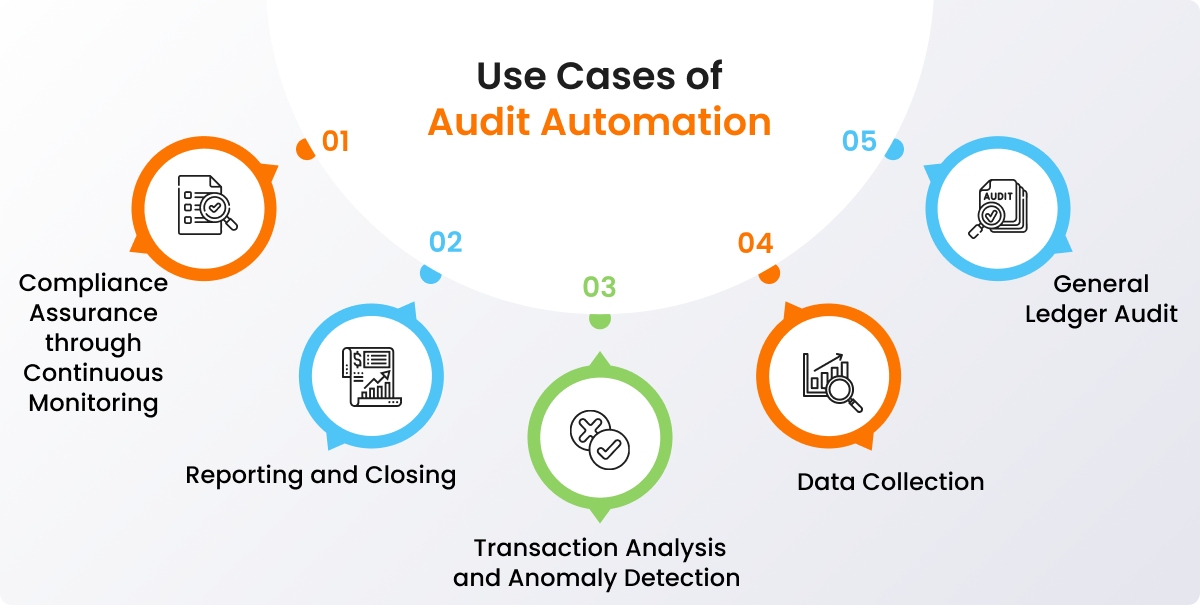
Because software execution is most powerful when backed by domain expertise, Carbonstop pairs its technology with certified carbon accounting practitioners. Our consulting teams assist manufacturing enterprises through supplier engagement campaigns, primary activity data collection for GHG inventory verification, and end-to-end preparation for third-party ISO 14067 audits, ensuring rapid certification and frictionless international market access.

Commercial Advantage: Securing Market Access and Premium Positioning
Verifiable carbon reporting and ESG compliance are no longer merely compliance burdens; they are critical commercial differentiators. Enterprise buyers in Europe and North America increasingly incorporate carbon intensity metrics into vendor procurement scorecards. Suppliers that provide an audit-ready product carbon footprint declaration gain immediate market access, protect commercial margins against CBAM tariffs, and establish long-term strategic supplier relationships.

Actionable Steps for Manufacturing ESG Leaders
- Audit Primary Data Lineage: Evaluate current PCF calculations against ISO 14067 and LCA requirements, ensuring every BOM line item has an auditable source log and DQI score.
- Replace Secondary Global Averages: Transition from generic global databases to localized emission factor repositories (like China Carbon Database) to eliminate inflated Scope 3 assumptions in Asian supply chains.
- Automate BOM Ingestion: Deploy domain-specific AI toolsets like Carbon Agent on a dedicated AI carbon management platform to connect ERP system data directly to standardized PCF calculation workflows.
- Prepare for Third-Party Verification: Partner with technical assurance specialists using robust product carbon footprint software to establish complete audit trails prior to formal SGS or TÜV verification reviews.

Ready to Streamline Your Audit-Ready Carbon Footprinting?
Don't let complex global compliance standards bottleneck your export growth or slow down procurement approvals. Partner with Carbonstop and deploy our carbon accounting platform to transform complex supply chain data into verifiable, market-leading sustainability credentials.
[Request a Custom Walk-Through with Carbonstop Technical Experts Today]
FAQ
Why do generic AI tools fail third-party ISO 14067 audits?
Generic AI models lack domain-specific AI carbon accounting validation logic, regularly hallucinate background emission factors, and fail to maintain immutable calculation logs. ISO 14067 auditors require verifiable primary activity data, explicit allocation documentation, and transparent emission factor lineage that generalist AI tools cannot provide, making specialized sustainability reporting software essential.
How does regional emission factor accuracy affect CBAM liability for manufacturing exporters?
CBAM calculations require accurate primary data or specific localized default values. Relying on conservative global default factors often artificially inflates reported carbon intensity in Scope 3 calculations, leading to significantly higher carbon tariff penalties upon EU entry. Utilizing localized databases like China Carbon Database within Carbonstop's product carbon footprint software ensures accurate, fair accounting for ESG compliance.
How does Carbonstop assist with primary data collection across multi-tier supplier networks?
Carbonstop combines automated supplier survey modules with Carbon Agent AI-enabled validation routines that check incoming supplier activity data for unit inconsistencies, statistical anomalies, and missing operational parameters, drastically increasing supplier response rates and data fidelity for overall carbon accounting.
What is the typical path from raw ERP/BOM data to a certified PCF label?
The process begins by ingesting BOM and facility energy data into Carbonstop's carbon accounting platform, applying Carbon Agent to map system boundaries and match China Carbon Database factors, running mass/energy allocations according to ISO 14067 and LCA standards, generating an audit-ready product carbon footprint documentation log, and subjecting the final portfolio to third-party verification by accredited bodies.


