


 510
510
In global supply chain management, supply chain carbon accounting faces a big change. Large brand owners, manufacturers, and buyers no longer rely on broad yearly averages for Scope 3 transport emissions. Rules like the Corporate Sustainability Reporting Directive (CSRD), the International Sustainability Standards Board (ISSB), and the EU Carbon Border Adjustment Mechanism (CBAM) now require firms to calculate exact order-level shipment carbon footprint numbers across freight networks.
Working out carbon emissions per shipment at the single order level has moved past routine ESG reports. It now acts as a key business tool. Procurement leaders who use an enterprise freight emissions calculator gain better terms in carrier talks, cut audit risks, and support real emission cuts in supply chains.

The Death of Spend-Based Averages in Freight Procurement
Historically, enterprise procurement teams relied on top-down spend estimates to account for Scope 3 logistics emissions under Category 4 (Upstream Transportation) and Category 9 (Downstream Transportation). By multiplying logistics expenditure by regional industry averages, organizations estimated overall carbon footprints.
While simple, spend-based carbon accounting introduces significant enterprise risk under modern regulatory regimes:
- Audit Exposure under Mandatory Disclosure: Third-party assurance auditors operating under CSRD or CDP frameworks routinely reject top-down financial proxies. Spend-based metrics lack the primary data lineage required to achieve limited or reasonable assurance in freight carbon reporting.
- The "Decarbonization Paradox": Revenue-based formulas fail to capture operational improvements. If a logistics provider optimizes routes, increases payload load factors, or shifts volume from air to rail, spend-based models reflect zero emission reductions—and can even show increased carbon if freight costs rise.
- Inaccurate Landed Carbon Intensity: Generic industry averages distort actual greenhouse gas (GHG) intensity across international trade corridors, exposing importers to compliance errors under trade mechanisms like CBAM.
- To maintain regulatory compliance and achieve meaningful Scope 3 reductions, enterprise buyers are replacing financial proxies with activity-based, shipment-level carbon emissions tracking.

Technical Foundations: The ISO 14083 Standard and Operational Variables
Transitioning to order-level precision requires aligning supply chain data with globally recognized freight accounting frameworks. The cornerstone of modern logistics emission calculations is ISO 14083, which formalizes and expands upon the methodology established by the GLEC Framework.
ISO 14083 establishes standardized boundary definitions and allocation rules for calculating multimodal transport emissions across complex transport chains—encompassing road, ocean, air, and rail. Crucially, the standard mandates full Well-to-Wheel (WTW) accounting, requiring organizations to capture both direct fuel combustion (Tank-to-Wheel) and upstream energy production and distribution (Well-to-Tank).

Executing precise order-level calculations under ISO 14083 requires continuous ingestion of primary operational variables across every leg of a shipment:
- Mode and Asset Specifications: Vehicle engine standards, fuel types, vessel container classes, and localized grid carbon intensity for electrified rail or green freight transport fleets.
- Routing Dynamics: Actual distance traveled, intermediate transit hubs, port congestion factors, and multimodal transfer points.
- Payload Allocation Mechanics: Allocating total transport legs accurately to calculate carbon emissions per shipment based on mass, cubic volume, and vessel or container load factors.

Overcoming the "China Supply Chain Gap" in Global Logistics
For multinational procurement teams sourcing or operating in Asia, capturing accurate Scope 3 transport emissions presents a unique operational challenge. Standard global emission factor databases rely heavily on North American or Western European transport baselines. When applied to Asian supply chains, these generic factors generate error margins of up to 40%, leaving global enterprises vulnerable during CSRD and ISSB assurance audits.
This is where localized operational intelligence becomes critical. Carbonstop addresses this data deficit through the China Carbon Database (CCDB)—a proprietary repository containing over 300,000 localized transport emission factors. By integrating granular, region-specific data for China's regional electrical grids, inland waterway barges, coastal shipping routes, and domestic trucking fleets, Carbonstop enables multinational procurement teams to execute accurate logistics emissions tracking across Asian supply chains with verified precision.

Enterprise Platform Architecture: Carbonstop’s Automated Logistics Suite
Carbonstop provides an integrated technology stack engineered to convert complex, fragmented freight data into automated, audit-ready carbon intelligence.
- Enterprise Logistics Carbon Calculator: A dedicated calculation engine that functions as an advanced logistics carbon calculator, processing complex, multimodal trade routes automatically. By leveraging native RESTful APIs, the logistics carbon calculator embeds directly into existing Enterprise Resource Planning (ERP) and Transportation Management Systems (TMS) to compute the exact shipment carbon footprint of individual order IDs in real time.
- AI-Enabled Carbon Agent: An intelligent automation layer designed to parse unstructured carrier documents, standard shipment waybills, and multimodal logistics receipts. The Carbon Agent automatically validates primary activity data, flags anomalies, and matches specific transport legs with appropriate localized transport emission factors.
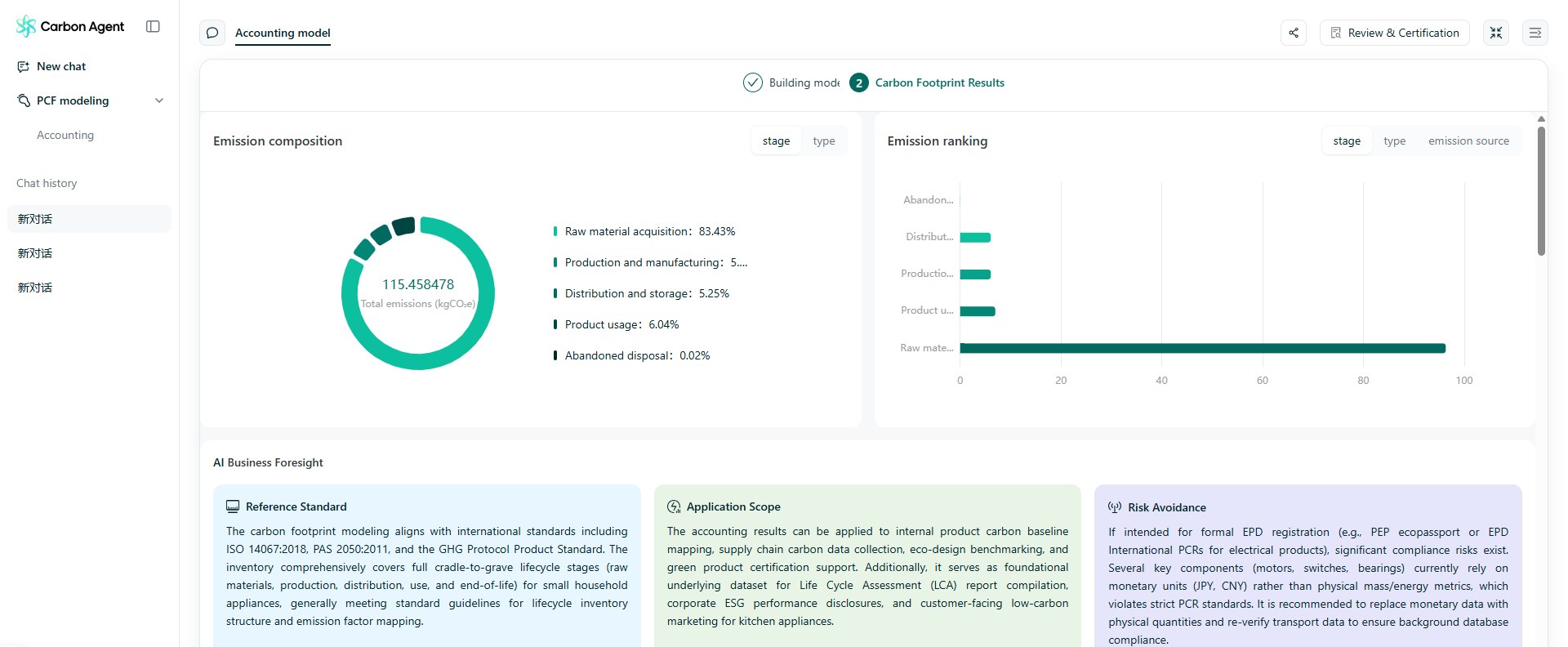
- Supplier Engagement & Audit Workflows: A centralized management module that streamlines primary data collection across carrier networks for audit-ready freight carbon reporting. By providing carriers with standardized ingestion templates, procurement teams can replace proxy metrics with verified operational data while maintaining complete data lineage for third-party auditors.

Operational Roadmap: Implementing Order-Level Carbon Tracking
Procurement and supply chain executives need a clear four-phase plan to roll out an order-level logistics emissions tracking system.
- Audit Data Architecture and System Boundaries: Review the main activity data now held in your TMS and ERP systems. This covers details like origin and destination postal codes, shipment weight, and carrier equipment codes. Spot any areas where spend-based estimates still appear in supply chain carbon accounting.
- Establish ISO 14083 API Integrations: Link a freight emissions calculator to your main procurement and logistics tools. This lets the system handle shipment-level carbon emissions right when a shipment is created, or an invoice is checked.
- Institute Carrier Data SLAs: Revise tender rules and vendor contracts. Require carriers to share primary data, such as fuel use or equipment details, that meets ISO 14083 standards. Do this in quarterly reviews to back green freight work.
- Leverage Insights for Decarbonization SLAs: Use order-level carbon metrics to build scenario models. Shift freight spend to carriers with lower emissions. Improve container loads and move from air to sea-rail where it makes sense.

Strategic Commercial Advantage: Turning Compliance into Value
Implementing granular supply chain carbon accounting transforms a regulatory burden into a core driver of commercial value.
From a procurement perspective, measuring carbon emissions per shipment provides unprecedented visibility into landed carbon intensity, enabling buyers to factor verified emission performance directly into logistics carrier scorecards alongside cost and transit time. From a commercial perspective, enterprise shippers capable of providing exact shipment carbon footprint reports empower their downstream corporate customers to satisfy CSRD Scope 3 logistics emissions reporting requirements effortlessly—creating a powerful competitive moat in B2B supplier selection.
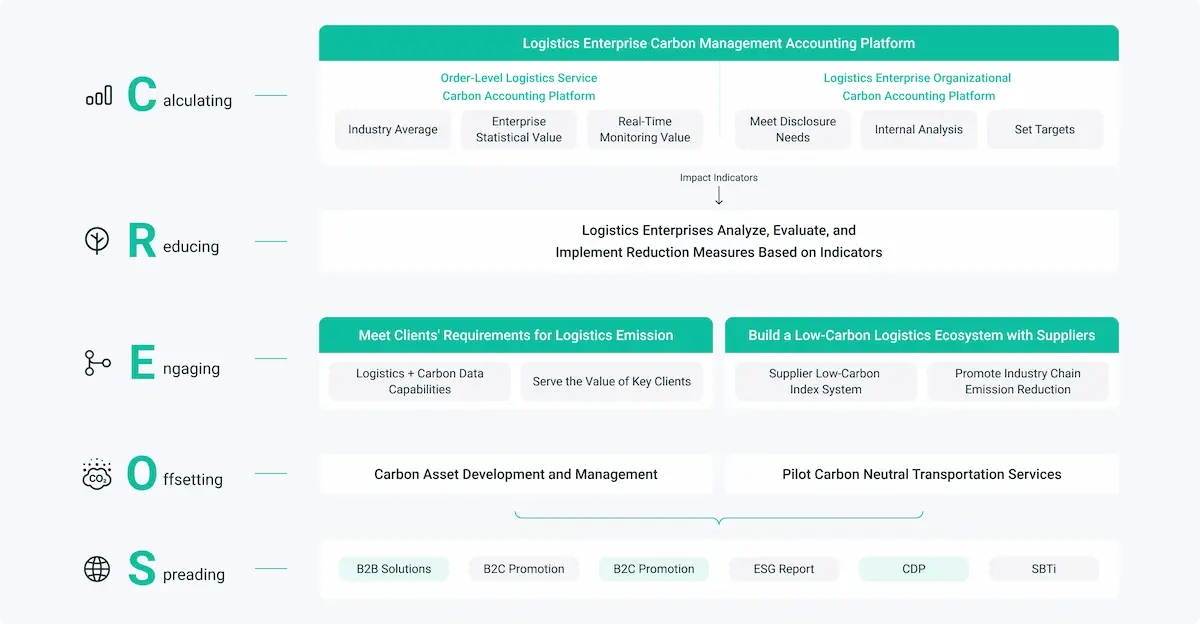
Ultimately, moving from spend-based estimates to order-level calculation bridges the gap between ESG intent and procurement execution, delivering transparent, resilient, and audit-ready green freight operations across global supply chains.

Build an Audit-Ready Green Freight Network
Transition your supply chain from spend-based estimates to verifiable, order-level carbon intelligence. Download the Enterprise Procurement Guide to ISO 14083 Logistics Accounting or contact Carbonstop's supply chain experts today to request a customized demonstration of our logistics carbon calculator.
FAQ
Q: How do order-level carbon calculations differ from traditional spend-based Scope 3 estimates?
A: Spend-based estimates multiply financial expenditure by broad industry averages, failing to capture operational realities. Order-level calculations utilize primary operational data—such as exact shipment mass, routing distance, equipment type, and fuel specifications—aligned with ISO 14083 to deliver verifiable, audit-ready shipment-level carbon emissions per order ID.
Q: What international standards govern enterprise freight carbon calculations?
A: Modern freight carbon accounting is primarily governed by ISO 14083 and the GLEC Framework. These standards establish unified rules for Well-to-Wheel (WTW) greenhouse gas accounting and the calculation of multimodal transport emissions across passenger and freight networks.
Q: Why are localized China emission factors critical for multinational enterprise reporting?
A3: Global generic databases rely heavily on Western grid and freight averages, creating severe inaccuracies when applied to Asian manufacturing and transport hubs. Utilizing localized transport emission factors from repositories like the China Carbon Database (CCDB) eliminates calculation discrepancies and ensures compliance during international CSRD and ISSB audits.
Q: How does Carbonstop integrate with existing logistics software infrastructure?
A: Carbonstop integrates directly via RESTful APIs into existing Transportation Management Systems (TMS) and Enterprise Resource Planning (ERP) platforms, using its automated freight emissions calculator engine to compute the shipment carbon footprint at the point of order creation or invoice settlement.


