


 373
373For many procurement leaders, the next supply chain disruption will not begin with a delayed shipment. It will begin with a number that cannot be verified: a supplier's electricity consumption, an outdated emission factor, or a product carbon footprint that does not reconcile with the corporate inventory.
At Carbonstop, carbon data is treated as operational infrastructure. Its enterprise carbon accounting capabilities help companies define boundaries, identify emission sources, collect activity data, match appropriate factors, calculate emissions, and produce reviewable reports. Ccloud and the China Carbon Database (CCDB) add digital workflows, localized data, AI-assisted factor matching, and traceability. This is not a general ESG platform or a dedicated Scope 3 product. The core is enterprise carbon management, with customized services that can connect corporate accounting, product footprints, and supplier data processes when needed.
A centralized carbon management platform gives procurement and operations teams a common system for deciding where data is weak and which interventions can reduce emissions and supply risk.

The Carbon Data Problem Is Now a Supply Chain Problem
Supplier sustainability tracking has moved from annual questionnaires to recurring operational management. Regulations, customers, lenders, and internal targets increasingly require data that is timely, comparable, and defensible.
Fragmented data creates hidden operational risk
Most companies possess substantial supplier information, but it is distributed across procurement systems, spreadsheets, factories, consultants, and email attachments:
- Procurement cannot compare supplier carbon performance on a consistent basis.
- Operations teams cannot distinguish efficiency improvements from changes in estimation methods.
- Product and sustainability teams reconcile versions instead of analyzing reductions.
- Reviewers cannot easily trace a figure to its source, factor, method, and approval history.
- This fragmentation matters more as climate disclosure matures. The GHG Protocol requires clear boundaries and consistent treatment of Scope 1, Scope 2, and relevant Scope 3 categories. IFRS S2, issued by the International Sustainability Standards Board (ISSB), covers climate-related disclosure, including greenhouse gas emissions. The EU Corporate Sustainability Reporting Directive (CSRD), through the European Sustainability Reporting Standards, can require material value chain information, while the Carbon Border Adjustment Mechanism (CBAM) creates embedded-emissions obligations for covered imports. These frameworks differ, but all demand explainable carbon data.

Connecting Product Footprints with Enterprise Carbon Accounting
A resilient data architecture does not force product and corporate accounting into one calculation. It allows them to share governed inputs while preserving their different boundaries and purposes.
img.Connecting Product Footprints with Enterprise Carbon Accounting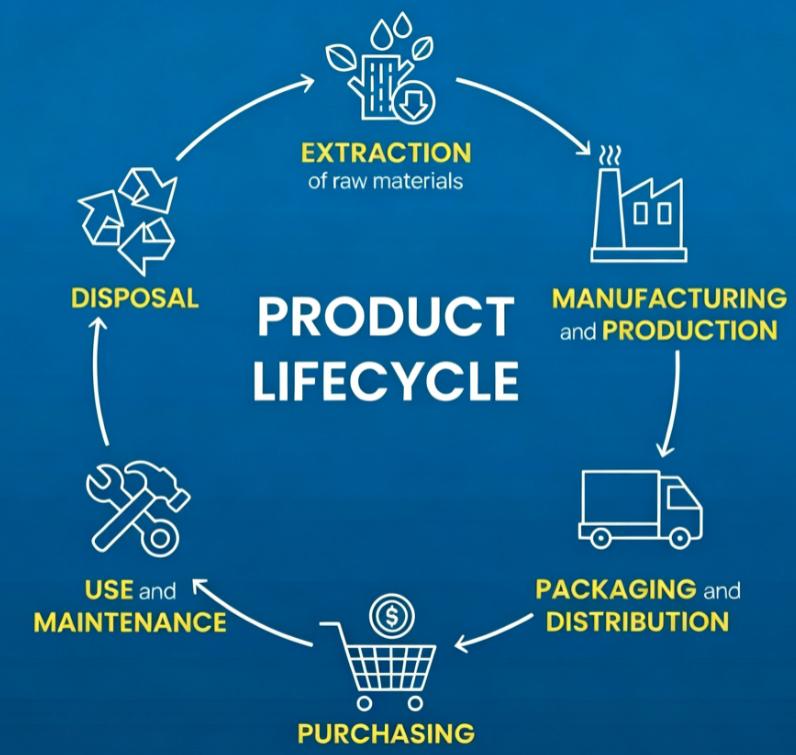
The two views answer different management questions
Enterprise carbon accounting asks how much an organization emitted during a reporting period. Product carbon footprinting measures emissions associated with a defined product system and functional unit across specified life-cycle stages.
The connection should be deliberate:
- Facility energy, materials, logistics, and production volumes can serve as governed source data.
- Corporate inventories aggregate emissions by entity, site, scope, and period.
- Product footprints allocate emissions using documented rules.
- Supplier-specific data can inform product calculations and applicable corporate inventory categories.
- Reconciliation controls explain differences in boundaries, allocation, periods, and exclusions.
The objective is not to make the totals identical, but to make their relationship visible. Without that link, a company may report a credible corporate total while making sourcing decisions with inconsistent assumptions.
A shared data model prevents repeated collection
- Integrated carbon management platforms should separate reusable data from calculation logic, so suppliers do not resubmit the same figure for multiple purposes.
- A centralized model can store:
- Supplier, facility, material, product, and purchase-order identifiers.
- Period, geography, unit, source, activity data, and factor version.
- Verification status, approvals, change history, and allocation links.
- This structure enables automated supplier carbon data collection while qualified teams retain control of boundaries, methods, exceptions, and material assumptions.

Building a Closed-Loop Supplier Carbon Management Process
A supply chain decarbonization platform creates value only when it converts collected information into repeated action. The operating model should move from request to validation, decision, engagement, and measured improvement.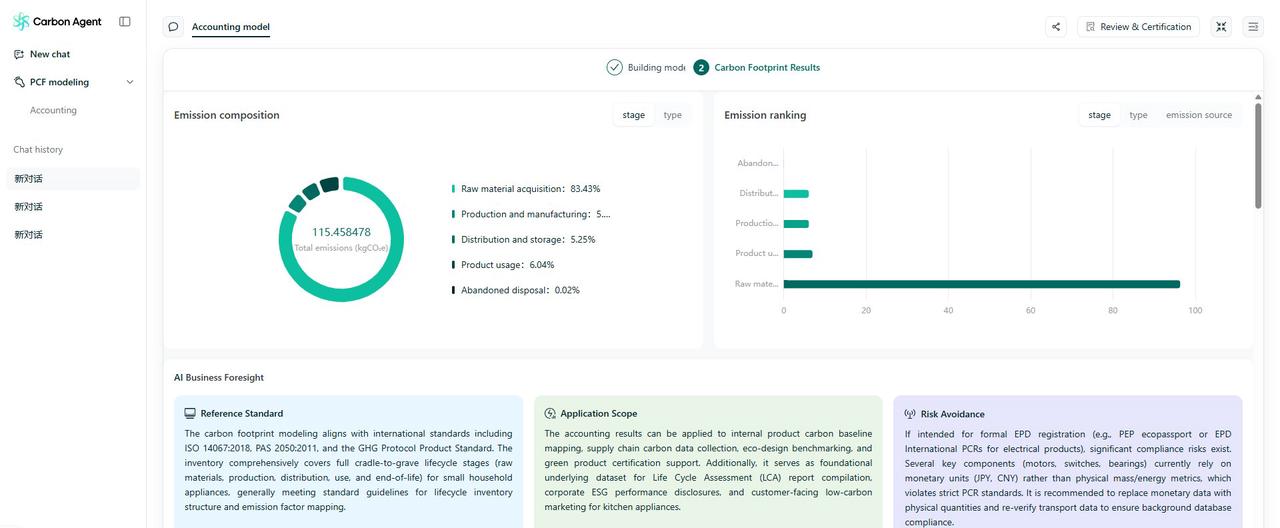
Step 1: Prioritize suppliers by carbon and business exposure
Do not ask every supplier for the maximum dataset. Segment the supplier base using:
- Spend, volume, and estimated emissions.
- Carbon-intensive materials and geographic concentration.
- Criticality, substitutability, and supplier capability.
- Exposure to customer requirements or mechanisms such as CBAM.
- This creates a practical supplier emissions reduction program, with deeper engagement for strategic, high-emitting suppliers.
Step 2: Collect data with context, not just fields
- Supplier carbon data collection should specify boundary, period, unit, methodology, evidence, and intended use. Templates must distinguish primary data from estimates and clarify whether figures cover a facility, company, material, or product.
- Carbonstop's enterprise carbon accounting workflow provides a useful foundation: set boundaries, identify sources, define collection frequency, gather activity data, match factors, calculate, and report. Customized templates, approval routes, integrations, and deployment models can reflect existing controls.
Step 3: Validate before scoring
- Supplier emissions tracking becomes credible only when submissions are checked. Effective supplier emissions data validation combines automated tests with expert review:
- Unit, period, completeness, variance, and intensity checks.
- Duplicate, outlier, and inconsistent boundary detection.
- Evidence checks against invoices, meters, or calculation files.
- Factor matching by geography, technology, time, and availability.
- Flags for estimates, proxies, and unsupported claims.
- Carbonstop's AI-assisted workflows and localized Chinese emission factors are particularly relevant for sourcing from China, where generic factors may obscure regional differences. The advantage is not simply factor coverage; it is keeping sources, selections, assumptions, and calculations reviewable, strengthening supplier carbon data quality.
Step 4: Turn scores into supplier decisions
- Supplier carbon performance management should influence commercial and operational choices. Useful supplier carbon management software outputs include:
- Carbon-performance dashboards and supplier benchmarks.
- Reduction scenarios for energy, materials, logistics, and processes.
- Corrective plans with owners, milestones, and evidence requirements.
- Sourcing criteria balancing carbon, cost, quality, resilience, and capacity.
- A score rarely changes emissions. Improvement occurs when buyers and suppliers agree on a baseline, levers, responsibilities, and comparable measures.

What Procurement and Operations Leaders Should Do Next
Centralization is a management transformation, not a software installation. Leaders should establish governance before scaling supplier participation.
Start with a controlled 90-day pilot
A focused pilot can test the operating model:
- Select one high-impact category and representative suppliers.
- Map corporate, product, procurement, and supplier data sources.
- Define one governed data model and hierarchy.
- Configure validation, approvals, and escalation thresholds.
- Reconcile product results with the enterprise inventory.
- Produce two decisions, such as an improvement plan and sourcing scenario.
- Beyond response rates, track primary-data coverage, resolved exceptions, calculation time, traceability, and reduction actions.
Centralized Data Is the Foundation of Value Chain Resilience
Supply chain decarbonization succeeds when carbon information becomes decision-ready for the executives selecting suppliers, designing products, and managing risk. A centralized carbon management platform establishes this shared language while preserving the necessary technical distinctions between enterprise inventories and product footprints.
Request a Carbonstop Data & Workflow Assessment to benchmark your primary supplier data against the China Carbon Database (CCDB) and build an audit-ready 90-day value-chain decarbonization roadmap.

FAQ
How does centralized carbon data improve supply chain resilience?
It exposes data gaps, high-emission dependencies, and supplier concentration risks earlier, enabling procurement teams to prioritize engagement, alternatives, and operational improvements.
Should companies collect primary data from every supplier?
Not immediately. Use risk-based segmentation, prioritize material suppliers, and apply transparent estimates where primary data is unavailable while building supplier capability over time.
Can product carbon footprints be added directly to a corporate inventory?
Usually not. The calculations may use different boundaries, allocation rules, and periods. Shared source data should be reconciled through documented mapping rather than simple addition.
What makes supplier carbon data audit-ready?
Clear boundaries, source evidence, documented methods, versioned emission factors, validation records, approvals, and a traceable change history are essential for review and assurance.


