


 1680
1680Recently, Carbonstop has helped Seasons HK Ltd (hereinafter referred to as "Seasons") successfully join the "Science-Based Targets initiative" (SBTi), with its carbon targets officially approved by SBTi. Seasons commits to reducing Scope 1 and Scope 2 carbon emissions by 23% from 2021 levels by 2030, while also aiming for reductions in its Scope 3 emissions.
About 「Seasons HK Ltd」

Founded in 1998, Seasons HK Ltd is a globally leading manufacturer of holiday-themed costumes and props. Seasons provides costumes, accessories, and other peripheral products for various important festivals and celebrations, including Halloween, St. Patrick's Day, American Independence Day, and everyday parties. It holds licenses for internationally renowned cartoon animation IPs. Seasons has served over 60 customers, most of whom are Fortune Global 500 companies, including Disney, Walmart, and Target.
In this regard, the Chairman of Seasons stated, “Seasons joining SBTi” will actively respond to ambitious climate goals set by major brands across the value chain, turning challenges into opportunities, and actively promoting actions against climate change.
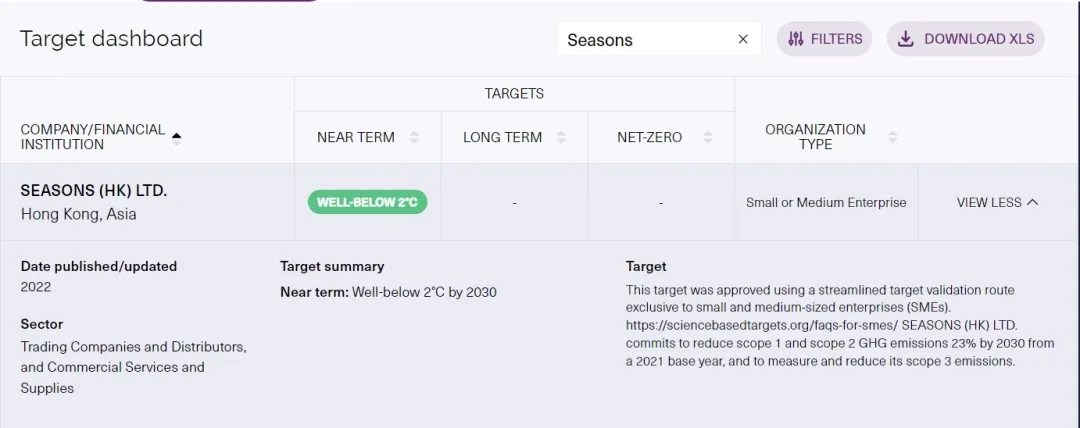
Source: SBTi Official Website
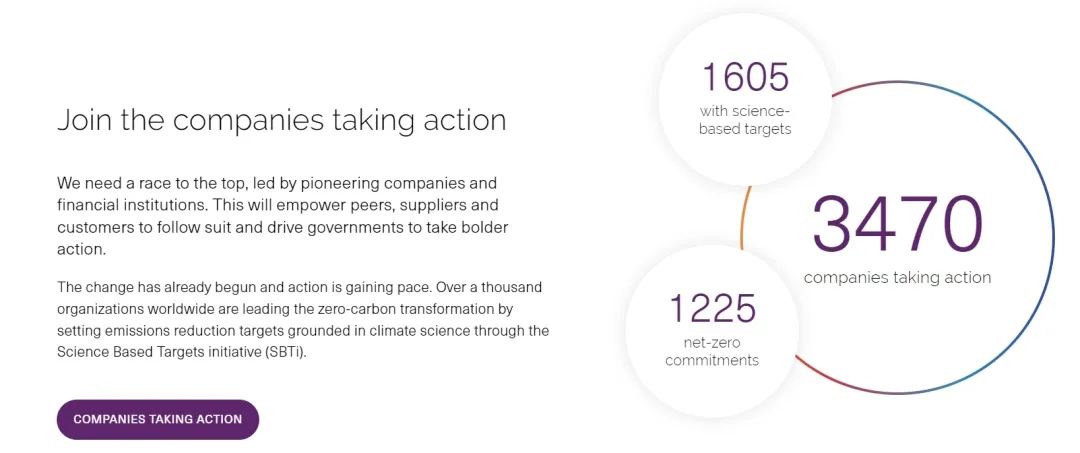
It is reported that as of August 1, 2022,globally, a total of 3,470 enterprises and financial institutions have applied to join SBTi, and 1,605 enterprises' carbon targets have been officially recognized by SBTi. Among them, there are 62 Chinese enterprises, and Hong Kong-based enterprise Seasons, as a supplier to Walmart and Target, is one of them.

What is SBTi?
The Science-Based Targets initiative (SBTi) is a global initiative launched in 2015 by the World Wildlife Fund (WWF), the Global Environment Information Research Center (CDP), the World Resources Institute (WRI), and the United Nations Global Compact (UNGC). The initiative provides industry-specific resources and practical guidance to ensure that the greenhouse gas emission reduction targets and rates set by enterprises are consistent with the Paris Agreement's goal of limiting global temperature rise to below 2°C.
Source: SBTi Official Website
Although governments and enterprises around the world have already taken action to address global climate change, the current level of emission reduction efforts is still far from achieving the climate goals. SBTi represents a more scientifically grounded approach for enterprises to manage carbon emissions over the long term, objectively assessing the targets required to achieve global greenhouse gas emission reductions. In the process of global transition to a low-carbon economy, it can significantly enhance the competitiveness of enterprises.
Source: SBTi Official Website
Since the launch of the project in 2015,to date, a total of 3,470 enterprises and financial institutions have applied to join SBTi, among which Chinese enterprises number 194. Although the number of Chinese enterprises joining is not large, the growth rate is very rapid. From 13 enterprises in 2020, to 52 at the end of 2021, to today's 194. The number of Chinese enterprises joining SBTi continues to rise.

Why Do Enterprises Join SBTi?
If a few years ago, SBTi was just a badge of strength and influence for leading enterprises, then by the end of 2021, it has gradually become an international business norm and a standard for corporate climate action. More and more enterprises have seen the benefits of setting science-based targets.
The benefits of enterprises joining SBTi mainlyare reflected in two aspects: business and brand value. First, science-based targets lay a solid foundation for a company's long-term climate change strategy, enhancing its competitive advantage during the transition to a low-carbon economy. According to the latest research results from the Science-Based Targets initiative, setting science-based targets helps enhance brand reputation, increase investor confidence, meet regulatory requirements, and also promotes internal innovation within the company, helps save costs, and enhances the competitiveness of the enterprise, etc.
In the future, with changes in some key influencing factors, setting science-based targets will also be of significant importance to more Asian enterprises, such as the continuous expansion and tightening of carbon border adjustment mechanisms in Europe and America, the development of domestic carbon policies, and the growing sustainable awareness of domestic consumers, all of which are linked to SBTi, requiring enterprises to plan ahead, understand their own emission base, and formulate emission reduction targets and paths that fit the development of the enterprise.

Carbonstop Provides Protection for Enterprises Joining SBTi
Committing to join the Science-Based Targets initiative involves a scientific and rigorous process, which can be summarized in five main steps:
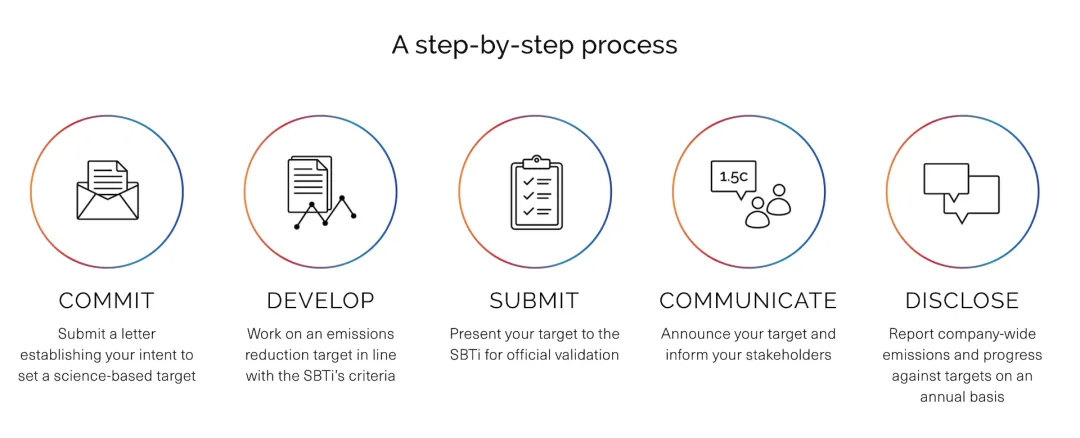
1. Submit: Submit a commitment letter indicating that the company intends to set a science-based target
2. Formulate: Develop emission reduction targets that comply with SBTi standards
3. Submit: Submit the company's targets to SBTi for complete validation
4. Communicate: Announce the company's science-based targets externally
5. Disclose: Report the company's emission situation annually and track target progress
Carbonstop conducts on-site investigations for enterprises, assists them in completing greenhouse gas inventories, formulates science-based carbon targets, and completes target submissions, mainly including:
- Helping enterprises complete SBT commitment application letters
- Conducting on-site research for enterprises, quantifying greenhouse gas emissions, and planning greenhouse gas reduction schemes
- Assisting enterprises in establishing energy baselines and setting science-based targets
- Submitting to SBTi and completing audit technical support for SBTi publicity
The path is long and arduous, but action leads to success. Setting science-based targets is a challenging process. Carbonstop has been deeply involved in the field of carbon management for more than ten years and has provided carbon disclosure and carbon neutrality target formulation and planning services to hundreds of leading enterprises in China. Empowering enterprises to achieve low-carbon and sustainable development. In the future, Carbonstop will focus on the different needs of enterprises in the process of low-carbon transformation, improve the carbon disclosure and carbon management level of enterprises, and contribute to the goal of limiting global warming to 1.5 degrees Celsius.


