


 685
68501 Carbonstop Joins the China Retail Industry Science-Based Targets Working Group as a Partner
In July 2018, Carbonstop joined the Chain Retail Industry Science-Based Targets Project as a member, collaborating with the China Chain Business Association (CCFA), World Wildlife Fund (WWF), and CDP to promote the formulation and implementation of science-based targets in China.

The "Science-Based Targets" initiative is a global effort aimed at helping businesses set scientifically grounded carbon reduction targets aligned with the two-degree decarbonization pathway and promoting the establishment of science-based targets as a business norm. However, due to the specialized requirements and international nature of science-based targets, progress in China has been slow. This project will advance through steps including questionnaire design and distribution, evaluation and summary analysis of feedback, on-site research to identify corporate carbon foundations and participation potential, provision of training activities and workshops, enterprise selection, and follow-up research to understand the foundation of science-based targets in Chinese enterprises, assist influential and willing enterprises in setting targets, and continuously improve.
02 Yan Luhui of Carbonstop Invited to Join the IPCC Sixth Assessment Report Expert Committee
The Intergovernmental Panel on Climate Change (IPCC) Sixth Assessment Report is expected to be completed in full by 2022, with the First Working Group Report now entering the substantive writing phase. Yan Luhui, founder of Carbonstop, has been invited to join the expert committee of this report, responsible for reviewing and other tasks related to the Sixth Assessment Report.
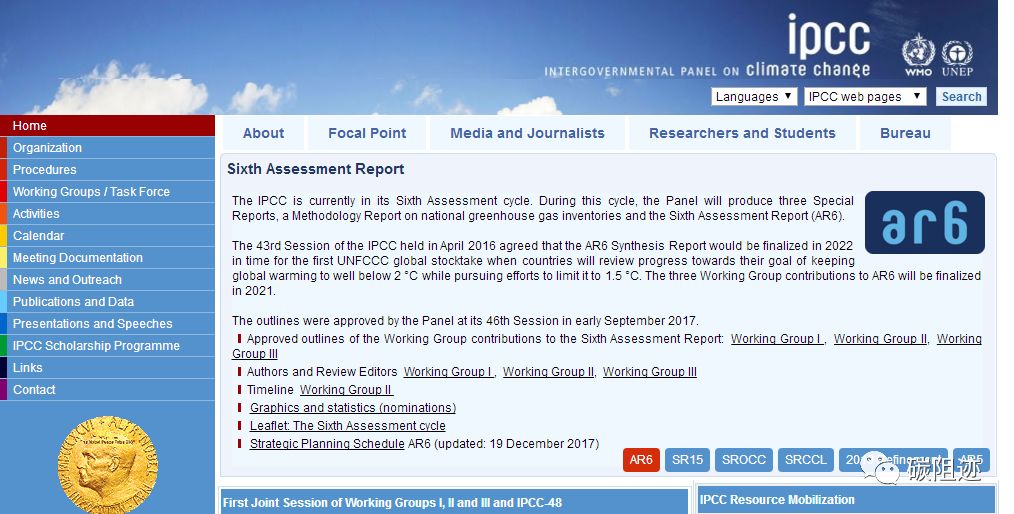
The IPCC was jointly established in November 1988 by the World Meteorological Organization and the United Nations Environment Programme. Over nearly 30 years, the IPCC has organized thousands of experts recommended by governments and relevant international organizations to complete the writing of five climate change scientific assessment reports. These assessment reports have become the scientific basis for international communities to understand climate change issues and promote the construction of climate governance systems. The IPCC Sixth Assessment Report was officially launched in 2015 and will compile three working group reports, a synthesis report, and three special reports on "Global 1.5°C Warming," "Climate Change and the Ocean and Cryosphere," and "Climate Change and Land," as well as the "2019 Refinement" methodology report. These assessment reports will profoundly influence the process of future international climate negotiations and actions taken by countries to address climate change.
03 Carbonstop Co-Initiates the "Joint Green and Energy-Saving Initiative" with NRDC, WRI, WWF, and Other Organizations
On June 11, 2018, Carbonstop, along with NRDC, WRI, WWF, and 12 other organizations, jointly initiated the "Joint Green and Energy-Saving Initiative," making detailed proposals for four major areas: industry, buildings, transportation, and lifestyle.
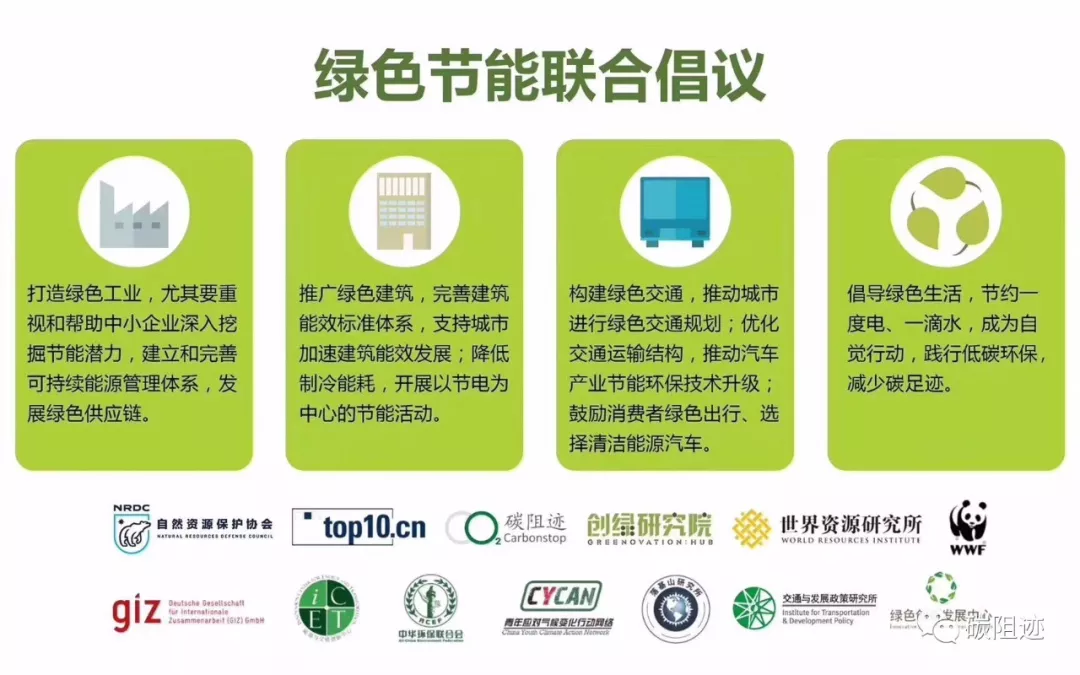
Green Industry
Promote a green industrial sector, particularly by supporting and assisting small and medium-sized enterprises to deeply explore energy-saving potential, establish and improve sustainable energy management systems, and develop green supply chains.
Green Buildings
Promote green buildings, improve building energy efficiency standards, support cities in accelerating building energy efficiency development; reduce cooling energy consumption, and conduct node-centered energy-saving activities.
Green Transportation
Build a green transportation system, promote urban green transportation planning; optimize the transportation structure, promote energy-saving and environmental protection technology upgrades in the automotive industry; encourage consumers to choose green travel and clean energy vehicles.
Green Lifestyle
Advocate a green lifestyle, save every kilowatt-hour of electricity and every drop of water, make it a conscious action, practice low-carbon living, and reduce carbon footprints.


