

![[Original Carbonstop] From Baidu's special report on low-carbon development in 2020 to how technology enterprises achieve carbon neutrality](/_next/image?url=https%3A%2F%2Ffactor-file.carbonstop.com%2Ffactor-test%2F93f40304ae5b4f46a4e2eb9d2e87e62d962.png&w=1920&q=75)
 724
724Key Conclusions
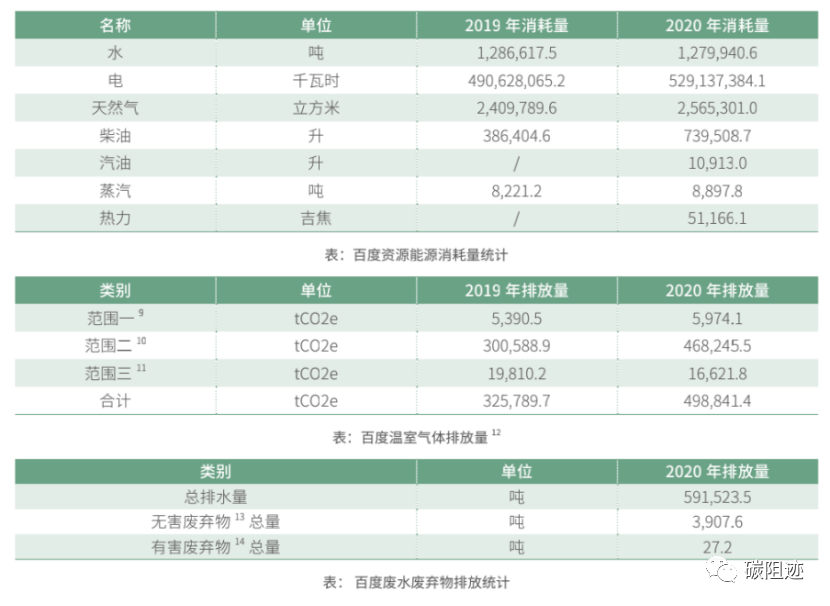
1. Baidu's total greenhouse gas emissions in 2019 were 325,798.7 tCO2e, and in 2020, they were 498,841.4 tCO2e. In 2020, the greenhouse gas emission density was 15.1 tCO2e/person.
2. In 2020, the average PUE (Power Usage Effectiveness) of all Baidu-built data centers was 1.14, with the most efficient single data center achieving an average annual PUE of 1.08.
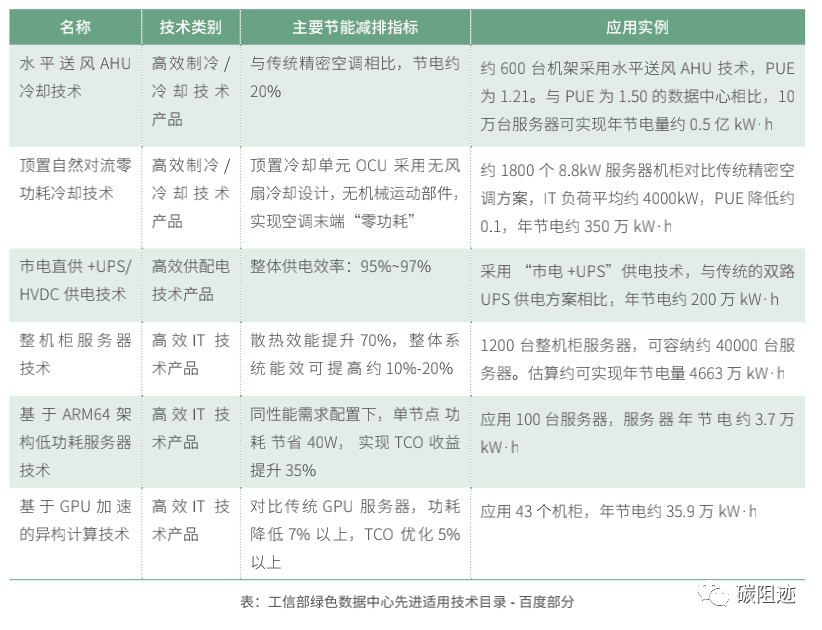
3. In 2020, Baidu had six energy efficiency technologies included in the Ministry of Industry and Information Technology's (MIIT) list of advanced and applicable green data center technologies.
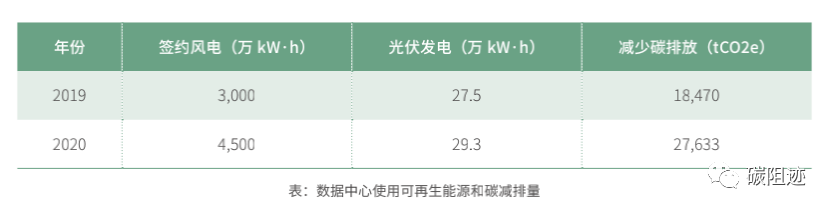
4. In 2020, Baidu signed up for 45 million kWh of wind power and generated 293,000 kWh through rooftop photovoltaic installations at data centers, collectively reducing carbon emissions by approximately 44,000 tCO2e.
Recently, Baidu released its 2020 Low-Carbon Development Report on its official website. Carbonstop was commissioned by Baidu to provide low-carbon consulting services and technical support for the preparation of the report.
Given that China has clearly stated its goals of reaching peak carbon emissions by 2030 and achieving carbon neutrality by 2060, China has officially entered the era of carbon neutrality implementation. Against this backdrop, what should internet companies do and how should they proceed? We hope to find some answers in Baidu's Special Report on Low-Carbon Development.
The theme of Baidu's 2020 Low-Carbon Development Report is “Green Mountains and Clear Waters, Sustainable Development,” focusing on three main areas highlighting Baidu's efforts and contributions to low-carbon development in 2020: Advocating Green Living, Building a Green Heart, and Embarking on a Green Journey.
Advocating Green Living
Technology makes life simpler, and green technology makes life even more sustainable. As an internet integrated service company centered on information and knowledge, Baidu has a vast user base covering over 95% of Chinese internet users. Therefore, while undertaking its corporate responsibility for green and low-carbon development, Baidu also strives to integrate sustainable concepts into its products and services.
Green Intelligent Transportation
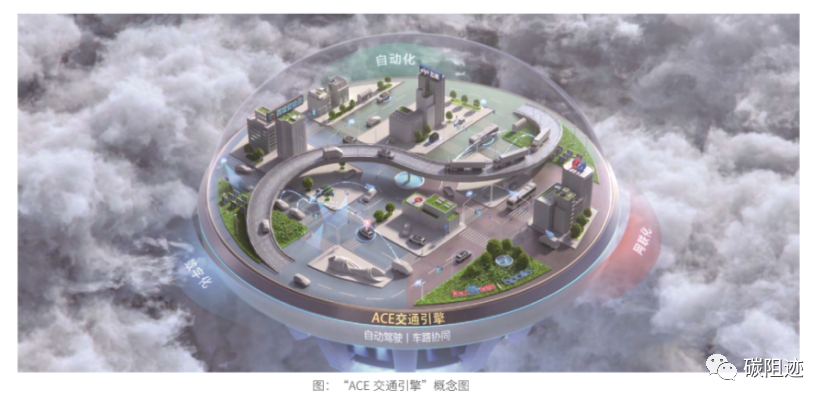
In April 2020, Baidu Apollo released the "ACE Traffic Engine," integrating autonomous driving, vehicle-road coordination, and efficiency to promote the intelligent transformation of infrastructure and convenient travel services. This represents a significant advancement in the development and transformation of autonomous driving and vehicle-road coordination technologies, improving traffic congestion and optimizing routes while reducing vehicle energy consumption and pollution emissions.
Regarding Baidu Maps, Baidu provides real-time traffic predictions and smart travel recommendations to reduce the large amount of fuel consumed by vehicles due to frequent starts and stops in congested conditions. According to calculations, idling a vehicle for 3 minutes in heavy traffic consumes the same amount of fuel as driving 1 kilometer under normal conditions. Baidu Maps' "Green Drive Initiative" encourages users to adopt lower-carbon travel methods and incentivizes public participation through carbon credits, accumulating experience for promoting green transportation in China and providing channels for individuals to engage in carbon trading.
Green Information Channels
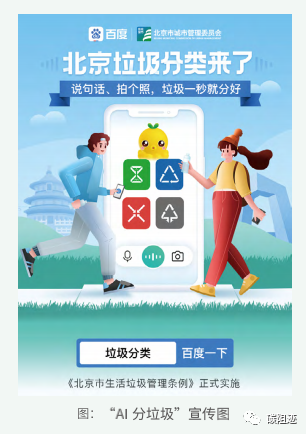
Baidu integrates low-carbon and environmental information into its products, leveraging its AI technology advantages to develop an AI-based garbage classification mini-program with daily usage reaching 500,000 times. Knowledge platforms such as Baidu Baike, Baidu Wenku, and Baidu Zhidao serve as green carriers, generating over 1.6 billion high-quality pieces of content and offering 670 million academic documents for retrieval. These information searches and interactions reduce resource input and waste associated with relevant activities.
Building a Green Heart
Green data centers will become a hot topic of this era, and indeed, this era needs green data centers to achieve energy savings and low carbon emissions.
Using Clean and Low-Carbon Energy
In 2020, Baidu signed up for 45 million kWh of wind power; in 2015, Baidu's Yangquan Cloud Computing Data Center became the first data center in China to apply solar photovoltaic direct grid-connected power generation technology, achieving an annual power generation of 120,000 kWh.
Improving Data Center Efficiency
In 2020, the average PUE of all Baidu-built data centers was 1.14, with the most efficient single data center achieving an average annual PUE of 1.08. Developing higher-efficiency data center technologies is a direction that Baidu's data centers have consistently pursued and should be a common goal for tech companies.
Utilizing Old Resources
Baidu's Yangquan Data Center uses wastewater recovery and treatment for cooling water and recycles old server parts, which can also reduce greenhouse gas emissions to a certain extent.
Embarking on a Green Journey
Disclosing Environmental Data
Accepting supervision from stakeholders and society: In the context of carbon neutrality, this not only enhances brand value but also improves social and user acceptance, reflecting the company's social responsibility.
The report details Baidu's carbon emissions, resource and energy usage, and waste emissions for 2019 and 2020.
Setting Scientific Low-Carbon Action Goals
Overall planning, multi-pronged approaches, starting from the details, and exploring the company's potential for low-carbon development. Baidu reviews the energy consumption of various equipment and facilities, gradually phasing out high-energy-consuming devices, implementing effective energy-saving measures, and actively exploring renewable energy utilization.
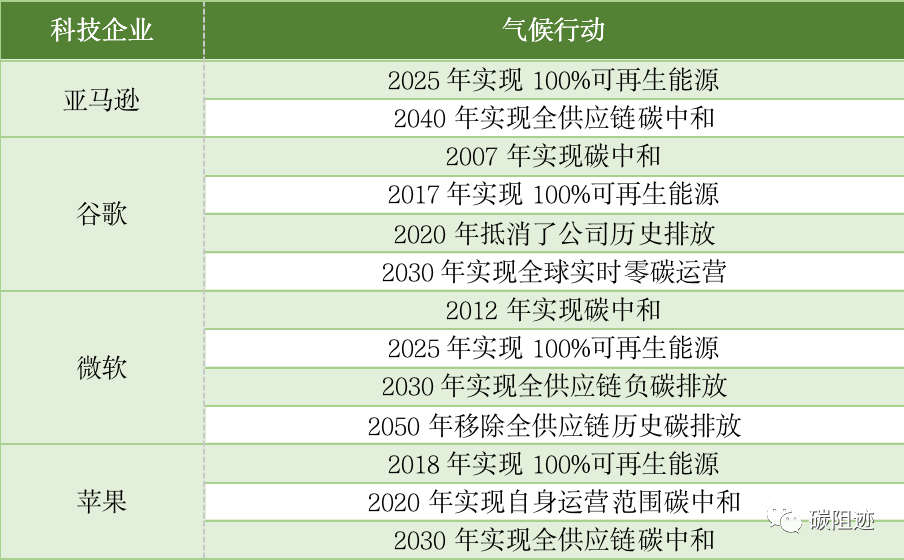
How can the tech industry achieve carbon neutrality by learning from Baidu's initiatives?
The Carbonstop team recently analyzed most companies that have proposed carbon neutrality and recent case studies, distilling the CREO principle for achieving corporate carbon neutrality goals:
1. Calculating (计算): Regardless of the industry, the first step for any company aiming to achieve carbon neutrality is always to quantify its carbon emissions and understand its current situation. Only by clearly knowing the current state of carbon emissions and its position within the industry can targeted measures be taken to lay the foundation for carbon neutrality.
2. Reducing (减排): After understanding the baseline of carbon emissions, the company should focus on scientifically reducing emissions rather than opting for carbon offsetting. Disclose carbon emission information, set scientific carbon targets, and develop practical carbon reduction paths based on the company's actual situation, such as reducing energy consumption through technological innovation, using renewable energy, recycling resources, and locating data centers in areas rich in natural resources.
3. Engaging (参与): Not only should the company itself reduce emissions, but it should also encourage its ecosystem partners to do so. The tech industry can empower other sectors to reduce emissions through technological means and leverage its platform advantages to integrate resources for carbon neutrality across the entire industry chain. Many companies are using WeChat mini-programs to encourage employees to participate in carbon reduction activities and reward outstanding performers with both spiritual and material incentives. Some companies are using carbon management software platforms to help upstream and downstream supply chain enterprises calculate, manage, and reduce carbon emissions. Investment institutions are also getting involved, managing their own carbon emissions and providing carbon management training and tools to portfolio companies to support their carbon reduction efforts.
4. Offsetting (抵消): This is the final step. After a company has done everything possible, how to handle the unavoidable carbon emissions? At this point, true carbon offsetting comes into play. Options include planting trees or purchasing carbon credits to offset unavoidable emissions and achieve "zero emissions." However, these carbon offset projects themselves may also generate emissions, such as those from the lifecycle of photovoltaic systems or the operation of forest carbon sinks. It is recommended that future carbon offset projects achieve carbon neutrality throughout their lifecycles to make carbon neutrality for enterprises more scientifically sound and reasonable.