


 3842
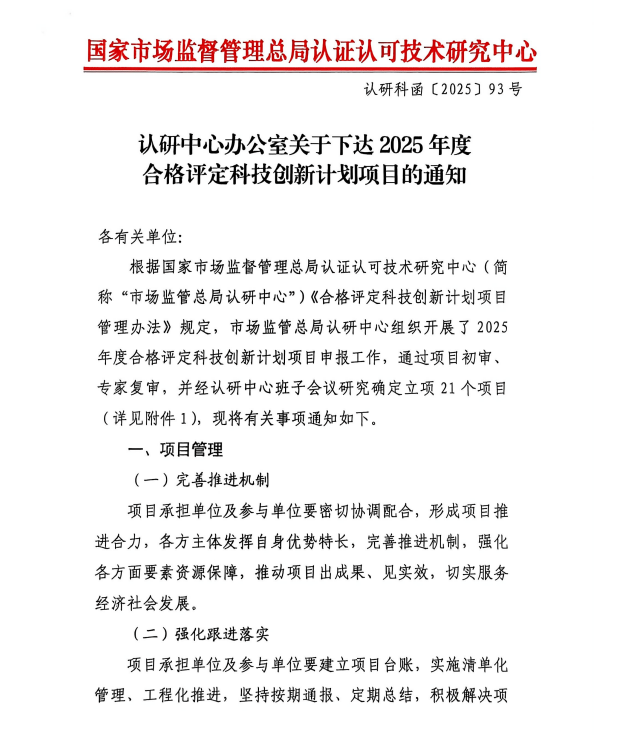
3842On September 9, 2025, the Secretariat of the Certification and Accreditation Administration of China (CNCA) issued the Notice on the First Batch of Special Implementation Rules for Product Carbon Footprint Labeling Certification (Trial). This move, like a stone dropped into the lake of green development, has sent ripples across the industry, marking another solid step forward in China’s product carbon footprint management and demonstrating the nation’s strong determination to accelerate the rollout of product carbon footprint labeling certification. Meanwhile, Carbonstop’s proposed research project—“Key Technology Research on a Digital-Intelligent Management Platform for Product Carbon Footprint Labeling Certification in Representative Sectors”—has received formal approval from the Certification & Accreditation Research Center under the State Administration for Market Regulation (SAMR), and has been officially launched. This will inject powerful technological support into China’s product carbon footprint labeling certification efforts. Today, we’ll take an in-depth look at these significant developments.

Policy Context: An Inevitable Requirement for Green Development
Against the global backdrop of actively addressing climate change, reducing carbon emissions and achieving green development have become a shared consensus among nations. As a global manufacturing powerhouse and a major carbon emitter, China must establish a robust product carbon footprint management system—critical not only for achieving its carbon peaking and carbon neutrality goals but also for driving industrial green transformation and enhancing the international competitiveness of its products.
As early as 2023, multiple ministries including the National Development and Reform Commission (NDRC) jointly released the “Opinions on Accelerating the Establishment of a Product Carbon Footprint Management System,” which set the goal of basically establishing a national product carbon labeling and certification system by 2025 and fully implementing it by 2030. In June 2024, fifteen ministries—including the Ministry of Ecology and Environment and NDRC—jointly issued the “Implementation Plan for Establishing a Carbon Footprint Management System,” signaling a firm national commitment to systematically advance green and low-carbon development, respond to international climate governance rules, and drive green transformation across entire industrial and supply chains. Since then, a series of key documents have followed: the national standard GB/T 24067-2024 “Greenhouse Gases — Requirements and Guidelines for Quantifying Product Carbon Footprints,” the “Guidelines for Developing Product Carbon Footprint Accounting Standards,” and the “General Implementation Rules for Product Carbon Footprint Labeling Certification (Trial).” SAMR and other agencies also announced pilot programs for product carbon footprint labeling certification in regions such as Beijing, Tianjin, and Hebei, and issued the “First Batch Pilot Catalogue for Product Carbon Footprint Labeling Certification,” designating lithium batteries and textiles as initial pilot sectors. The successive release of these standards and rules, coupled with active pilot implementation by relevant departments, has laid a solid foundation for the current issuance of detailed implementation rules.

Key Policy Interpretations: Comprehensive Regulation of Product Carbon Footprint Certification
The newly released first batch of Special Implementation Rules for Product Carbon Footprint Labeling Certification (Trial) covers 17 product categories and provides detailed specifications for every stage of the certification process.
_175809934143726.webp)
Scope of Application: The rules clearly define the full life cycle boundary for carbon accounting—from raw material extraction, manufacturing, transportation and distribution, through product use, to final disposal—ensuring a comprehensive assessment of a product’s carbon footprint.
Certification Model: The model adopts “Initial Inspection + Product Carbon Footprint Verification + Post-Certification Surveillance.” Certificates are valid for two years, with ongoing validity maintained through post-certification surveillance. Surveillance audits must occur no less than once every 12 months. Additionally, recertification is required whenever significant changes occur in the product’s carbon footprint, ensuring the timeliness and accuracy of certification results.
Data Requirements: Data collection must span the entire product life cycle (raw material acquisition → manufacturing → transport/distribution → use → end-of-life). The core objective is to prevent “data gaps” or “selective data reporting” that could skew calculations. Taking “consumer lithium-ion batteries” as an example, processes are categorized into core and non-core unit processes. Core processes require on-site primary data collection, while non-core processes follow a hierarchy prioritizing primary over secondary data. Detailed data collection templates are provided for cathode active materials, anode active materials, and other raw and auxiliary materials to ensure clarity, completeness, and traceability.
Emission Factor Requirements: Site-specific (activity-based) emission factors are preferred. Where unavailable, emission factors must be selected in the following order: those published by national authorities or recommended by relevant ministries; third-party verified reports; commercial databases; academic literature, survey reports, or industry statistics; and, as a last resort, comparable foreign technical data.
Management Requirements: Enterprises must establish a comprehensive carbon footprint management system to effectively oversee emissions across the product life cycle. Notably, for the first time, submission of a “Product Decarbonization Plan/Strategy” is now a mandatory condition for certification. This breakthrough signifies a substantive shift in China’s carbon footprint management—from mere “data disclosure” to tangible “action implementation.” It further underscores that the essence of product carbon labeling is not just about “accurately calculating and verifying carbon,” but more importantly, guiding enterprises to “effectively manage carbon” through life-cycle carbon management and ultimately achieve real emission reductions.
These detailed provisions offer clear guidance and standardization for enterprises pursuing product carbon footprint certification. The strict requirements on data collection and emission factor selection are central to China’s effort to build a “unified and credible” product carbon labeling system. Only by ensuring “true data and accurate factors” can carbon labels truly serve as a “compass” for corporate green transformation and a “guide” for consumer green choices.
This release of implementation rules also serves as a critical link—bridging earlier policies and enabling carbon footprint labeling certification to evolve from a “general framework” to “sector-specific implementation.” It fulfills the 2025 institutional-building timeline set out in the 2023 “Opinions,” operationalizes the “full-chain management” approach outlined in the 2024 “Implementation Plan,” and—through these “specialized rules”—translates previously generic standards and accounting guidelines into industry-tailored certification details for the first batch of pilot sectors. This ensures that accumulated policy achievements and pilot experiences are concretely realized as executable, verifiable industry norms, thereby completing a closed-loop policy framework for China’s product carbon footprint management.
 Carbonstop’s National-Level Carbon Labeling Research Project Officially Approved!
While the state intensifies efforts to build the product carbon footprint labeling certification system, Carbonstop has successfully secured approval for its CNCA-submitted research project—“Key Technology Research on a Digital-Intelligent Management Platform for Product Carbon Footprint Labeling Certification in Representative Sectors”—injecting fresh momentum into carbon footprint management.
As a leader in the carbon management field, Carbonstop has long been committed to helping industries calculate, manage, reduce emissions, and ultimately achieve carbon neutrality. Our flagship integrated carbon management platform, Carbon Cloud, has already served over 1,400 enterprises and institutions, facilitating emissions reductions exceeding one million tons. For this research project, Carbonstop will leverage its deep expertise and practical experience in carbon management, combined with advanced technologies such as big data and AI, to help build an efficient and intelligent digital platform for product carbon footprint labeling certification.
By selecting pilot enterprises and products in representative sectors—including lithium batteries, furniture, and textiles—the project will integrate policy requirements with real-world corporate needs to construct a data-element management system for product carbon footprints. This includes a standardized data collection framework, quality traceability mechanisms, and secure encryption technologies to solve the persistent challenges of “inaccurate data collection” and “poor data governance.” The project will also develop an AI-powered intelligent management module for dynamic carbon footprint modeling and anomaly detection, enabling enterprises to optimize decarbonization pathways. Ultimately, it aims to establish NQI (National Quality Infrastructure)-integrated, digital-intelligent key technologies for end-to-end product carbon footprint management. Through pilot implementation, the project will promote standardized, normalized, digital, and intelligent carbon footprint management, delivering a “one-stop” technical solution featuring reliable data collection and precise, efficient decision-making—providing a smart engine to support nationwide rollout of the product carbon footprint labeling certification pilot program.

Policy Impact and Outlook: A New Opportunity for Green Development
China’s resolve to accelerate product carbon labeling is unwavering. The release of these certification rules and the development of a digital-intelligent management platform will pave new pathways for the nation’s green development. Let us jointly look forward to even greater achievements in China’s green transition, driven by both policy leadership and technological innovation!
- Call for Collaborative Partners:
This research project has already brought together leading Chinese enterprises—including CATL, Tongwei Co., Lenovo, and Huasheng Furniture—as core participants, contributing essential strength and critical support to China’s national carbon labeling system. A limited number of participation slots remain open. We sincerely invite more outstanding enterprises to join this initiative and collectively build a solid foundation for China’s product carbon labeling development.
_1758099321630229.webp)


