


 706
706When logistics companies genuinely begin managing their carbon footprint, they often discover that the biggest challenge is not a lack of willingness to reduce emissions, but getting stuck at the very first step: how to obtain credible, complete, and usable carbon emissions data. For many companies, the current state of data management presents significant difficulties and challenges.

Challenges in Managing Logistics Carbon Footprint Data
1. Difficulty in Collecting Fragmented Data
A logistics carbon footprint spans multiple stages, including packaging, warehousing, and transportation, with data scattered across different links. Transportation is the most typical example, especially for outsourced fleets, where fuel consumption data often exists only as a summarized invoice and cannot be accurately matched to a specific shipment batch or route. Data for company-owned vehicles may be somewhat better, but without IoT devices installed, companies can only rely on estimates. As for electricity consumption at warehousing centers, companies often have access only to the total utility bill for the entire park, making it difficult to allocate emissions to specific warehousing service activities. Such fragmented data leaves the foundation for carbon accounting extremely weak.
2. Difficulty in Integrating Disparate Data
Even when data exists at different nodes, each system “speaks its own language.” A company’s transportation management system, warehouse management system, and supplier-provided datasets may all differ widely in format, standards, and statistical scope. Turning this chaotic information into a clear, calculable carbon footprint inventory requires extensive manual cleaning, alignment, and conversion. This process is not only inefficient and error-prone, but also difficult to update dynamically.
3. Difficulty in Applying Carbon Emissions Data
After great effort, a company may calculate a total carbon emissions figure or carbon intensity value—but then what? In many cases, the number remains in a sustainability report and fails to effectively guide business optimization. Companies also struggle to answer practical questions such as: Which transport route has the lowest carbon intensity? Which customer’s order mix results in higher emissions? How much actual emissions reduction would switching to electric trucks or optimizing packaging achieve? Because the data is not finely linked to specific business activities—such as orders, routes, or products—carbon footprint data cannot be translated into management insights, let alone support business decisions or return-on-investment analysis.
4. Difficulty in Building Data Credibility
Without standardized processes and third-party verification, carbon footprint data calculated internally by companies is often subject to both internal and external scrutiny. Supply chain customers will ask: How was your data calculated? What standards was it based on? Can it withstand detailed examination? In the context of increasingly stringent green procurement requirements, only a rigorous and standardized carbon footprint dataset truly has value for a company. Building credibility requires a transparent methodology aligned with international standards such as ISO 14083, along with complete and traceable data records—which in turn requires a relatively mature data management system.
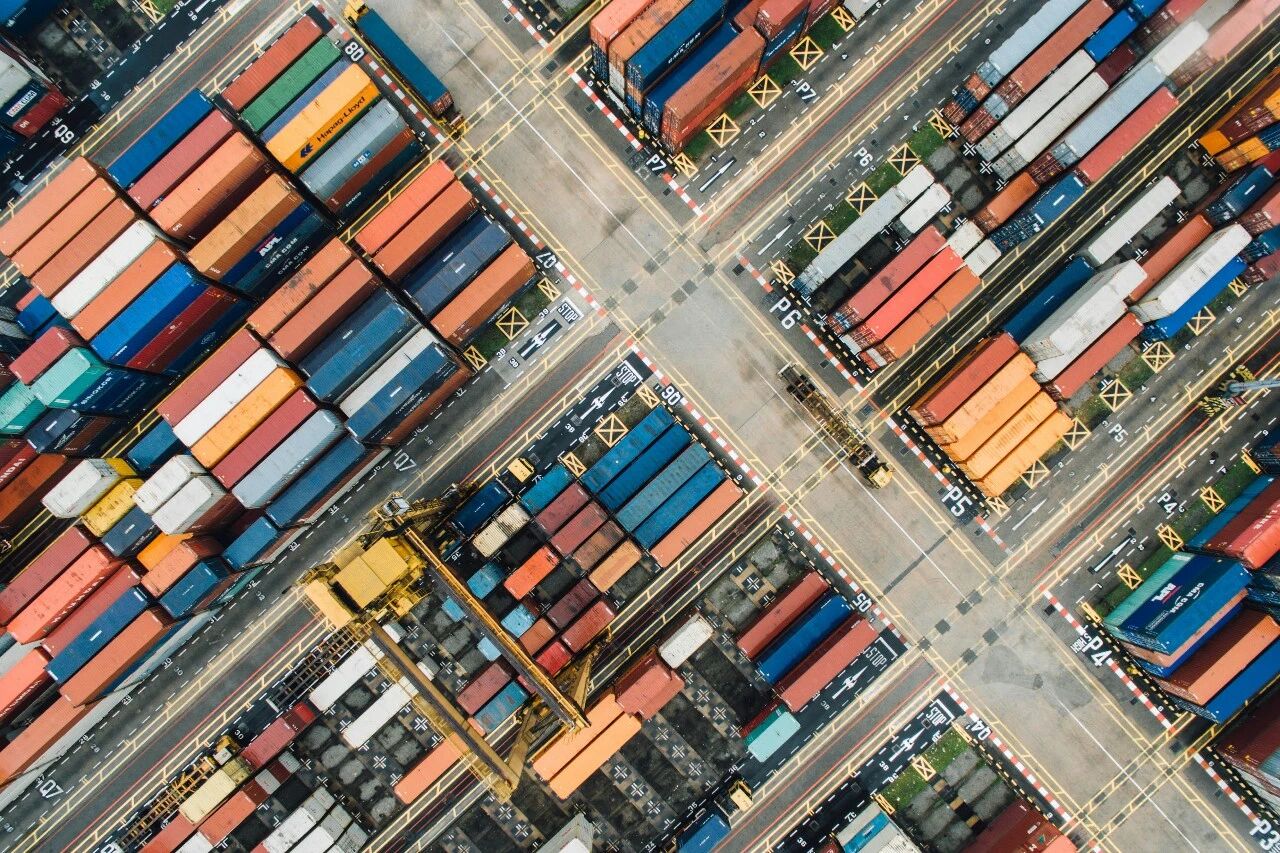
In summary, logistics carbon footprint data management is full of pain points. This shows that logistics carbon footprint accounting is far from a simple summation of numbers. Rather, it is a systematic undertaking that requires unified formats, standardized methodologies, and digital tools as support. To solve these issues, companies need to rely on globally recognized core standards and build a closed-loop management system covering data collection, accounting, and application.

Building a High-Quality Logistics Carbon Data Management System
Logistics companies need a solution fundamentally different from traditional approaches. Logistics carbon footprint management requires real-time data tracking, while traditional ex post statistical reporting cannot meet the data needs of a long-chain logistics industry. What is needed is a real-time data feedback system aligned with operational processes. Best practices from leading companies show that the key to breaking through lies in following international standard frameworks and using digital tools to build a closed-loop system that connects data and empowers management.
1. Unified Accounting Standards
The fundamental solution to data credibility issues is the adoption of a globally recognized set of standard rules. International standards represented by ISO 14083[1] and the GLEC Framework[2] provide companies with a clear operational handbook that has gained broad industry recognition, enabling companies to establish a clear data framework for logistics carbon footprint management.
The GLEC Framework serves as the methodological foundation and provides detailed implementation guidance for ISO 14083. Their relationship is similar to that between the GHG Protocol and ISO 14064-1: the latter defines the rules, while the former guides companies on how to apply and implement them. Together, they provide a complete toolkit covering data collection, boundary setting, and final reporting.
· Define Clear Boundaries to Ensure a Complete Data Chain: The standards consistently require full-chain accounting across logistics operations, covering all freight transportation and hub activities throughout the transport chain, including vehicle transport, transshipment handling, and on-site movements. The energy use and emissions of each link are all included within the accounting boundary. At the same time, the standards place particular emphasis on emissions from long-overlooked activities such as empty runs and idling. By following these two unified standard frameworks, companies can map out a complete and gap-free carbon footprint data chain, fundamentally addressing the problems of fragmented data and incomplete accounting.
· Provide Clear, Unified Measurement Methods with Alternative Approaches: The standards recognize that companies may not be able to obtain optimal data in a single step. Therefore, they provide alternative approaches to data processing. The framework clearly specifies what data should be collected, such as cargo weight and transport distance, and defines tonne-kilometres as the standard unit for transport activity. By introducing concepts such as TOC and HOC, highly diverse operational activities can be grouped into a limited number of manageable categories. When data is unavailable, the framework also provides relatively standardized fallback methods. With these consistent data categories and units, companies can scientifically integrate data across different transport modes and cargo types, forming a complete dataset.
· Enable Drill-Down Analysis for Better Actionability: Based on this framework, GLEC accounting results can be broken down layer by layer—from total carbon emissions at the overall level down to specific TCEs and TOCs, and even to a particular route of an individual vehicle. This allows companies not only to quickly identify the most emissions-intensive links, but also to clearly assess the actual impact delivered by each emissions reduction measure.
· Improve Data Credibility Through Clear Source Hierarchy: To ensure that data is truly credible, ISO 14083 clearly classifies data sources into tiers: primary data comes from actual measurement, modeled data is based on scientific estimation, and default data serves as the final fallback. Reports must specify which tier of data is being used, and the calculation methodology must also be clearly explained. At the same time, industry best practice encourages companies to bring in third-party verification of accounting results, adding an extra layer of assurance to data reliability.
[1] ISO 14083:2023 is the world’s first international standard specifically for quantifying and reporting greenhouse gas emissions from transport chains, marking the beginning of a standardized era in logistics carbon management. It was developed based on the GLEC Framework and officially published in 2023.
[2] The GLEC Framework, short for the Global Logistics Emissions Council Framework, was first released in 2016 and provides companies with a methodology for accounting and reporting freight transport systems, transport chains, and operations. The latest version is V3.2, released in October 2025.
[3] TOC: Transport Operation Categories
[4] HOC: Hub Operation Categories
[5] TCE: Transport Chain Elements
2. Making Carbon Data Flow Through the Transport Chain
With standardized rules in place, the next step is to make data “run” at low cost and high efficiency. This requires using technology to transform traditional operating processes, with the core objective being the automated collection and deep integration of key activity data.
· IoT Enables Data Collection at the Source: In transportation, on-board intelligent terminals (T-Boxes) can directly and in real time collect data such as vehicle speed, mileage, and instantaneous fuel or electricity consumption, replacing manual records and mileage-based estimates. In warehousing, smart meters can be installed on key energy-consuming equipment—such as cold-storage compressors and automated sorting lines—to accurately capture electricity use. IoT technology transforms the source of carbon emissions data from vague financial receipts into highly granular real-time data streams.
· System Integration Breaks Down Information Silos: Carbon data cannot exist in isolation. Through application programming interfaces (APIs), connecting the carbon management platform with a company’s transportation management system, order management system, warehouse management system, and carriers’ data platforms is key to data aggregation. The carbon emissions of a single transport task need to be linked to multidimensional business data such as order number, cargo weight, route trajectory, and carrier information. This kind of automated integration completely eliminates the tediousness and errors of manually copying and pasting across multiple Excel spreadsheets, ensuring the precise linkage between business context and emissions data.
· Data Governance Ensures Asset Quality: Aggregated multi-source data must be cleaned, transformed, and standardized before it can become a reliable asset. This requires establishing a set of data governance rules—for example, unifying units of measurement across all datasets, calibrating spatial and temporal tags from different sources, and identifying and removing outliers. Once governed, the data can be stored in a structured database, forming a company-specific “carbon emissions factor library” and “activity data pool” that provide stable and clean inputs for in-depth analysis.
3. Turning the Logistics Carbon Footprint into a Value Dashboard
When credible data can flow in real time, the value of carbon management changes fundamentally: it shifts from being a passive compliance cost center into an active dashboard for business optimization and strategic decision-making.
· Gain insight into emissions hotspots: A system can automatically drill down from total carbon emissions to each transport route, each vehicle type, each major customer, and even each product SKU. Management can clearly see whether trunk routes in East China have significantly higher carbon intensity than those in South China, or where emissions are concentrated in serving Customer A. This data-driven insight turns emissions reduction from a “one-size-fits-all” exercise into “precision surgery.”
· Simulate and optimize decisions: The advanced value of a digital system lies in its ability to “foresee.” Companies can build “what-if” models in the system: If fuel-powered trucks on a certain route are replaced with electric heavy-duty trucks, how much carbon emissions could be reduced? How much investment would be required? What would the payback period be? If the network layout is adjusted and two transfer warehouses are merged, what impact would that have on transport costs and carbon emissions? This simulation capability allows companies to scientifically evaluate the cost-effectiveness of emissions-reduction measures before investing real money, greatly reducing decision-making risk.
· Integrate into performance management: When carbon intensity indicators can be clearly calculated down to specific business units, they can be incorporated into management assessment systems. For example, fleet managers can be assigned targets for reducing “carbon emissions per tonne-kilometer,” while sales teams can be assessed based on the carbon footprint of customer service delivery. By using performance levers, low-carbon operational goals can be transmitted from the strategic level down to execution, ensuring that data insights are translated into concrete action.

A Full-Chain Solution for Logistics Carbon Management
The challenge of carbon footprint management for logistics companies is not whether to conduct accounting, but how to transform fragmented data into a management capability that supports analysis and decision-making. To address this need, Carbonstop combines a digital platform, databases, AI agents, and consulting services into a systematic solution that spans data governance, accounting analysis, and business implementation.

1. Using a Digital Platform to Connect the Carbon Data Chain
Logistics carbon footprint management is first and foremost a data management issue.
To solve it, companies must first build a unified carbon data foundation. The key is not simply collecting data, but structurally processing data from different business systems, partners, and activity links according to a unified standard, so that it can be clearly mapped to business objects such as orders, routes, vehicles, warehousing nodes, customers, and products. Only in this way can originally scattered carbon-related data be organized into a complete and usable data chain.
From an industry perspective, companies such as SF Express and JD Logistics are already promoting logistics carbon data management through platform-based approaches. These platforms use artificial intelligence to dynamically match transport routes with emissions factors and perform intelligent planning, enabling refined carbon footprint management in logistics.
The significance of this digital capability is that companies no longer need to launch a low-efficiency “data hunting campaign” every time accounting, disclosure, or customer questionnaires arise. Instead, they can gradually establish a data management mechanism that can be continuously updated, repeatedly used, and accumulated over the long term.
2. Databases Safeguard Accounting Quality and Analytical Depth
Logistics carbon footprint management is not achieved by simply summing a number of activity datasets. To obtain truly usable results, companies must solve a series of professional issues, such as emissions factor matching, transportation mode differentiation, activity classification, and default value selection.
At this stage, the key is to combine standardized methodologies with professional databases to build a higher-quality accounting system. On the one hand, mainstream frameworks such as ISO 14083 and GLEC can be used to standardize the treatment of transport chains, hub activities, different energy types, and multimodal scenarios. On the other hand, industry databases and rule-based expertise are also needed to adapt and supplement data sources at different levels. This enables companies to carry out accounting under a unified approach even when primary data is still incomplete, while gradually improving data quality tiers over time.
In terms of databases, Carbonstop’s China Carbon Database (CCDB) has accumulated standard emissions factors, industry scenario data, and historical accounting experience, providing logistics companies with more traceable carbon data support and improving accounting efficiency, consistency, and analytical depth.
3. Using AI Agents to Improve Carbon Management Efficiency
As the carbon management tasks facing logistics companies continue to grow, it is becoming increasingly difficult to rely solely on manual work. Whether responding to customer carbon data questionnaires, meeting supply chain audit requirements, or conducting internal carbon inventories, report preparation, and emissions-reduction assessments, teams must spend large amounts of time organizing materials, aligning methodologies, verifying calculations, and preparing outputs. For logistics companies operating in fast-paced environments with many stakeholders and long value chains, this repetitive work is costly and can easily become a response bottleneck.
The introduction of AI agents can improve carbon management efficiency at multiple stages—for example, by assisting with data identification and extraction, classification and validation, methodology matching, anomaly alerts, result summarization, report drafting, and issue tracking. AI agents do not replace professional judgment, but they can significantly reduce human effort spent on repetitive tasks, freeing up limited expert resources for higher-value analysis and decision-making.
For the logistics industry, this capability is especially important. Logistics operations are inherently high-frequency, dynamic, and multi-node. What companies need is not a one-time static result, but an ongoing capability to respond faster to customer requirements, identify data issues more quickly, and form management judgments more efficiently. The addition of AI agents enables carbon management to shift from a traditional “project-based” approach toward “routine operation, intelligent assistance, and process-based collaboration.”

4. Turning Logistics Carbon Footprints into Business Decisions
Digital platforms, databases, and AI agents address the question of how to calculate and understand carbon clearly, but the question companies truly care about often goes one step further: once the carbon footprint has been calculated, how should it be used? Which emissions-reduction initiatives deserve priority investment? Which measures have greater impact on customers, cost, and operational efficiency? How can carbon management become more than a compliance exercise and genuinely serve business performance?
This is where digital tools need to be combined with professional consulting services. In practical implementation, companies typically need to identify key emissions sources based on their business model, transport structure, energy mix, customer requirements, and organizational capabilities, and then design optimization paths that are more actionable. For example, in trunk transportation, they may assess the applicability of new energy substitution; in warehousing, identify energy-saving retrofit opportunities for high-energy-consuming facilities; in network planning, analyze the dual impact of route optimization and node consolidation on both carbon emissions and cost; and in customer service, build clearer capabilities for responding to carbon data requests and communicating green value.

For logistics companies, carbon management is no longer just a compliance requirement—it is becoming a critical capability that influences customer choice, supply chain collaboration, and operational efficiency. The earlier a company establishes a standardized, traceable, and actionable carbon management system, the greater its opportunity to turn low-carbon requirements into competitive advantage.


