


 543
543 In the current corporate landscape, climate disclosure has evolved from a voluntary corporate social responsibility initiative into a core requirement for capital market access and supply chain resilience. As global frameworks like the Corporate Sustainability Due Diligence Directive (CSDDD) and ISSB standards become legally binding across major jurisdictions, the CDP questionnaire has emerged as the definitive standard for corporate environmental transparency. For Chief Sustainability Officers (CSOs) and executive boards, achieving an 'A-List' rating is no longer just an honor, but a vital strategic advantage. However, collecting, validating, and reporting audit-ready environmental data across complex global operations remains a significant operational challenge.
Carbonstop is pioneering a new approach by combining deep carbon accounting expertise with advanced artificial intelligence. By deploying our customized solutions and proprietary software platforms like Carbon Cloud (Ccloud), enterprises can automate their carbon accounting and transform their compliance processes into strategic opportunities. This article explores how the Carbon AI Agent helps organizations navigate the complexities of the CDP questionnaire, improve disclosure scores, and build sustainable business growth.

The Evolution of Climate Disclosure and the Data Challenge
The climate disclosure landscape is shifting from general estimates toward precise, audit-ready data verification. This transition creates operational pressure for organizations trying to balance global compliance requirements with localized supply chain realities.
The Intersecting Mandates of Modern ESG Frameworks
Global regulatory alignment is forcing companies to treat carbon data with the same precision and rigor as financial reporting. The greenhouse gas protocol integration serves as the accounting foundation for measuring Scope 1, 2, and 3 emissions accurately. Furthermore, ISSB and CSRD convergence require rigorous quantitative evidence connecting environmental metrics to financial risks. For companies exporting to regulated regions, CBAM administration requires transaction-level carbon tracking to manage import liabilities effectively.
The Scope 3 Blind Spot and Supplier Engagement
Accurately measuring value chain emissions remains a major obstacle for most multinational corporations. Primary data from hundreds of tier-1 and tier-2 suppliers is often incomplete, inconsistent, or unavailable. Furthermore, suppliers often lack the technical resources to perform standardized carbon accounting under ISO 14067 or PAS 2050. Manually tracking supplier compliance requires hundreds of hours of administrative work each reporting cycle, creating severe resource constraints.
Cracking the CDP Questionnaire with Carbon AI Agent
The Carbon AI Agent, embedded within Carbonstop's comprehensive carbon management platform, redefines how enterprises handle their environmental reporting workflows. It automates carbon accounting models, generates reduction plans, assists ESG reporting, and improves CDP scores through intelligent automation.
Streamlining Data Collection and Automated Emission Accounting
Automated carbon accounting eliminates manual data entry errors and accelerates data processing across business units by ingesting utility bills, ERP transaction logs, and logistics data.
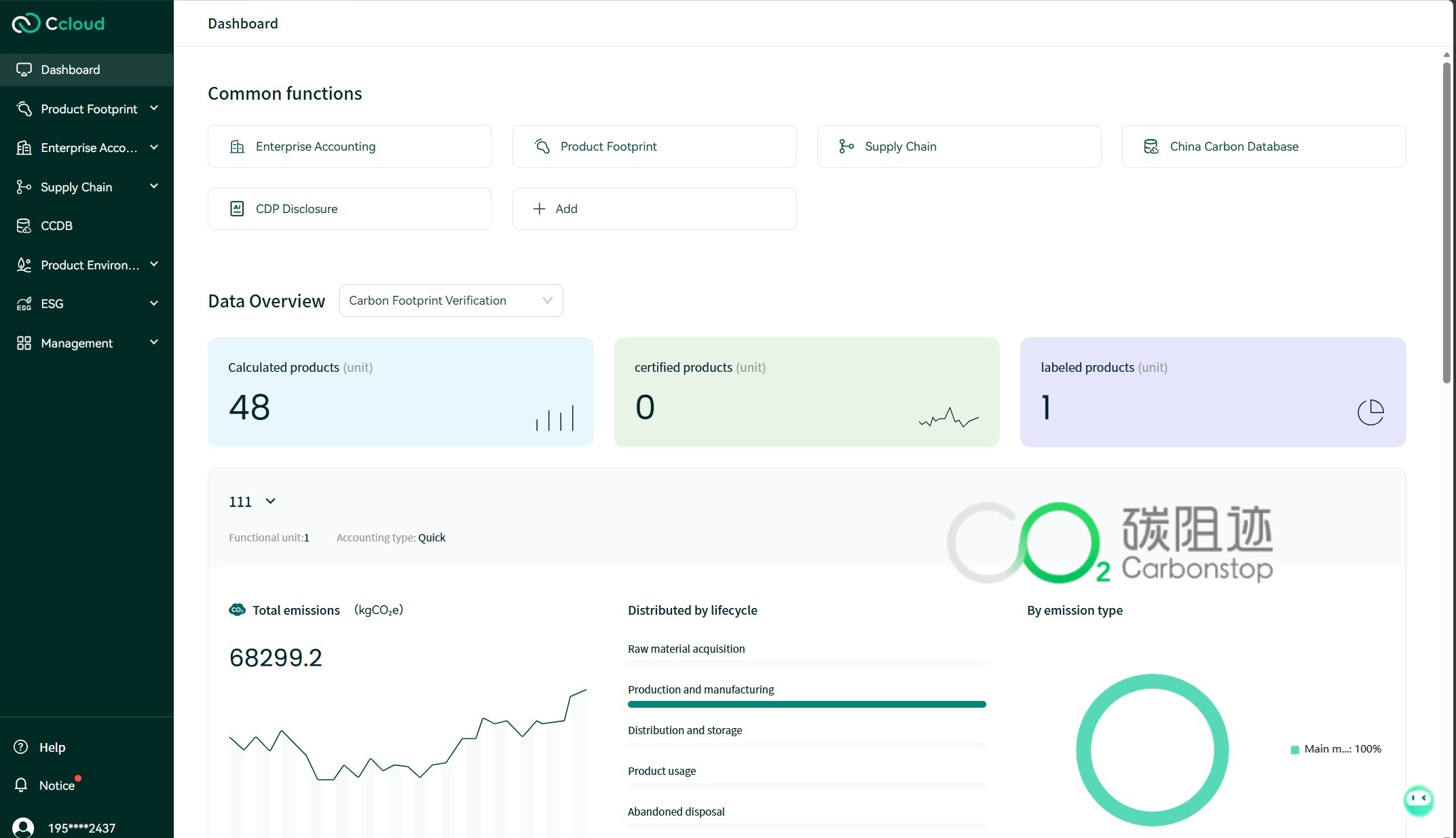
A core differentiator for Carbonstop is our integrated China Carbon Database (CCDB), which features over 51,000 real-world data points and more than 300,000 emission factors to ensure accurate localized footprinting. The tool maps operational activity to localized carbon factors, which is essential for accurate Scope 2 and Scope 3 compliance.
Elevating Quality via AI-Driven Data Verification and Traceability
High data accuracy and traceability are crucial for securing top marks from CDP reviewers and independent auditors. Machine learning algorithms flag data anomalies, outliers, and historical inconsistencies before reporting, ensuring seamless anomaly detection.
Every calculation can be traced back to its raw data source, providing an audit trail for third-party verification to deliver audit-ready documentation. Based on industry benchmarks, the AI agent suggests contextual adjustments to accelerate error correction and reduce manual review cycles.
Optimizing Supplier Engagement and Scope 3 Management
Managing Scope 3 emissions requires structured collaboration with suppliers across different regions. Digital portals allow suppliers to securely upload operational data and calculate product carbon footprints through customized supplier workflows.
The platform guides supply chain partners through complex accounting rules without requiring extensive consulting, enabling capacity building at scale. This allows organizations to replace industry averages with high-quality primary data, improving their overall CDP performance through primary data substitution.
Scenario Modeling and Strategic Climate Risk Assessment
Improving your CDP score requires demonstrating robust transition planning and forward-looking financial risk assessment. Leaders can model different decarbonization pathways to align corporate targets with SBTi criteria through advanced scenario modeling.
The platform connects carbon intensity variations to financial metrics, satisfying TCFD and ISSB requirements for climate risk quantifying. Ultimately, these scenario insights help companies develop carbon credit strategies and manage regulatory risks effectively to optimize their carbon asset strategy.

Driving Strategic Value Through Intelligent Carbon Management
AI for climate reports helps companies turn rules into real business value. Custom setups and strong software platforms let firms hold margins, build brand strength, and find new market chances.
•Operational Cost Reduction: Accurate carbon accounting shows energy waste in production and logistics. This cuts running costs over time.
•Supply Chain Resilience: Clear views of supplier data help firms reduce climate risks and handle border tax issues with more control.
•Lower Cost of Capital: Good CDP scores show strong risk handling to big investors. This brings better green funding terms.
•Enhanced Brand Equity: Open and verified climate steps meet the needs of B2B buyers and everyday consumers alike.

Turn Carbon Data Into a Competitive Advantage
Navigating the complexities of the CDP questionnaire requires moving beyond manual spreadsheets toward intelligent automation. Carbonstop's customized software and consulting solutions help organizations build a highly accurate, fully traceable digital foundation for their carbon management journey.
Discover how the Carbon AI Agent can streamline your compliance processes, engage your supply chain, and improve your climate disclosure performance.

FAQ
Q: How do changes in global reporting standards like ISSB and CSRD impact our annual CDP submission?
A: Global rules now line up more closely with the CDP questionnaire. Recent updates call for checked numbers, detailed Scope 3 facts, and financial reviews of climate risks. A single platform lets teams meet these needs in one workflow.
Q: Why are localized emission factors critical for multi-regional Scope 3 calculations?
A: Broad global averages often produce clear errors when estimating emissions in specific markets. Exact local data matches real operating conditions in each region. This approach cuts overestimates and shows where emissions actually occur.
Q: What steps should an organization take to prepare its environmental data for a third-party audit?
A: Track every figure from source papers to the final report. Teams should apply auto-check tools, record each calculation method, and keep a fixed digital log of emission factors used during the period.
Q: How can procurement teams encourage diverse suppliers to provide accurate carbon data?
A: Lower the tech hurdles for suppliers. Offer them simple digital tools for calculations, quick verification portals, and straightforward guides. This way, teams gather solid first-hand numbers without adding pressure to existing relationships.


