


 796
796As leaders in corporate sustainability face stricter rules around the world, the task of tracking environmental effects has moved from a voluntary CSR step to a core part of daily work. Rules such as the Corporate Sustainability Reporting Directive and the EU Carbon Border Adjustment Mechanism now apply in full. This shift means carbon accounting must be exact. For Chief Sustainability Officers and ESG managers in manufacturing, building a reliable Product Carbon Footprint through supply chains with many layers is no longer optional. It has become a basic need to stay in global markets.
Many firms turn to artificial intelligence to speed up the change. Yet a clear gap appears when general Large Language Models handle technical carbon accounting. These tools handle text, policy summaries, and broad ideas with ease. At the same time, calculating a Product Carbon Footprint calls for firm math limits, checks on primary data, and full use of standards like the Greenhouse Gas Protocol and ISO 14067.
Carbonstop has launched Carbon Agent to close this gap. The tool is built for product carbon footprinting, picking local emission factors, and preparing supply chain reports that stand up to audits. Manufacturing leaders gain from seeing why everyday AI tools can create compliance risks. This understanding supports a carbon management process that holds up and can grow with the business.

The Illusion of Expertise and the Risk of AI Hallucination
The structural flaw of general-purpose AI lies in its training methodology. These models are built on vast, public datasets designed to predict the most statistically probable next word in a sentence—not to perform real-time mathematical validation or verify regulatory boundary rules. This architecture makes them fundamentally prone to "hallucinations" when applied to complex, multi-tiered manufacturing data.
For instance, a generic AI can fluidly explain the theoretical difference between a "cradle-to-gate" and a "cradle-to-grave" assessment. However, it cannot analyze a complex manufacturing Bill of Materials (BOM) to mathematically define a compliant calculation boundary. When pushed for specific carbon emission factors for specialized industrial alloys, chemical precursors, or regional electricity grids, generic models routinely fabricate plausible-sounding but completely incorrect variables.
Relying on these unverified values introduces severe legal, operational, and financial risks. Under rigorous framework audits like the CSRD, which mandates limited assurance (and moving toward reasonable assurance), using hallucinated or untraceable data points leaves an enterprise exposed to compliance failures, supply chain penalties, and public accusations of greenwashing.

The Critical Data Gap in Localized Emission Factors
Accurate product carbon footprinting relies entirely on matching granular manufacturing activity data with geographically precise and temporally relevant emission factors. This is a task where generic models inherently fail due to information cutoff dates and a lack of access to specialized data infrastructure.
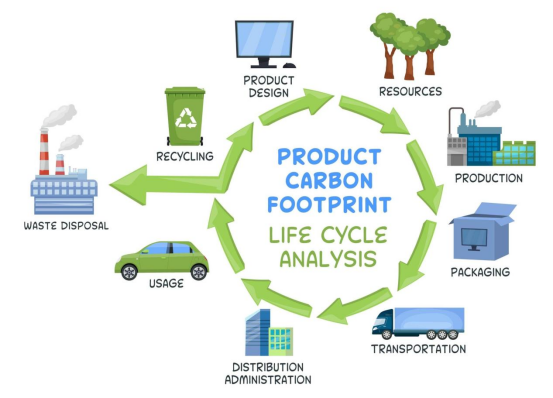 The Supply Chain Reality: Because global manufacturing supply chains invariably run through major Asian industrial hubs, access to localized, primary data lines is non-negotiable. Generic LLMs lack access to specialized regional databases, meaning they cannot differentiate between the carbon intensity of producing an identical component across different provinces or grid networks.
Furthermore, standard AI tools fail to provide a transparent audit trail. They deliver answers as isolated outputs without an underlying methodology map. This lack of data lineage makes it impossible for internal risk teams or external third-party verifiers to trace how a specific calculation was derived, rendering the final report unauditable under CBAM requirements.

Beyond Chatbots: Deploying Domain-Specific Intelligence
To solve these technical limitations, Carbonstop developed Carbon Agent. Rather than acting as a simple conversational chatbot, Carbon Agent integrates advanced language capability with deep carbon accounting logic and proprietary data infrastructure to execute real carbon workflows with mathematical precision.
Powered by the China Carbon Database (CCDB)
Because data opacity in regional manufacturing hubs remains a primary hurdle for global CSOs, Carbon Agent is directly anchored to Carbonstop’s China Carbon Database—the industry's most comprehensive domestic emissions database. This integration provides instant, verifiable access to over 300,000 localized carbon emission factors and verified corporate data lines, ensuring that Scope 3 and product-level calculations reflect true operational realities rather than static national averages.
Automated Validation and Audit Readiness
Carbon Agent features built-in, AI-driven verification algorithms that actively scrub incoming supplier data. Before any calculation runs, the system automatically checks for data anomalies, statistical outliers, and reporting inconsistencies in supplier spreadsheets and activity logs. Once validated, the system maps the data to the correct emission factor, producing a completely reviewable output. Every calculation details the underlying assumptions, source methodology, and specific data lineages required to satisfy external clients and rigorous third-party auditors.
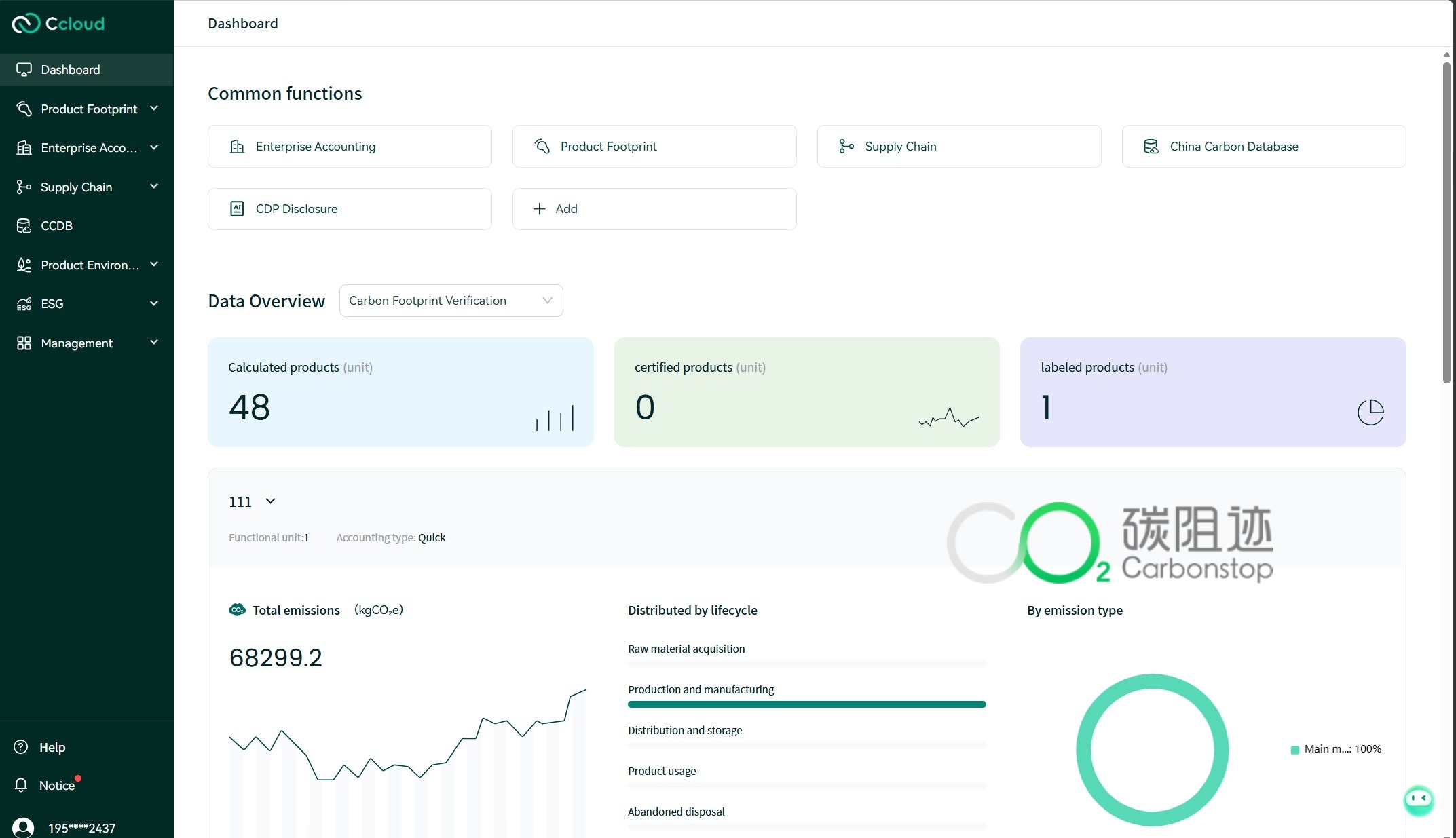

Driving Operational Value Across Complex Enterprises
Deploying a specialized intelligent agent transforms carbon management from a labor-intensive compliance burden into a scalable, high-efficiency operational workflow. Recognizing that manufacturing enterprises operate with varying levels of data maturity, Carbonstop rejects a one-size-fits-all approach by offering tailored system configurations that seamlessly align with your specific supplier complexity and reporting scopes.
- Accelerated PCF Lifecycles: By automating data cleaning and emission factor matching, Carbon Agent reduces the time required to complete a product life cycle assessment from weeks to days. Sustainability managers can efficiently scale their calculations from a few core product lines to hundreds of active SKUs.
- Strengthened Supplier Engagement: The system streamlines the collection of upstream supplier data, converting fragmented, raw data sheets into structured, compliant inputs without requiring deep ESG expertise from your suppliers.
- Enterprise-Grade Deployment: Capabilities are delivered via secure, flexible architectures—including customized SaaS models, API integrations, or on-premises deployment—to comply fully with your corporate data governance and security protocols.

Take Control of Your Product Carbon Data
Transform your regulatory compliance burdens into a distinct competitive advantage. To discover how Carbonstop's Carbon Agent can bring automated precision, verified data traceability, and specialized manufacturing workflows to your organization, visit www.carbonstop.com or contact our enterprise risk team directly at mail@carbonstop.com to schedule a tailored system demonstration.

FAQ
Q1: How does Carbon Agent ensure compliance with international frameworks like the GHG Protocol, CSRD, and CBAM?
Carbon Agent builds the exact math formulas, boundary rules, and report formats from the GHG Protocol and ISO 14067 straight into its core logic. This setup limits data handling to approved paths only. Reports then follow structures that meet audit standards from global regulators.
Q2: Why can't general-purpose LLMs be reliably used to select carbon emission factors?
General-purpose LLMs guess words from past text. They skip live checks on databases. So they miss whether a factor fits the time, place, or tech. This often leads to wrong product carbon footprints.
Q3: What are the primary data challenges when calculating the carbon footprint of products sourced from China, and how does Carbon Agent solve them?
Key issues include hard-to-see grid data in regions, split factors by province, and missing direct supplier info. Carbon Agent ties its logic to Carbonstop’s checked China Carbon Database. It runs auto steps that turn basic supplier data into exact, local, and traceable numbers.
Q4: Can an AI carbon agent replace the need for professional sustainability consultants?
Carbon Agent does not take the place of experts. Instead, it boosts their work. Automation handles the routine tasks of pulling in data, fixing errors, and matching factors. This frees managers and consultants to handle bigger jobs such as planning cuts in emissions and deciding on investments.


