


 1006
1006As globalization converges with the transition to green and low-carbon development, product carbon footprints are no longer a nice-to-have. They have become essential currency for companies expanding into global markets.
For businesses on the front line, the real challenge is no longer whether to calculate a product carbon footprint, but how to do it—more precisely, how to deliver results continuously and at scale that both customers and auditors can accept.
On July 17, Bryan Deng, Founder and CEO of Promocollection & Phonelocker, joined Yan Luhui, Founder and CEO of Carbonstop, in Carbonstop’s AI + Carbon Management livestream series for an in-depth discussion titled “How Globalizing Companies Can Build Product Carbon Footprints Faster, More Affordably, and More Credibly.”


Policy and Market Forces Make Carbon Footprints a Common Language
From EU regulatory requirements and procurement access rules imposed by international buyers to the criteria used by major e-commerce platforms and ESG rating agencies, product-level carbon data is rapidly becoming a common language for international trade and capital markets. China is advancing its own related policy framework in parallel, creating an increasingly clear picture of policy- and market-driven change.
Yet many companies still face a steep learning curve when trying to speak this common language.
Where exactly do companies get stuck? Yan Luhui summarized the core pain points in three areas:
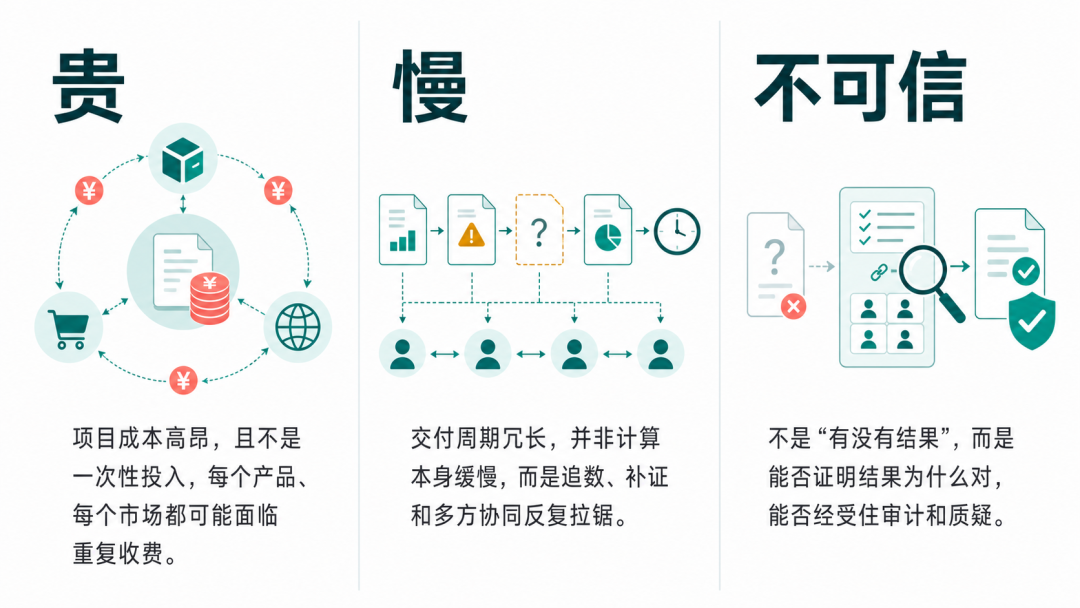
Behind these challenges lies the same root cause: the lack of an efficient, compliant, and scalable data management tool and process. Product carbon footprint accounting has long remained a largely manual craft. It depends heavily on the judgment of experienced consultants, manual searches through bills to collect data, experience-based matching of emission factors, and Excel-intensive model building. This traditional approach is clearly inadequate when businesses must handle hundreds or thousands of bill-of-materials items and constantly changing supply chains.

The Way Forward: From Answering Questions to Executing Tasks
How can companies overcome these challenges? A specialized carbon management Agent is the key.
AI capabilities are undergoing a qualitative leap. AI is no longer limited to answering simple questions; it is evolving into an agent that can understand objectives and execute tasks. This shift means AI can proactively break down complex goals, plan an execution path, and call tools to complete specific work. Its significance is comparable to the leap from a calculator to autonomous driving.
In the specialized field of carbon management, however, general-purpose AI tools such as ChatGPT, Doubao, and Kimi may possess broad knowledge but lack a deep understanding of product carbon footprint accounting rules, emission factor databases, supply chain data structures, and professional modeling. They can offer general advice, but they cannot directly produce compliant, auditable accounting results. Companies therefore need a professional Agent grounded in carbon management expertise and equipped with built-in industry rules and data systems. This is the rationale behind Carbon Agent.
Carbon Agent moves the carbon management industry from “people searching for data, filling in forms, and writing reports” to a new paradigm: people define the objective, the Agent organizes the workflow, and experts ensure credibility. Users only need to provide product information in a single sentence. The Agent can then automatically generate a draft model compliant with ISO 14067 and assist with data cleaning, compliance checks, and emission factor matching. The system handles complex calculations while experts review critical judgments, combining efficiency with credibility.

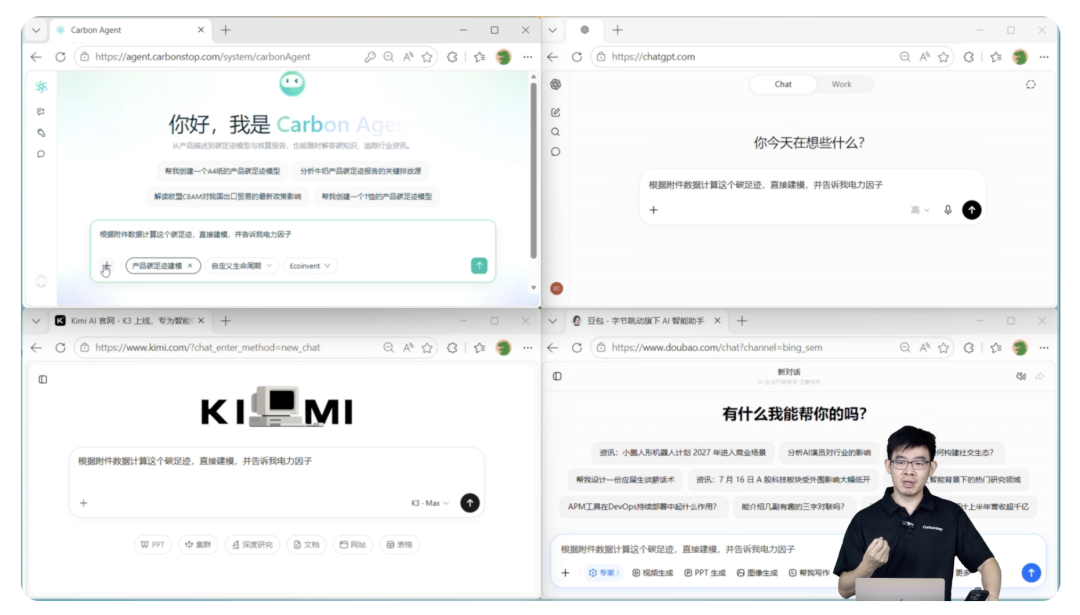
During the livestream, Yan Luhui put Carbon Agent head-to-head with ChatGPT, Kimi, and Doubao on the same carbon footprint accounting task. In practice, Carbon Agent demonstrated greater professional depth, precision, and task execution capability. As Carbonstop has emphasized before, the carbon management industry does not lack AI that can chat. It lacks an Agent product that can enter real workflows, take on professional tasks, and stand behind the results.
Carbon Agent brings together Carbonstop’s 15 years of industry experience, real-world use cases from more than 1,500 corporate customers, and practical knowledge from nearly 10,000 projects. It is also supported by Carbonstop’s China Carbon Database (CCDB), which contains 510,000 carbon data entries, making product carbon footprint accounting more efficient, reliable, and accessible.

Promocollection’s Zero-Carbon Practice
Yan Luhui once said: “We look forward to a day in the near future when people shopping in malls, supermarkets, or online can see the carbon footprint information of products and have the opportunity to choose options that are more environmentally friendly.”
Promocollection primarily provides cross-border corporate gifts and customized trade services for markets including Australia and Europe. It has long embraced the sustainability principle of “accounting for every gram of carbon and taking responsibility for every impact,” an approach closely aligned with Carbonstop’s philosophy. Through their collaboration, Carbonstop helped Promocollection efficiently calculate the carbon footprints of tens of thousands of products, strengthening its differentiated green competitiveness in the international customized-gifts market.
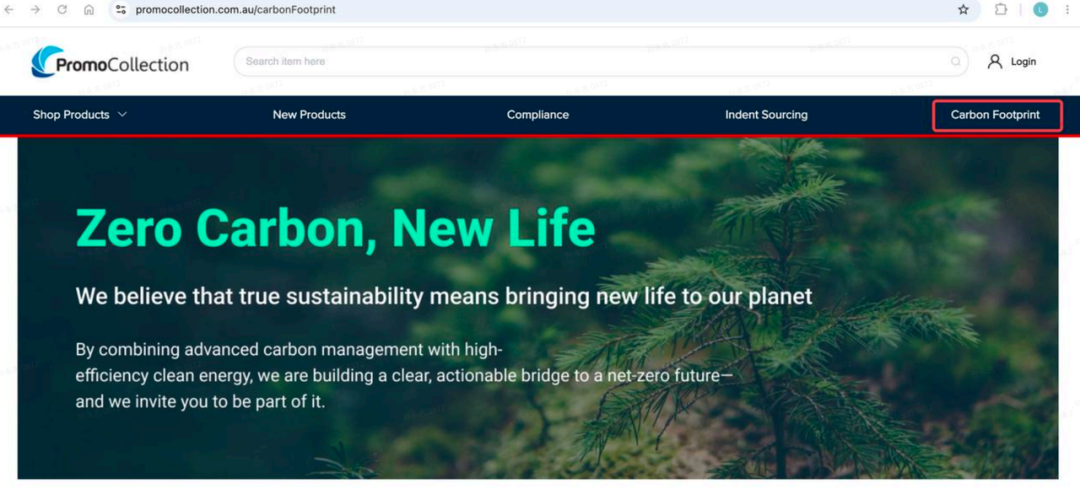
Bryan Deng, Founder and CEO of Promocollection & Phonelocker, noted that low-carbon and environmental awareness among consumers and brands is increasing significantly. Carbon footprints are no longer merely a compliance obligation; they are becoming a new selling point for product differentiation. More buyers and end users now include low-carbon attributes in purchasing decisions. Carbon management is therefore shifting from a cost center to a value engine that gives products a green competitive advantage.

CEO Dialogue: AI-Powered Carbon Management, from Compliance Cost to Green Competitiveness
Following the presentations, Yan Luhui and Bryan Deng held an in-depth discussion on their collaboration, project practices, and how AI can support product carbon footprint accounting.

When asked about accounting for more than 10,000 Promocollection products, Yan Luhui said there was “no pressure at all.” Digital tools combined with the new Carbon Agent make accounting both fast and accurate. He suggested that companies first bring more products into the accounting scope and then gradually improve the precision of each individual product calculation. When data is incomplete, AI does not fabricate information. Instead, it makes reasonable estimates based on built-in models, Carbonstop’s CCDB China Carbon Database developed over many years, and expert experience. It retains the complete calculation chain and documents assumptions to ensure traceability and auditability. AI’s greatest value is freeing consultants from repetitive work such as data entry and emission factor matching so they can focus on critical judgments.
Bryan described the experience from the perspective of a company expanding overseas. As a business focused on international customized sourcing, Promocollection launched its carbon footprint initiative in response to compliance and market demand. It chose Carbonstop not only for its technical and professional capabilities, but also for its international service experience, deep understanding of China’s manufacturing supply chains, and the alignment of values between the two teams. The results exceeded expectations. Carbon management investment accounted for less than 1% of total order value, yet in some applications it generated product premiums of 2% to 5%. Dealers even began including the solution by default, significantly increasing customer stickiness. After trying Carbon Agent, Bryan was impressed by its planning capabilities and human touch.
On green competitiveness, both CEOs agreed that AI is turning product carbon footprints from a specialist capability into a standard feature. For companies entering global markets, green competitiveness is not an issue for the distant future; it is becoming an essential passport to international business. Rather than waiting, companies should act. By choosing the right partner and taking the first step, they can gain an early advantage in the carbon accounting race.


