


 184
184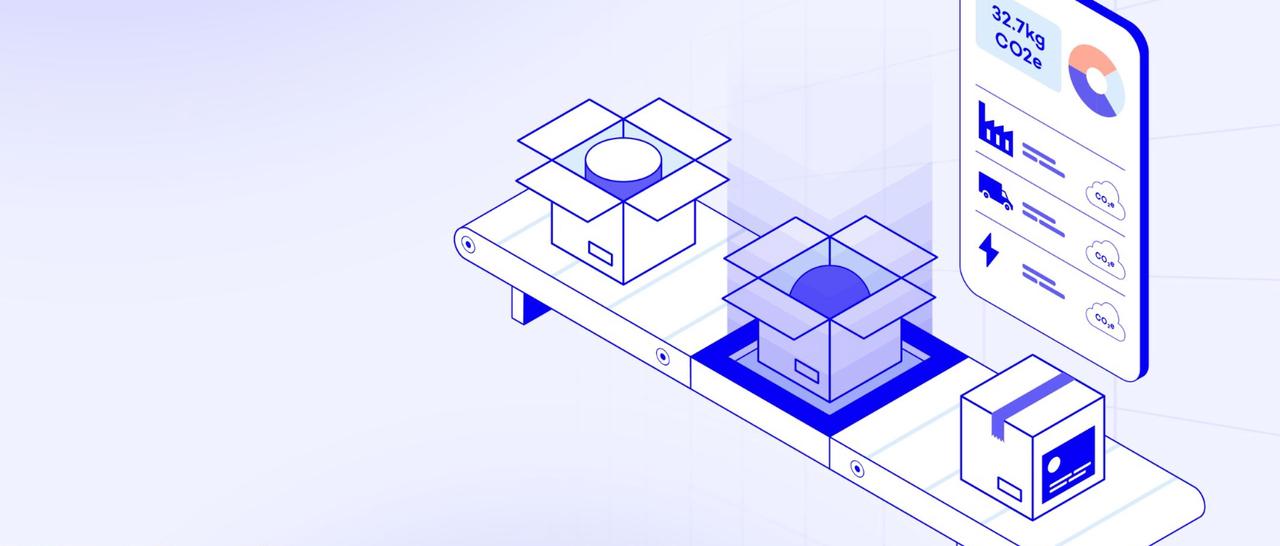 The regulatory landscape governing international trade has reached a decisive turning point. Frameworks such as the European Union’s Corporate Sustainability Reporting Directive (CSRD), the Carbon Border Adjustment Mechanism (CBAM), and International Sustainability Standards Board (ISSB) guidelines have fundamentally redefined supply chain management. Decarbonization is no longer an isolated ESG reporting initiative—it is a core procurement variable directly affecting margin preservation, tariff exposure, and contract eligibility.
For Chief Procurement Officers (CPOs) and sourcing executives, this regulatory shift creates an immediate operational challenge. Managing carbon performance requires granular visibility into Scope 3 Category 1 (Purchased Goods and Services) emissions across complex Bills of Materials (BOMs) and multi-tier supplier networks.
In response, Carbonstop—China’s leading carbon management software provider recognized by Gartner—launched Carbon Agent. Engineered as a specialized AI domain tool embedded within Carbonstop’s Enterprise Carbon Management Platform, Carbon Agent combines AI carbon accounting, PCF automation, and automated emission factor matching to transform complex manufacturing data into audit-ready carbon intelligence at speed and scale.
 The Sourcing Bottleneck: Why Manual Accounting and Generic AI Fail Procurement
Modern enterprise procurement involves managing thousands of active SKUs across global supply chains. Relying on traditional carbon accounting methods creates severe execution bottlenecks that delay sourcing decisions and increase compliance risk.
The Crisis of Scale in Product Carbon Footprints
Legacy carbon accounting relies heavily on manual data collection and ad-hoc spreadsheets, an approach that fails when applied to enterprise procurement volumes and product carbon footprint at scale requirements:
- Supplier Response Fatigue: Manual questionnaires create administrative friction for Tier-1 and Tier-N vendors, resulting in delayed responses, missing operational records, and low data submission rates.
- Cost and Lead-Time Delays: Traditional carbon consulting engagements require weeks to calculate a single product footprint. When applied across thousands of SKUs subject to CSRD or CBAM timelines, this pace creates an unsustainable compliance backlog and makes scalable PCF calculation difficult.
- Audit and Verification Exposure: Unverified supplier inputs, inconsistent unit metrics, and missing activity data compromise data integrity, exposing importers to financial penalties and greenwashing liability during assurance audits.
The Limits of General-Purpose AI in Carbon Accounting
- While general-purpose Generative AI models can summarize text, they lack the deterministic domain logic required for technical AI carbon accounting and reliable product carbon footprint calculation.
- Generic language models lack localized, verified manufacturing emission factor databases. When tasked with footprint calculations, they risk hallucinating default values that fail third-party verifications. Furthermore, global sustainability standards—including ISO 14067, PAS 2050, and the GHG Protocol—demand fully transparent, reviewable calculation steps. General AI tools operate as "black boxes," lacking the mathematical traceability needed to satisfy external audit standards.
 Operationalizing Precision: Automated Carbon Intelligence for High-Volume BOMs
To bridge the gap between compliance mandates and procurement speed, Carbon Agent delivers carbon accounting automation and automated product carbon footprint workflows without compromising mathematical accuracy.
Automated Multi-Source Parsing and Primary Data Ingestion
Procurement teams frequently receive supplier activity data in unstructured formats—such as PDFs, energy bills, material spec sheets, and CSV exports. Carbon Agent automatically extracts, categorizes, and normalizes operational activity data across these disparate sources. This eliminates the need to force suppliers into complex, manual data portals, significantly reducing vendor onboarding friction.
When integrated with product carbon footprint software, these automated workflows provide the foundation for rapid BOM carbon footprint calculation across complex product portfolios.
Deterministic Factor Matching via Localized Intelligence
A significant portion of global manufacturing and Scope 3 supply chain emissions is concentrated in East Asian supply hubs. Western emission databases often rely on regional averages that overestimate carbon intensity or lack facility-level specificity.
Carbon Agent connects directly to Carbonstop’s China Carbon Database (CCDB)—a proprietary database containing over 300,000 localized, verified emission factors. Through automated emission factor matching, primary supplier activity data is linked with localized CCDB factors to ensure precise geographic alignment. When primary supplier data is incomplete, the system intelligently applies audited secondary factor fallbacks, maintaining full calculation integrity under ISO 14067 and PAS 2050.
Automated Logic Self-Validation and Audit Readiness
To generate an audit-ready product carbon footprint before data is shared with verifiers, enterprise customers, or regulatory bodies, Carbon Agent executes automated logic checks across all activity logs:
- Discrepancy Detection: Automatically flags unit-mismatched inputs (e.g., kWh vs. MWh, kg vs. tons), missing parameters, and statistical anomalies.
- Traceable Calculation Trails: Preserves every calculation step, raw material input, emission factor reference, and allocation methodology in a transparent audit log.
- Compliance Mapping: Formats outputs directly for third-party verification under ISO 14067, CSRD Scope 3 reporting, and CBAM declaration requirements.
 Strategic Integration: Turning Carbon Intelligence into Sourcing Advantage
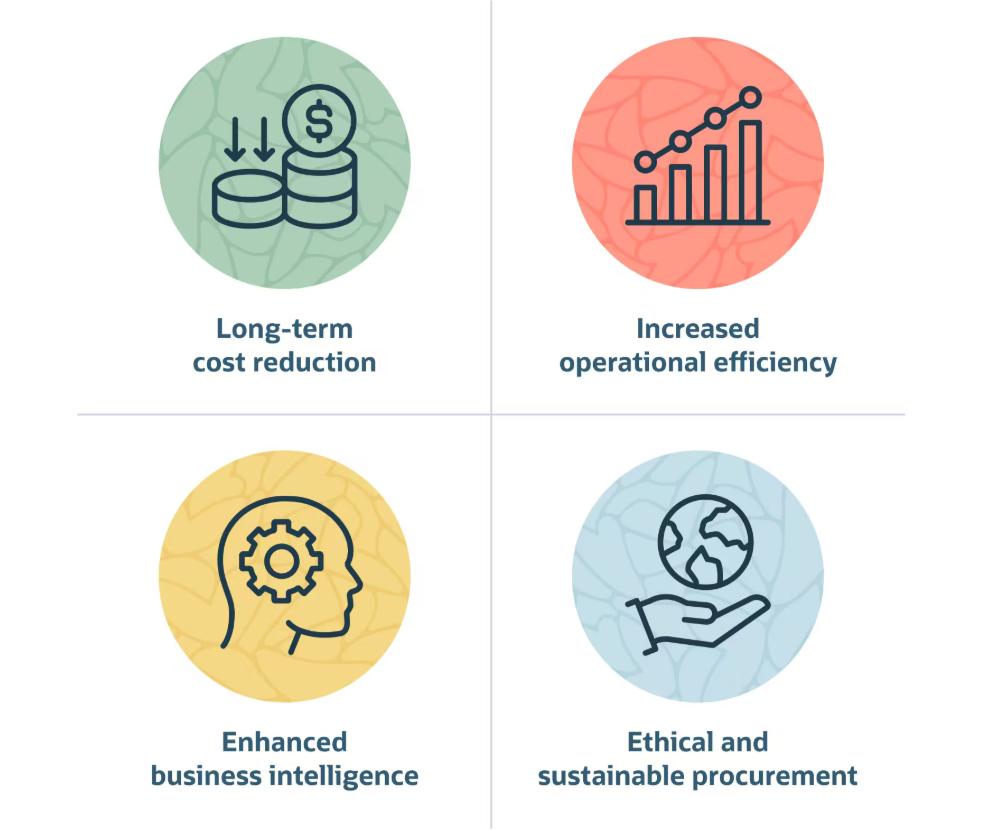
Integrating automated PCF capabilities into core procurement workflows converts compliance requirements into a tangible commercial advantage.
Enterprise System Alignment
Carbon Agent functions alongside existing Enterprise Resource Planning (ERP) and Product Lifecycle Management (PLM) architectures, such as SAP Ariba, Coupa, or Siemens Teamcenter. While Carbon Agent handles task-specific execution—such as rapid BOM parsing, PCF automation, and factor matching—broader enterprise Scope 3 aggregation and organizational ESG disclosures are managed through Carbonstop’s overarching AI carbon management platform and enterprise carbon management software infrastructure.
Low-Carbon Sourcing and Tariff Mitigation
Automated carbon accounting equips procurement teams with actionable intelligence to manage cost and regulatory risk:
- Targeted Decarbonization: Procurement teams can evaluate the carbon footprint of individual components within a Bill of Materials to identify high-emission hotspots and select lower-carbon alternative materials proactively in design cycles.
- CBAM Financial Protection: Accurately calculating embedded emissions in imported goods allows European importers and global exporters to minimize financial liabilities associated with default CBAM tariff penalties.
- Commercial Acceleration: Rapid PCF generation enables commercial and sales teams to fulfill customer requests for verified carbon disclosures instantly, protecting export market access and securing competitive tenders.
 Modernizing Procurement Infrastructure with Carbonstop
As carbon performance becomes inextricably linked to commercial market access, enterprise procurement leaders must transition from reactive supplier surveys to automated, audit-ready data workflows supported by specialized product carbon footprint software.
Strategic Next Steps for Procurement Leaders
- Benchmark Current PCF Velocity: Measure the current time, cost, and vendor response rates required to conduct manual product carbon footprint calculations across high-priority SKUs.
- Pilot Automated BOM Parsing: Deploy Carbon Agent on a selection of complex product lines to test BOM carbon footprint calculation, automated document ingestion, factor matching, and self-validation against existing supplier data.
- Integrate Sourcing Workflows: Align automated PCF outputs with central ERP and PLM systems to enable continuous carbon risk evaluation during routine procurement cycles.
Accelerate Your Supply Chain Decarbonization
- Ready to scale product carbon footprint at scale across your global supply chain? Contact Carbonstop today to request a 10-SKU BOM Carbon Audit Benchmark and discover how Carbon Agent delivers audit-ready carbon intelligence at enterprise speed.
FAQ
How does automated emission factor matching handle localized supply chain variations in Asian manufacturing hubs?
Automated matching links supplier activity data directly with localized regional factor databases, such as Carbonstop's CCDB containing over 300,000 verified factors. This ensures accurate geographic and technological alignment for components manufactured in China and East Asia, avoiding the inaccuracies introduced by generic Western default averages.
How does Carbon Agent ensure compliance with strict EU regulations like CSRD and CBAM?
Carbon Agent aligns its underlying calculation methodologies strictly with ISO 14067 and PAS 2050 standards. It maintains a fully transparent, step-by-step audit log detailing every data source, unit conversion, and emission factor used, allowing third-party assurance bodies to verify data integrity easily.
What is the operational distinction between Carbon Agent and enterprise ESG software?
Carbon Agent is a specialized AI execution tool designed for task automation—such as unstructured document parsing, rapid BOM carbon modeling, and automated factor matching. Broader enterprise carbon management software ingests these product-level calculations to manage organization-wide Scope 3 aggregation, corporate targets, and global framework disclosures.
How can procurement teams maintain data precision when scaling PCF calculations across thousands of SKUs?
Data precision is maintained through AI-driven self-validation algorithms that automatically scan incoming activity logs for unit discrepancies, missing parameter variables, and anomalous data points prior to calculation, supporting reliable, scalable PCF calculation across thousands of SKUs.


