


 87
 A buyer asks for the emissions behind a component. Operations produces energy records, procurement supplies material specifications, and sustainability delivers a footprint. The numbers do not reconcile. Before anyone can discuss reducing emissions, the manufacturer must explain which calculation can be trusted.
For Chief Sustainability Officers, this is a governance problem with commercial consequences. Carbonstop’s Carbon Agent and Ccloud address the underlying operational challenge: converting fragmented records into traceable carbon calculations within a structured carbon management platform.
By 2026, the challenge will be to render such computations dependable enough for purchasing decisions, investments, and consumer choices. Advanced carbon management is becoming an economic need despite the fact that reporting requirements have been simplified. The successful management of the manufacturing carbon footprint, consequently, requires consistent controls, transparency of proof, and decision-supporting systems.
 Why 2026 Raises the Stakes Despite Reporting Simplification
The regulatory picture is changing in different directions. Your response should connect each obligation to its business exposure, rather than assume that one inventory satisfies every requirement.
The EU’s Carbon Border Adjustment Mechanism entered its definitive regime on January 1, 2026. It covers selected goods in cement, iron and steel, aluminium, fertilisers, electricity, and hydrogen. For affected trade, embedded emissions become inputs to importers’ certificate obligations and commercial negotiations. Confirm customs classifications, exemptions, and sector calculation rules. The regime’s commencement and its declaration and certificate deadlines are separate milestones.
Meanwhile, the European Commission adopted ESRS simplification measures on July 3, 2026. Under the Corporate Sustainability Reporting Directive, manufacturers must assess current entity scope, reporting dates, and applicable European Sustainability Reporting Standards. Simpler disclosure requirements do not eliminate the need for reliable operational data or dependable enterprise carbon management software.
International Sustainability Standards Board’s IFRS S2 standard relates climate risks and opportunities to cash flow, financing, and cost of capital. Mandatory application relies on the adoption of this standard in the jurisdiction.
The executive takeaway is apparent: manage carbon data as a reusable enterprise asset through the controlled carbon emissions management system, using appropriate boundaries and methodologies for each instance. Treat Carbon Evidence as an Enterprise Control
The value of the carbon management platform is delivered when finance, operations, and sustainability have a common measure of the same result. Manufacturing carbon footprint management begins with ownership and control.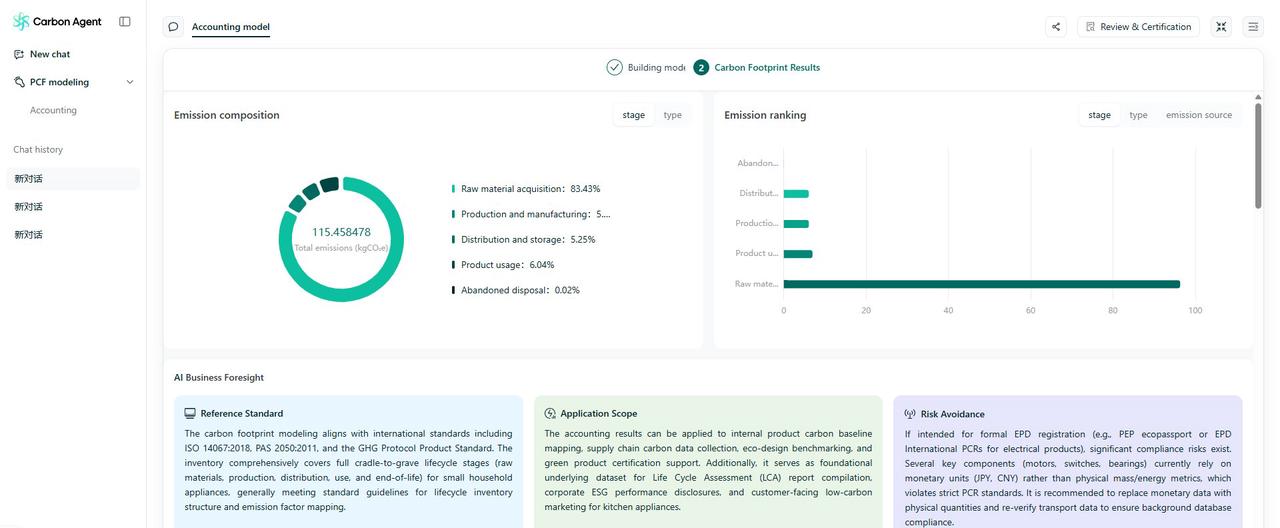
The GHG Protocol principles of relevance, completeness, consistency, transparency, and accuracy translate into three management controls.
- Accountability: Owner accountability for activity data, methodologies, approvals, and corrections; finance for record reconciliation, operations for production changes, and sustainability for accounting methodologies.
- Comparability: Boundaries, allocation basis, factor version, and reporting period known prior to making comparisons between sites or products.
- Traceability: Source records, assumptions, calculation methodology, and approval decisions captured in the carbon data management platform and linked to the GHG emissions accounting platform.
If two Chinese factories manufacture the same aluminium component, it will be different in terms of material manufacturing process, energy consumption, and waste treatment process, hence, in terms of its carbon footprint. It will be difficult to make a clear distinction using average material.
In order to justify a price premium for the lower-carbon component, comparable boundaries and production evidence are needed. The CSO should require such evidence as a prerequisite for this decision.
Carbon accounting software for manufacturers should help teams test the explanation against documented inputs. Electricity comparisons must distinguish location-based and market-based Scope 2 results where dual reporting applies, with contractual instruments meeting relevant quality criteria. CBAM assessments require their own prescribed emissions boundaries and methods.
Corporate carbon footprint software and product footprint models answer different questions. Keeping those purposes explicit prevents a convenient dataset from becoming a misleading comparison.
 Where Carbonstop Adds Practical Value
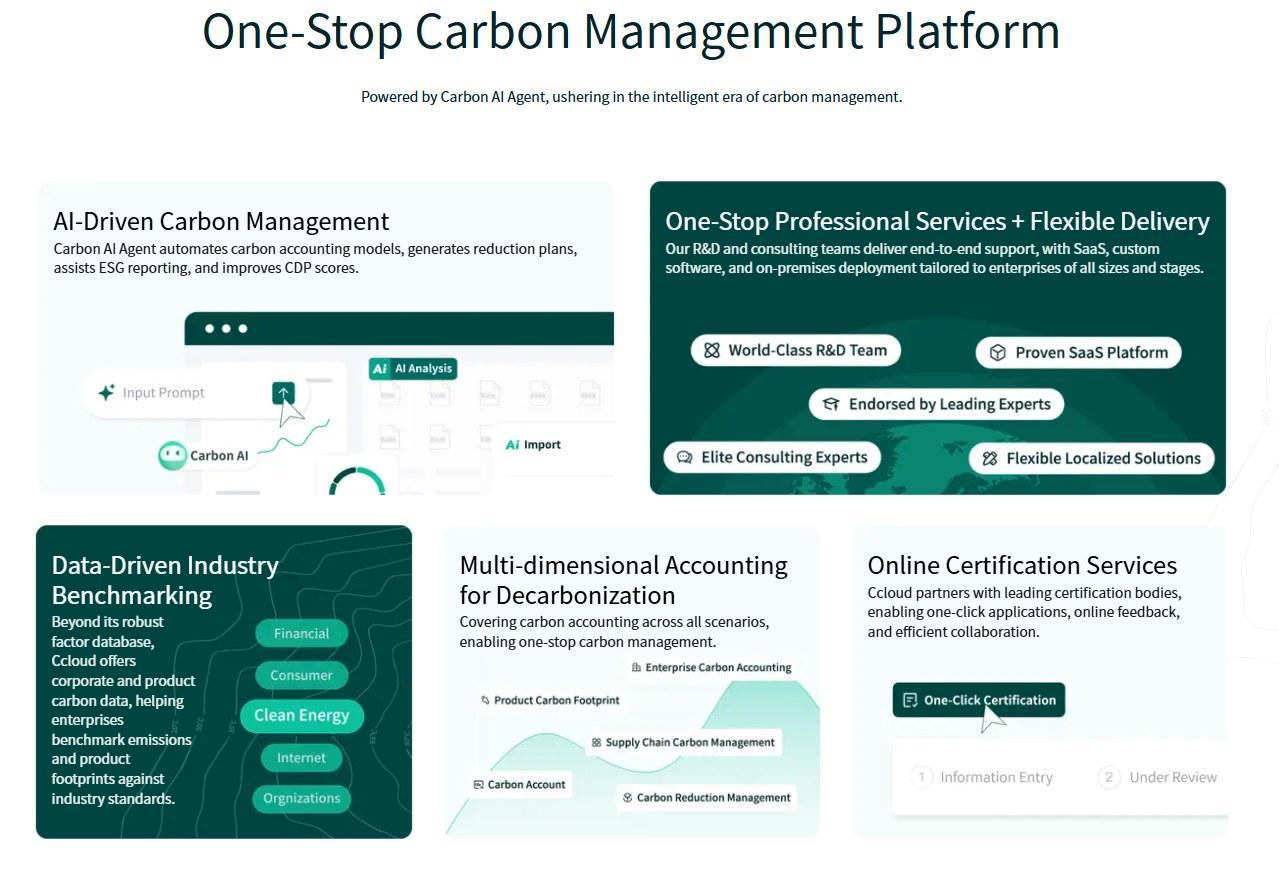
Enterprise carbon management software should reduce effort while preserving methodological control. Carbonstop combines Chinese data coverage, AI-supported workflows, and customized professional services around operational and product carbon accounting.
Chinese Data That Supports More Defensible Choices
Carbonstop’s China Carbon Database provides localized emission factors, applicability descriptions, and uncertainty information to support factor selection.
In the aluminium example, industrial carbon accounting software needs factors that reflect the relevant production technology, geography, year, and assessment boundary. Chinese coverage provides more relevant candidates; documented plant data and the required methodology determine which candidate is appropriate.
This is the practical differentiation: stronger local evidence can reveal a production difference that a broad average conceals. Database coverage alone does not establish accuracy, and a lifecycle factor cannot automatically substitute for CBAM-specific data.
AI That Makes Review More Efficient
The Carbon Agent extracts information from PDF documents, spreadsheets, images, and bills of materials, standardizing units of measurement and identifying any inconsistencies and anomalies.
The Carbon Agent also suggests appropriate emission factors with the sources and versions thereof, constructs models once confirmed, and captures expert commentary and modifications on the same. Carbon accounting software powered by automation will help to achieve all these tasks but, at the same time, maintain reviewability of any important decision-making. AI-powered verification can detect possible discrepancies, but it can never prove that the bill of materials represents the truth about the situation.
Customized Delivery With Clear Responsibilities
Ccloud combines carbon accounting, benchmarking, and reduction pathway analysis with SaaS, customized software, and on-premises delivery options.
Customized services can establish boundaries, data templates, collection frequency, and factor selection criteria. System delivery includes requirements analysis, prototype review, testing, and deployment planning. Specialists can then help resolve gaps, assemble calculation records, and coordinate independent verification where required.
These workflows support audit readiness within a carbon emissions management platform and can strengthen the broader GHG emissions accounting platform used by operational teams. They do not constitute independent assurance. Carbonstop’s products discussed here do not handle ESG reporting or corporate Scope 3 accounting. Those needs, including any requirement for supply chain carbon management software, require separate evaluation and processes. Give the Transition an Executive Owner
Your task is to sponsor a targeted pilot along with a business decision tied to it. Procurement will set out the requirements for suppliers, while operations and finance will hold all the data to assess the options. The task you face is to sponsor a pilot with an associated business decision. Procurement needs to work out the evidence criteria with suppliers, whereas operations and finance are responsible for the documentation of alternative assessment.
A ninety-day timeline will be enough to set up a foundation without trying to implement an enterprise-wide system right away.
- Days 1–30: Pick one commercially significant plant or product and assess its requirements. Appoint data owners.
- Days 31–60: Benchmark the baseline, find explanations, and make sure that the GHG emissions accounting system keeps the evidence.
- Days 61–90: Assess the efficiency, process, and electricity alternatives based on their impact, cost, feasibility, and ROI. Conduct sensitivity analysis for output and energy price changes.
Assess any net-zero carbon management system from the perspective of the decisions it makes possible and the scope of the accounting it does. Measure both absolute and normalized per-production emissions.
The competitive advantage comes from using credible carbon evidence to choose better investments and answer customers confidently through a controlled carbon management platform, supported where appropriate by Carbon Agent, automated carbon accounting software, and disciplined carbon reporting automation.
Speak with Carbonstop’s specialists about a customized assessment for one priority plant or product, focused on baseline reliability and reduction priorities. Sponsor the decision, and ask your operational team to bring energy records, a bill of materials, and the relevant customer requirement.
FAQ
Does CBAM Cover Every Manufactured Export?
No. Check listed goods, customs classifications, applicable exemptions, and importer obligations before assessing exposure.
Can One Carbon Footprint Serve Every Reporting Purpose?
No. Corporate inventories, product assessments, and CBAM calculations have different boundaries and methodologies, even when they share source records.
Can AI Make Carbon Data Audit-Ready?
AI can flag inconsistencies and organize evidence. Readiness also requires documented methods, accountable reviews, and reproducible calculations. Assurance remains separate.
How Should Manufacturers Prioritize Limited Resources?
Start with significant emissions or commercial exposure, establish a reliable baseline, and compare reduction options before expanding.


