


 58
 The difficult question in a carbon audit is rarely, “Did you multiply correctly?” It is, “Why did you use that factor?” Carbonstop’s Carbon Agent addresses this consequential step: connecting activity data with appropriate emission factors and making the calculation reasoning reviewable.
For manufacturers, what seems like an inconsequential decision can affect customer communication, product comparison, and investments. The use of a general electricity factor could mask conditions on the ground. The application of a fuel factor within the life cycle to boundaries that are combustion-only would give rise to false emission values.
With the introduction of carbon knowledge into procurement and accounting, speed will no longer be valuable by itself. What’s required is automated carbon accounting that retains data and highlights uncertainty. The critical test of a carbon accounting platform is whether its numbers hold up under scrutiny.
 Why Factor Selection Deserves Management Attention
An emission factor translates activity into emissions. Its suitability depends on context, making selection a governance decision as well as a technical task.
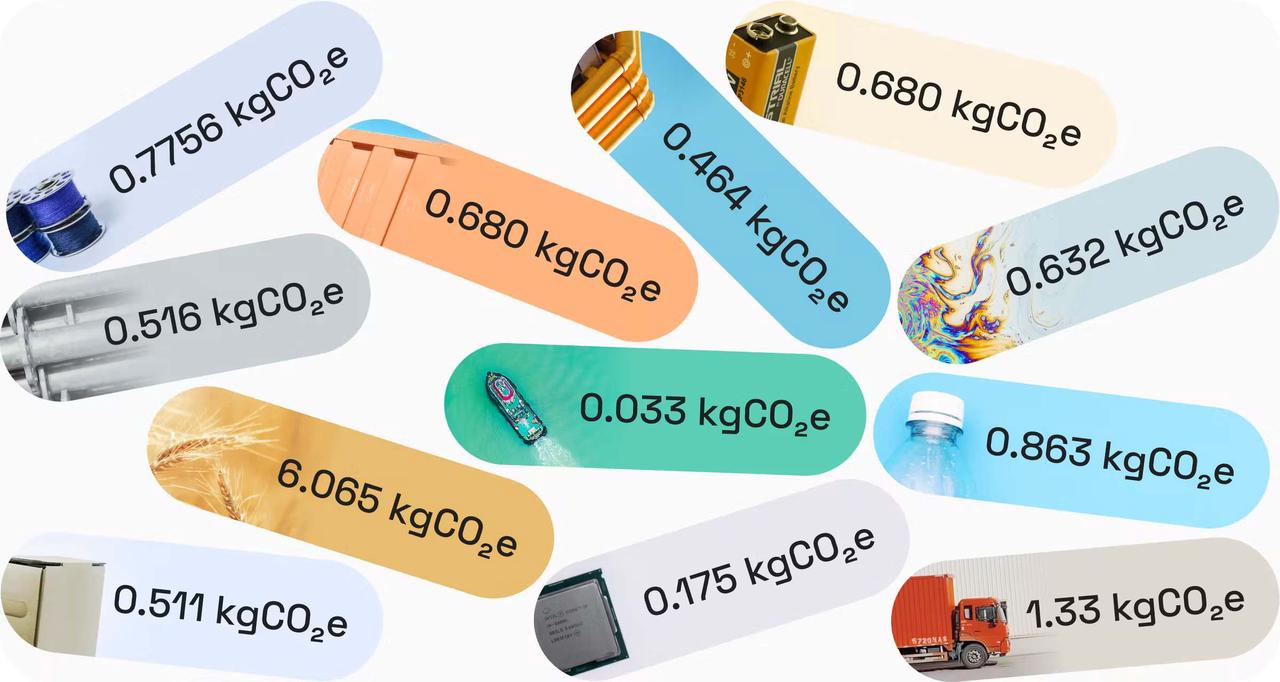
Relevance Comes Before Database Size
A useful emission factor database for carbon accounting must support informed choices across several dimensions.
- Geography: Does the factor represent the relevant electricity grid, production location, or market?
- Time: Is its reference period appropriate, with any lag explained?
- Technology: Does it represent the actual material, fuel, or manufacturing process?
- Boundary and units: Does it cover the required emissions stages and use compatible measurement units?
For executives choosing automated carbon accounting software, these questions matter more than the number of available records. A large database still needs disciplined selection rules.
 How Carbon Agent Supports Automated Emission Factor Selection
Carbon Agent combines activity-data interpretation, emission factor matching, calculation documentation, and report preparation support. Carbonstop’s China Carbon Database adds China-specific factors and geographic and sector detail, reducing reliance on generic proxies where suitable records exist.
Turn Descriptions into Reviewable Choices
The practical value comes from linking daily operations language with carbon accounting rules.
- Interpret inputs: Review activity details, amounts, and units first when picking a factor.
- Find relevant candidates: Apply location and industry details to limit options.
- Apply quality checks: Rely on AI validation to spot errors or gaps in data.
- Expose the reasoning: Show sources, methods, and assumptions for checking.
This approach leads to steady results in similar calculations. Yet unclear entries still need human review. Groups must set up a review step instead of accepting all auto matches.
Keep Human Accountability Clear
A GHG emissions calculation platform helps simplify expert checks on key assumptions.
Name one methodology owner and set review rules for cases where other factors alter outcomes. Put focus on main energy inputs instead of minor parts so experts review choices that shape the final results.
Carbon Agent supports product carbon footprint workflows. Product results may inform a separate Scope 3 assessment, subject to its methodology and boundaries.
 A Manufacturing Example: One Input, Several Possible Answers
Consider an illustrative factory calculating a product footprint using one million kilowatt-hours of purchased electricity. The multiplication is straightforward; the methodological choice is not.
Check the Accounting Context First
Before accepting a match, the team needs to resolve the following questions.
- Which production location and reporting period apply?
- Is the electricity quantity measured, allocated, or estimated?
- What electricity dataset does the product-footprinting methodology require?
- Are contractual electricity claims eligible under that methodology?
For a corporate inventory, the GHG Protocol’s location-based and market-based Scope 2 methods have distinct requirements. Market-based calculations also require instruments meeting applicable quality criteria. Product accounting requires its own methodological assessment.
Using hypothetical factors of 0.50 and 0.60 kilograms CO2e per kilowatt-hour produces 500 and 600 tonnes CO2e. That 100-tonne difference reflects a factor choice, not an operational improvement. Management should understand the distinction before reporting progress.
 What Makes a Footprint Ready for Review
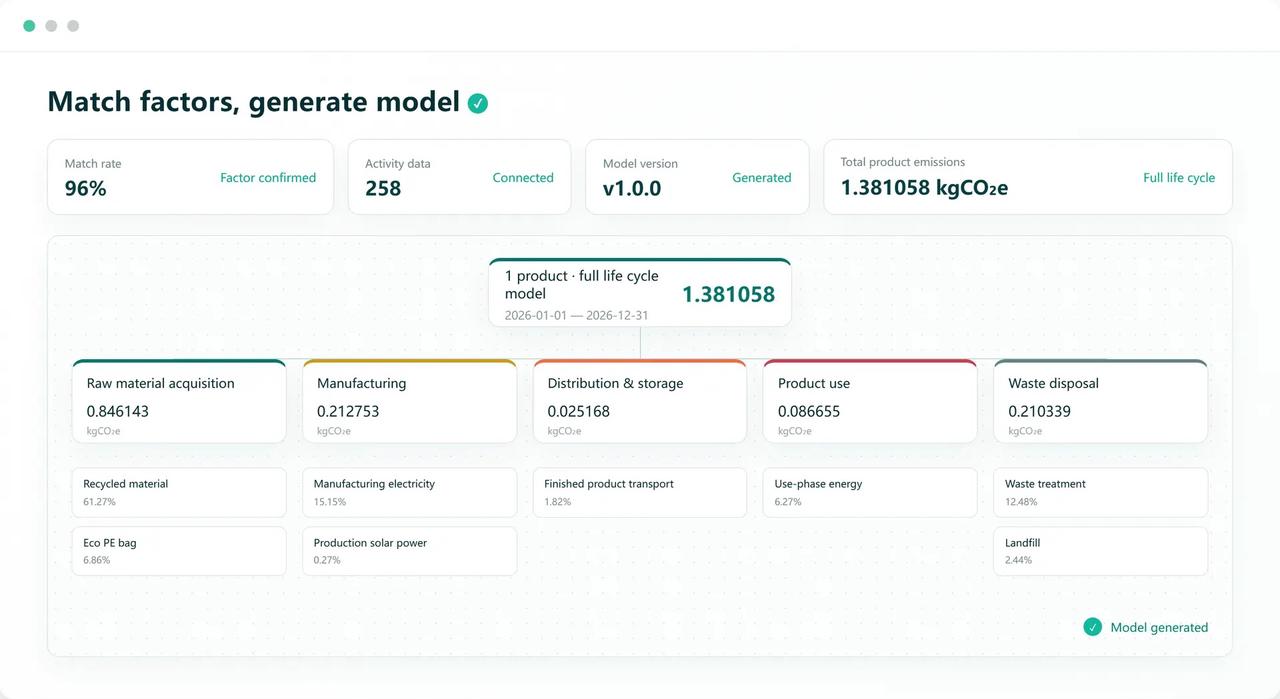
An audit ready carbon footprint requires a reproducible evidence chain. Calculation transparency supports assurance, but independent assurance remains a separate process.
 Build an Evidence Package Around Each Result
Carbon Data Management System must facilitate teams in arranging the documents required to justify their calculation process.
- Activity proof: Metering data, bills, production data, and allocation methods.
- Factor sources: Source, dataset ID, dataset version, unit, and time period.
- Methodology: Scope, exemptions, assumptions, and applicable global warming potentials.
- Review history: Owners, exceptions, approval, and reasons for revision.
Maintain previous factor versions in case of revision of calculations. In all other cases, a new data set would make it hard to reproduce the past and skew annual comparisons.
Keep the revision history of methodology separate from the reduction history. When there is a revision of a factor resulting in a lower footprint, explain its impact prior to the attribution of changes to procurement, efficiency, or decarbonization investment.
Match Evidence to the Reporting Framework
- The carbon reporting software should be compatible with the methodology because the purpose of the disclosure frameworks is different.
- CSRD: The EU Corporate Sustainability Reporting Directive relies on European Sustainability Reporting Standards for entities within scope.
- ISSB: International Sustainability Standards Board IFRS S2 disclosure framework contains climate-related disclosures, which include greenhouse gas emissions disclosures as well, depending on jurisdiction.
- CBAM: EU Carbon Border Adjustment Mechanism contains certain embedded-emission regulations related to covered goods; company inventory is not enough.
CDP questionnaires represent another reporting destination. Governing the evidence could help to avoid duplication, but applicability and methodology checks are required separately for every output.
 Make Implementation a Controlled Business Process
The transition from spreadsheets should begin with one representative workflow. A customized implementation gives teams a practical way to test data quality and review responsibilities.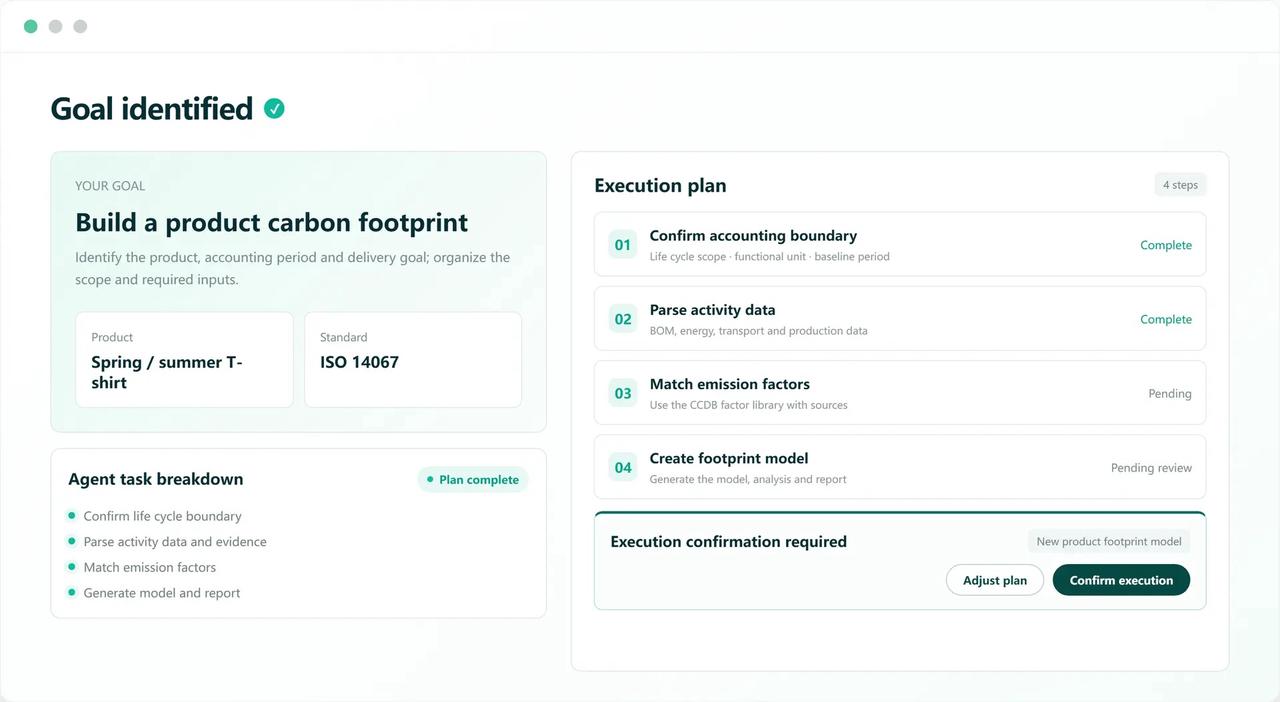 Define Customized Support Around Real Decisions
Carbonstop’s technical guidance and report preparation support can be organized around a customized implementation plan.
- Methodology review: Agree on the footprint boundary, factor hierarchy, and evidence requirements.
- Data preparation: Standardize activity descriptions and units, then identify missing records.
- Pilot review: Examine representative calculations and resolve questionable matches with technical specialists.
- Operational guidance: Document reviewer responsibilities and procedures for future dataset updates.
When analyzing corporate carbon footprint software, make sure to separate the needs for inventory versus product analysis. The performance of the carbon footprint management system must be evaluated based on the actual workflow that the system will facilitate.
In terms of GHG inventory management in general, performance can be measured by fewer unresolved exceptions, reproducibility, and shorter review times.
 Start with the Number You Must Defend
Automated selection creates value when faster calculations retain clear reasoning. Carbon Agent’s combination of local data, AI-assisted workflows, and reviewable documentation supports that objective.
Bring Carbonstop a representative product dataset and reporting objective. Request a customized walkthrough of factor choices, assumptions, and supporting evidence before expanding deployment.
FAQ
Is the Most Recent Factor Always Best for Manufacturers?
Not necessarily. The appropriate data set should be chosen based on the reporting period and methodology used.
Can the National Average Substitute Local Electricity Data?
Sometimes. It is determined by the accounting approach, evidence, and the need for geographical representation.
Is AI Eliminating the Need for Carbon Experts?
Not really. Experts will still be needed for boundaries, exceptions, methodology, and assumption review.
Is the Auditable Product Footprint Enough for CBAM Compliance?
Not necessarily. Appropriate calculations and evidence in line with the CBAM requirements must be provided.


